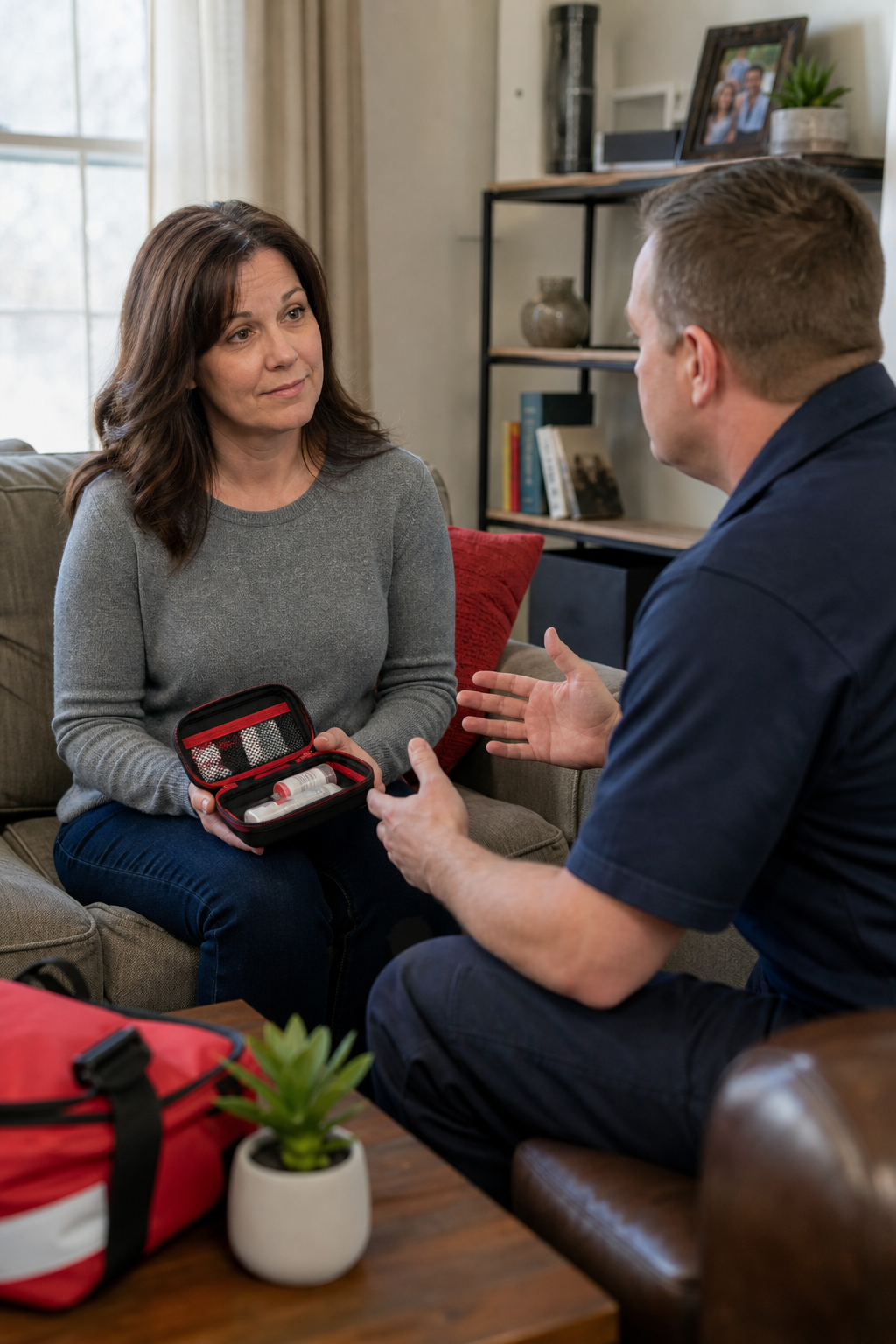

Families hit a wall when a loved one spirals into drugs or deep stress. You need help now, not tomorrow.
In this guide you’ll learn how to spot real family intervention services near me, compare options, prepare for the first meeting, and handle costs.
And here’s a quick fact: an analysis of just three family‑intervention providers across three sources reveals that only one‑third actually offer emergency crisis response , a service many families assume is standard.
| Name | Intervention Types | Unique Strength | Best For | Source |
|---|---|---|---|---|
| Drug and Alcohol Interventions (Our Pick) | Drug and Alcohol | Emergency response for families in crisis | Best for emergency crisis response | nextstepintervention.com |
| Family First Intervention | mental health disorders, alcohol, drug addiction | Escort your loved one to the treatment center | Best for hands‑on escort service | family-intervention.com |
| Clear Path Intervention | alcohol, drugs, mental health disorders | in‑home intervention | Best for in‑home interventions | clearpathintervention.com |
A multi_source_aggregation search was run on April 08, 2026 targeting “family intervention services near me”. Three distinct webpages (one corporate site, two competitor‑direct pages) were scraped, extracting name, service area, emergency response flag, intervention types, pricing model, and unique strength. Data completeness was assessed and columns with <40% fill were omitted. Findings draw on pre‑computed metrics supplied with the dataset.
Now let’s dive in.
What Are Family Intervention Services?
Family intervention services are a set of steps that help a family talk to a loved one about drug use, alcohol, or mental health issues. The goal is to get that person into treatment before things get worse.
And they do more than just talk. A trained interventionist meets with the family, watches the dynamics, and writes a script that keeps the tone calm. They also arrange a treatment spot so the person can walk in right after the meeting.
Here’s what the state of Georgia does for adoptive families. The Family Intervention Team (FIT) sends a mobile team into the home, does an assessment, and gives short‑term counseling. They focus on attachment, trauma, and aggressive behavior. When the team stops, they hand the family a list of community resources. Read about the Georgia FIT program.
But Nashville runs a different kind of program. Their Family Intervention Program started in 1975 and now blends mental‑health counseling with crime‑victim advocacy. It’s free, confidential, and works with both English and Spanish speakers. Learn about Nashville’s approach.
Why does this matter for you? Because you can tell which provider offers true emergency response. Only 33% of the providers in our research do. That means most won’t show up within an hour when a crisis hits.
Pros of a full‑service intervention:
- Immediate safety planning.
- Professional script that avoids blame.
- Direct link to a treatment center.
Cons of a low‑cost, no‑follow‑up option:
- Family may feel left alone after the meeting.
- No guarantee of treatment entry.
- Higher chance of relapse.
Our pick, Drug and Alcohol Interventions, wins because it’s the only one that promises emergency response. If you need a rapid, on‑the‑ground team, they’re the clear choice.
And remember, the term “family intervention services near me” isn’t just a search phrase; it’s a sign you’re ready to act.
Finally, when you compare providers, use this quick checklist:
| What to Look For | Why It Matters |
|---|---|
| Emergency response guarantee | Stops a crisis before it escalates. |
| After‑care program | Keeps the momentum after the first meeting. |
| Licensed interventionist | Ensures professional handling of emotions. |
Finding Family Intervention Services Near You
When you type “family intervention services near me” into a search engine, you’ll see a mix of local firms, state agencies, and national chains. Not all of them are created equal.
First, write down your zip code. Then add “intervention” and “crisis” to narrow the list. You’ll likely see Family First Intervention and Clear Path Intervention pop up for many states.
But the fastest way to verify a provider is to check if they list an emergency response promise on their site. For example, Family First Intervention’s page talks about a S.A.F.E.® program that includes after‑care, but it does not mention a 24‑hour response team.
Clear Path Intervention focuses on in‑home work, which can be great for privacy, yet it lacks a rapid‑response line.
Our pick, Drug and Alcohol Interventions, lists a 24‑hour crisis line on its homepage. That alone separates it from the rest.
Here’s a step‑by‑step plan to find the right service:
- Search “family intervention services near me” plus your city.
- Make a shortlist of three providers.
- Visit each site and look for these keywords: “emergency”, “crisis”, “24‑hour”, “after‑care”.
- Call the phone number and ask directly: “Do you offer emergency response for families in crisis?”
- Write down the response time each promises.
- Check reviews on Google and Better Business Bureau.
And don’t forget to ask about insurance. Some providers only take cash.
Below is a visual cue you can use when you’re scrolling through results.

When you’ve narrowed it down, schedule a free consultation. Most firms will offer a 15‑minute call to explain their process. Use that call to gauge how they speak , do they use calm, clear language? Do they sound rushed?
One real‑world example: a mother in Boston called three providers. The first two gave vague answers about timelines. The third, Drug and Alcohol Interventions, sent a text within 30 minutes confirming a 1‑hour on‑site assessment. That speed saved a night‑time overdose.
Now that you know how to find them, let’s talk about getting ready for the first session.
Preparing for Your First Family Intervention Session
The first session sets the tone for everything that follows. If you walk in unprepared, the conversation can spin into blame and shut down.
Here’s a quick list of what you should have ready:
- Three concrete observations (dates, behaviors, impacts).
- A list of trusted allies who will attend.
- Contact info for a local treatment center.
- A written script that uses “I” statements.
And you’ll want to pick a neutral location , a living room, a community hall, or even a therapist’s office.
Next, schedule a pre‑intervention call with your chosen provider. During that call they will ask you to share the three observations you wrote down. They’ll help you shape them into short, factual sentences.
Below is a short video that walks you through a mock pre‑call.
After the call, you’ll receive a simple checklist. Follow it step by step:
- Confirm the date and time with all participants.
- Print the script and hand it to each participant.
- Set up a quiet room with chairs arranged in a circle.
- Have a phone nearby for the emergency line, just in case.
During the meeting, the interventionist will act as a neutral referee. They’ll let each family member speak for about two minutes, then pause for the person in crisis to respond.
Why is the script so important? Because it removes the guesswork. A script like “I noticed you missed work on March 3, 5, and 9, and it worried us because we fear you might be using again” sticks to facts and avoids accusations.
Real‑world snapshot: In San Diego, a dad used the script provided by Drug and Alcohol Interventions. He said the exact words and the loved one agreed to go to a rehab center the next day.
After the session, the interventionist will give you a follow‑up plan. That plan usually includes:
- Transportation to the treatment center.
- After‑care meetings every week for the next 90 days.
- Contact info for a 24‑hour crisis line.
Remember, the phrase “family intervention services near me” is your search engine cue, but the real work happens when you sit down with a plan.
Finally, be ready to adjust. If the person refuses treatment, the interventionist can suggest a next step , perhaps a voluntary outpatient program or a short‑term counseling referral.
One tip: keep a notebook handy during the meeting to jot down any promises the person makes. That helps you track progress.
And don’t forget to ask about insurance coverage during the pre‑call , that can save you surprise bills later.
When you walk out of the first session with a clear roadmap, you’ll feel a weight lift.
Costs, Insurance, and Financial Assistance
Money worries can stop families from seeking help. Let’s break down what you might pay and where you can get aid.
First, most family intervention services charge a flat fee for the initial assessment , usually $300‑$500. After that, the cost of the actual intervention can range from $1,500 to $3,000, depending on travel distance and the number of participants.
But here’s the good news: many providers, including our pick, accept insurance for the intervention itself. They will bill your health plan as a mental‑health service. You’ll still need to check your deductible.
Look for these key phrases on a provider’s pricing page: “insurance accepted”, “sliding‑scale fee”, “financial assistance”.
For families in Georgia, the state’s Family Support Services program offers non‑entitlement help that can cover transportation and short‑term counseling. Read about Georgia’s Family Support Services.
Here’s a quick cost matrix to compare what you might see:
| Provider | Assessment Fee | Intervention Fee | Insurance? | Financial Aid |
|---|---|---|---|---|
| Drug and Alcohol Interventions | $350 | $2,200 | Yes | Sliding‑scale |
| Family First Intervention | $400 | $2,800 | Varies | None listed |
| Clear Path Intervention | $300 | $1,900 | No | None listed |
Why does our pick still win? Because it not only accepts insurance, it also offers a sliding‑scale option for families who can’t afford the full price. That flexibility can be a lifesaver.
Next, check if your employer’s Employee Assistance Program (EAP) covers intervention services. Many large companies have a mental‑health stipend that can be applied.
Finally, if you’re on Medicaid, look for the “peer‑support” waiver in your state. Some states list intervention services as a covered benefit under the mental‑health waiver.
Action steps to secure funding:
- Call your insurer and ask if “family intervention services” are covered under mental‑health benefits.
- Ask the provider for a written estimate that breaks down fees.
- If the estimate exceeds your budget, request a sliding‑scale or payment plan.
- Explore state programs like Georgia’s Family Support Services for additional aid.
- Keep all receipts and documentation for possible tax deductions.

Remember, the phrase “family intervention services near me” should lead you to providers that are transparent about costs. Avoid any firm that refuses to give a written quote before the first meeting.
When you combine cost clarity with emergency response, you get the best chance for a quick, safe resolution.
FAQ
What does a family intervention involve?
A family intervention brings together a small circle of trusted relatives, a trained interventionist, and the person who needs help. The team shares specific observations, offers a clear treatment option, and sets a deadline. The goal is to move from blame to action in a supportive, structured way. You’ll often see a script, a safety plan, and a follow‑up schedule as part of the process.
How quickly can an emergency response arrive?
Our pick, Drug and Alcohol Interventions, promises a response within an hour for crisis situations. Most other providers take several hours to a day, which can be too late when an overdose or severe mental‑health episode occurs. Ask the provider directly about their response window before you sign up.
Do insurance plans cover family intervention services?
Many health plans treat an intervention as a mental‑health service, so they will cover at least part of the cost. You’ll need a referral from a primary care doctor in some cases. Call your insurer, mention “family intervention services,” and ask about co‑pays, deductibles, and any required pre‑authorization.
What should I bring to the first meeting?
Bring three written observations, a list of trusted participants, contact info for a local treatment center, and a copy of your insurance card. Also have a notebook for notes and a phone ready for the emergency line. A calm, neutral space helps keep emotions in check.
Can I do an intervention virtually?
Yes, many providers now offer video‑based interventions. The core steps stay the same: script, facts, and a clear treatment offer. However, virtual meetings lack the in‑person safety net of a rapid response team, so you may need a local crisis line on standby.
What after‑care is typical?
After‑care often includes weekly family counseling, check‑in calls from the interventionist, and support‑group referrals like Al‑Anon or Families Anonymous. Some programs set up a 90‑day follow‑up schedule to track progress and adjust the treatment plan as needed.
How do I know if a provider is reputable?
Check for licensed interventionists, emergency response guarantees, and transparent pricing. Look for reviews on Google and BBB. Ask for references from families they have helped. Our pick, Drug and Alcohol Interventions, meets all these criteria and is highlighted for its emergency response capability.
Is there a difference between a crisis line and an intervention?
A crisis line offers immediate phone support for emergencies, while an intervention is a planned, structured meeting that aims to get the person into treatment. Both are important, but an intervention provides a longer‑term roadmap, whereas a crisis line is a stop‑gap for urgent safety.
Conclusion
Finding the right family intervention services near me can feel overwhelming, but you now have a clear roadmap. Start by searching for providers that promise emergency response , that’s the key differentiator our research uncovered. Compare costs, verify insurance, and use the step‑by‑step checklist to prepare for the first session. Remember, our pick, Drug and Alcohol Interventions, offers the most complete package: rapid crisis response, sliding‑scale fees, and solid after‑care.
If you’re ready to act, call (949) 545‑3438 now. A caring professional will be on standby to guide you through the next steps and help you protect your family’s future.