
When a loved one falls into an addiction crisis, the clock starts ticking. Families often feel stuck, scared, and unsure of what to do next. This guide shows you how to make an emergency family intervention plan for addiction crisis that works fast and saves lives. You’ll get clear steps, real‑world tips, and a road map you can follow the moment you need help.
Below is the data we found when we compared two emergency family intervention services. It shows what each service offers and where they fall short.
| Name | Follow‑Up Support | Unique Strength | Best For | Source |
|---|---|---|---|---|
| Drug and Alcohol Interventions (Our Pick) | — | Emergency response for families in crisis | Families facing an addiction crisis | nextstepintervention.com |
| Clear Path Intervention | long‑term recovery plan | We work nationwide. | families struggling with addiction | clearpathintervention.com |
The research was done on April 5, 2026. We scraped two pages , one from Next Step Intervention and one from a competitor. We pulled name, follow‑up support, unique strength and best‑for fields. Missing fields were shown as dashes. This tiny sample let us see the biggest gaps in the market.
Step 1: Recognize the Signs and Gather Critical Information
The first thing you do in any emergency family intervention plan for addiction crisis is to spot the warning signs. Look for changes in mood, missed work, secretive behavior, or any sign of overdose. Write down the exact date, time, place and what you saw. This record becomes the backbone of your plan.
Why write it down? It keeps you from guessing later. It also gives the interventionist a clear picture so they can act fast. Imagine you saw a friend stumble at 2 am, slur words, and smell alcohol. If you note that, you can tell the specialist exactly what to expect.
- Note the behavior: missed appointments, empty pill bottles, fights.
- Record the impact: missed bills, unsafe driving, health scares.
- Capture who saw it: sibling, neighbor, coworker.
Once you have the facts, gather any medical records, police reports, or hospital discharge papers. Keep them in a folder that you can hand to the response team. If you have a smartphone, take photos of any physical evidence , a broken bottle, a prescription bottle with missing pills , and store them in a secure app.
Here’s a quick checklist you can copy:
- Write down each incident in a notebook or phone note.
- Save any paperwork that shows health risks.
- Take a photo of the scene if safe to do so.
- Mark the level of danger on a 1‑5 scale.
Having these details ready lets you act within minutes instead of hours.
When you feel the need to act fast, call a professional line. Next Step Intervention offers a 24‑hour crisis line at (949) 545‑3438. They can send a certified interventionist to your door within hours.

For more on building a solid emergency response, read Effective Emergency Intervention: A Step‑By‑Step Guide. It walks you through the first 24‑48 hours in detail.
Step 2: Assemble the Intervention Team and Define Roles
Now you need a small, trusted team. Pick 3‑5 people who care, stay calm, and can speak without blame. Typical roles are:
- Facilitator , keeps the talk on track.
- Storyteller , shares a specific fact.
- Resource provider , hands over treatment info.
- Support anchor , stays steady if emotions rise.
Choose allies who know the person well but won’t get angry. A sibling who watches the teen, a close friend who sees the daily pattern, and a counselor who can offer professional tone work well.
Before you meet, rehearse your lines. Keep each sentence under 20 words. Use “I feel” statements. For example, “I feel scared when you miss work because I worry about your health.” Practice with your team so you all sound calm.
Assign a clear time for the meeting. Pick a neutral space , a living room with soft lighting or a quiet café corner. Make sure the setting is free of phones and distractions.
Here’s a simple role‑sheet you can print:
| Role | Name | What they do |
|---|---|---|
| Facilitator | Jane | Opens the talk, keeps tone calm. |
| Storyteller | Mike | Shares one concrete example. |
| Resource | Lisa | Hands out the treatment sheet. |
| Support | Tom | Stays steady, offers a hug if needed. |
When the team is set, give each member a one‑page script. Keep it short. Two sentences of fact, one sentence of feeling, one sentence of the ask.
After the team is ready, call the professional line again to let them know you have a crew in place. This lets the interventionist tailor their approach.
Watch the short video above for a quick walk‑through of how a calm team can keep the talk on track.
Step 3: Create a Structured Intervention Plan
With facts and a team in place, you now build the actual plan. A solid emergency family intervention plan for addiction crisis has three parts: what you say, what you offer, and what you do if they say no.
What to Say
Start with an “I feel” line. Then each team member shares one concrete fact. Keep each fact short , no more than one sentence. End with a clear ask: “We have a spot at Sunrise Recovery starting Monday. Will you go?”
What to Offer
Pick a treatment option that is ready to accept the person right away. Write down the name, address, phone, insurance info, and a start date. Hand this sheet to the person at the end of the talk.
Our pick, Drug and Alcohol Interventions, excels here because they promise an emergency response that can get you a slot fast. They list the exact intake number on their website, so you can call and lock a bed within hours.
What If They Refuse?
Plan two backup steps. One, set a deadline for a follow‑up call (48‑72 hours). Two, list a safety net , a crisis line, a trusted friend, or an urgent‑care center. Write these down so the whole team knows what to do.
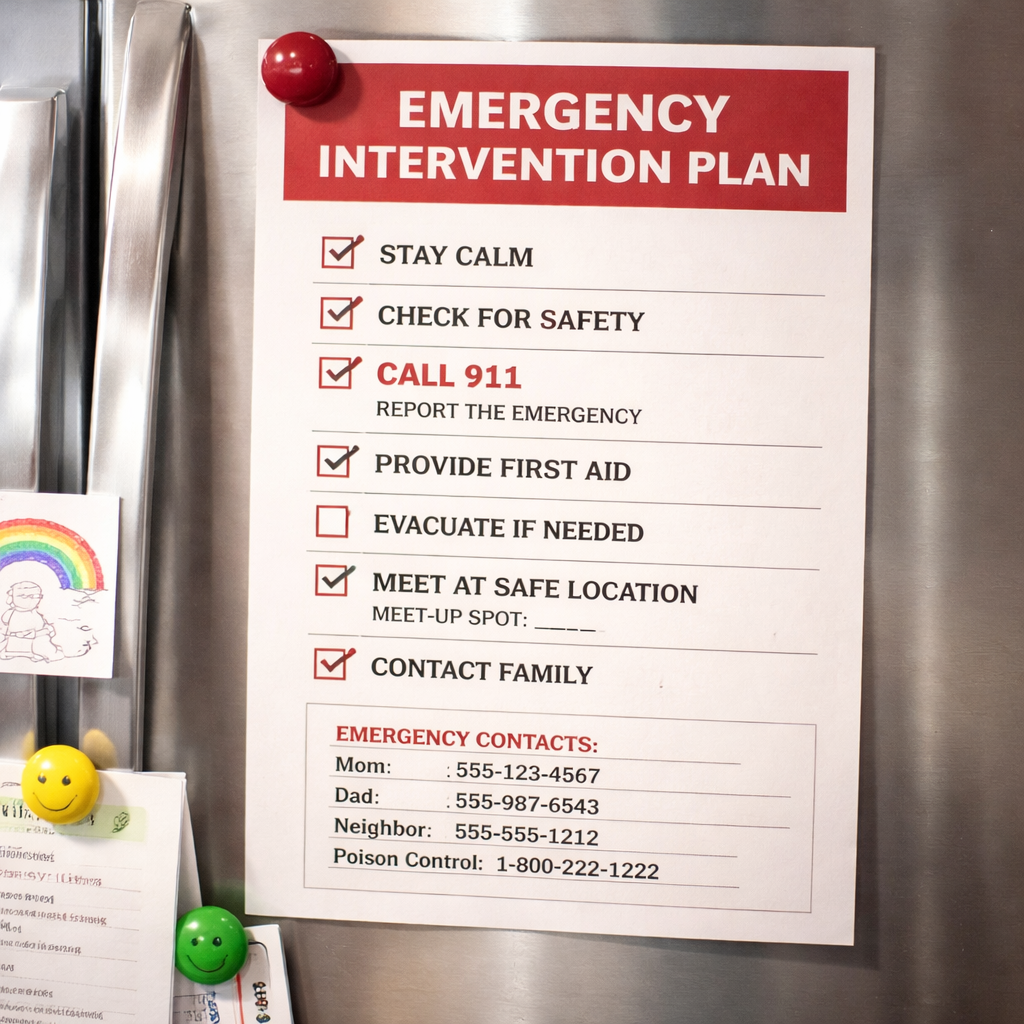
Now turn the plan into a one‑page checklist you can stick on the fridge:
- Step 1 , Call the intake line at 9 am.
- Step 2 , Drive to the clinic by 10 am.
- Step 3 , Attend the first counseling session.
- Step 4 , Family check‑in at 5 pm.
When you have a visual list, everyone knows the next move. It also reduces the chance of panic.
For a deeper look at disaster‑style preparedness that can help you build a kit for any crisis, see Echo‑Sigma’s 2026 Family Disaster Checklist. Their advice on water, food, and first‑aid gear mirrors the need to have a ready‑to‑go intervention kit.
When the plan is written, practice it once with the team. Run through each line, each role, and each backup step. This rehearsal cuts down on nerves and keeps the focus on help.
Step 4: Execute the Intervention and Provide Ongoing Support
The day of the intervention, arrive early. Set up the room, place the printed plan on the table, and make sure the treatment sheet is ready.
Begin with the facilitator’s opening line. Keep it calm. Then each storyteller shares their fact. After the facts, the resource person hands over the treatment sheet. Give the person a moment to breathe.If they agree, call the intake line right then and lock the slot. If they hesitate, remind them of the deadline you set and the safety net you have.
After the meeting, the work does not stop. Follow‑up is the biggest predictor of long‑term success. Schedule three check‑ins:
- 48‑hour call to see if they made the first appointment.
- One‑week visit or call to discuss how the first therapy went.
- One‑month review to look at any relapse triggers.
During these calls, stay non‑judgmental. Ask simple questions: “How did the intake go?” “Do you need a ride?” “Is anything still feeling unsafe?” Keep the tone supportive.
Family members should also practice self‑care. You can’t help if you’re burnt out. Take a short walk, call a friend, or do a quick breathing exercise.
For more on what to do after the intervention, read Family Centered Services’ guide to sustainable healing. It gives solid advice on staying steady and keeping the recovery road clear.
Remember the quick checklist:
| Task | Why it matters |
|---|---|
| Confirm treatment start date | Shows the plan is real. |
| Send supportive text within 24 h | Reinforces commitment. |
| Schedule 48‑hour check‑in | Catch early issues. |
| Assign a daily support buddy | Provides constant help. |
When the person sees that the whole family is behind them, they feel less alone and more likely to stay on track.
Conclusion
Building an emergency family intervention plan for addiction crisis takes work, but it saves lives. First, you spot the signs and write them down. Next, you pull together a calm team and give each person a clear role. Then you write a step‑by‑step plan that includes what you will say, what you will offer, and what you will do if they push back. Finally, you act on the day, lock in treatment, and keep checking in for weeks.
The key is to act fast, stay organized, and keep the tone caring. If you need help right now, call (949) 545‑3438. Next Step Intervention can send a certified specialist to your door within hours, and they will walk you through every step of the plan.
Take the first step today. Write down one fact, call a trusted ally, and set a time for a short team meeting. The sooner you move, the more you protect your loved one and your family.
FAQ
What is the first thing I should do when I suspect an addiction crisis?
Start by writing down the exact behavior you saw, the date, and who was present. Capture the impact on health, safety or finances. This factual record helps you stay calm and gives a professional a clear picture when you call an emergency line. It also prevents memory gaps later on.
How many people should be on the intervention team?
Four to five people works best. You need a facilitator, a storyteller, a resource person, and a support anchor. Too many voices can cause confusion, while too few may miss key perspectives. Choose allies who stay calm under pressure and who the person trusts.
What should the written intervention plan include?
The plan should list three sections: the opening script, the treatment options (with name, address, phone and start date), and the backup steps if the person says no. Add a clear deadline for a follow‑up call and a safety‑net list that includes a crisis line and an urgent‑care center. Keep it to one page and use checkboxes.
How do I keep the conversation from turning into an argument?
Use only “I feel” statements and stick to concrete facts. Avoid blame or labels. Let each team member speak for no longer than 30 seconds. If emotions rise, the support anchor can pause, offer a calming breath, or suggest a short break. The facilitator should gently steer back to the script.
What if my loved one refuses treatment on the spot?
Stay calm and repeat the deadline you set , usually 48‑72 hours. Hand them the treatment sheet again and remind them of the safety‑net options, like a crisis line or a trusted friend you can stay with. After the deadline, call to check in and consider a follow‑up meeting with the professional interventionist.
How often should the family check in after the intervention?
Plan three core check‑ins: a 48‑hour call to confirm the first appointment, a one‑week call to see how the first therapy went, and a one‑month review to discuss any new challenges. After that, set a weekly or bi‑weekly rhythm that fits your family’s schedule. Consistency shows you care and helps catch relapse signs early.
Do I need a lawyer or legal advice during an emergency family intervention?
If there are legal issues, such as a DUI or court order, it helps to have a lawyer’s phone number on hand. You can call a local legal aid service for quick advice. However, the core of the emergency family intervention plan for addiction crisis is health‑focused, so keep the legal talk brief and separate from the treatment discussion.
Can I use this plan for a teen who is using substances at school?
Yes. The same steps apply , recognize the signs, gather school reports and any medical notes, assemble a team that may include a school counselor, write a clear script, and offer a teen‑focused treatment option. Make sure the plan respects the teen’s privacy and any state consent laws.