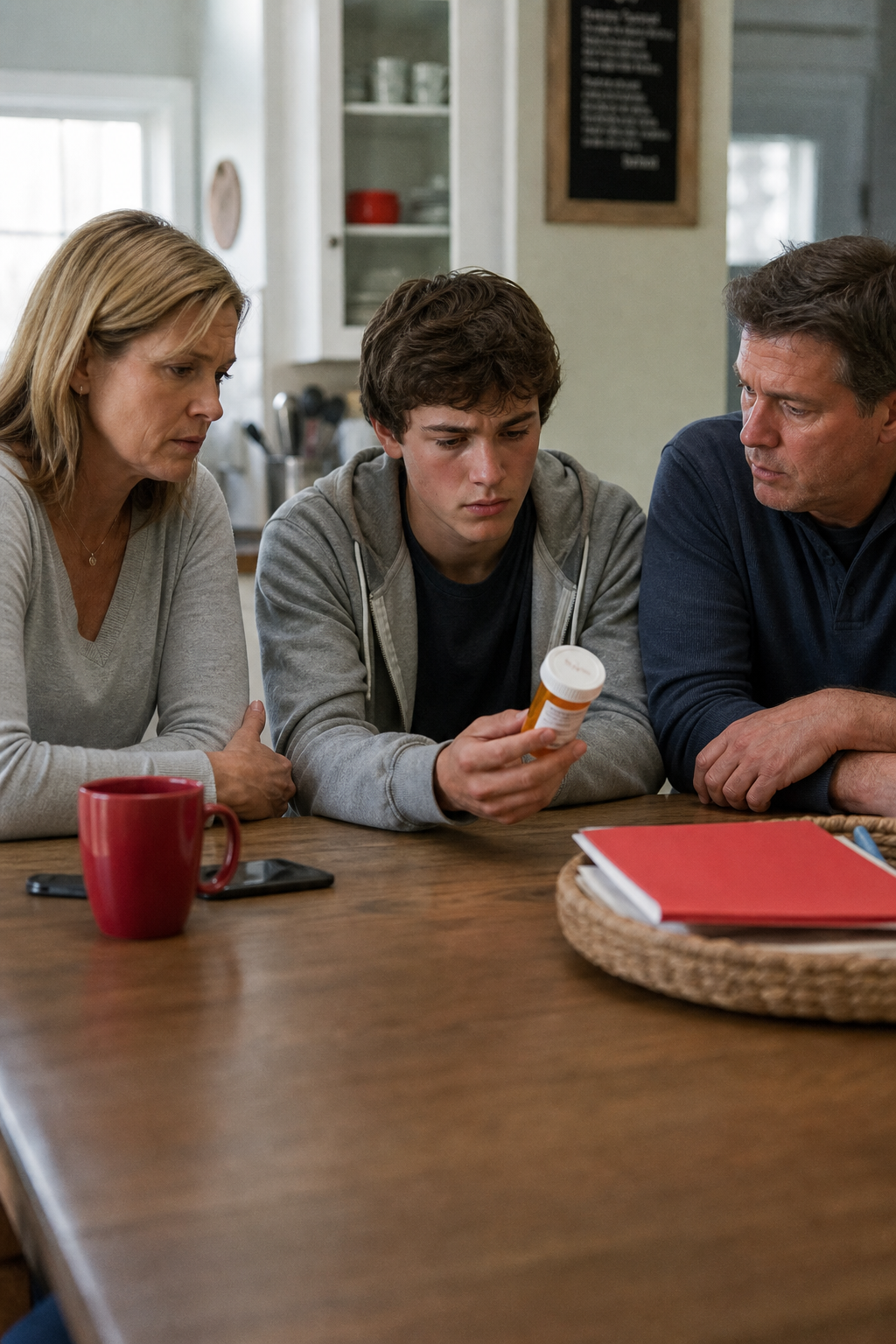

Families face a scary moment when a loved one is in danger of overdose or relapse. You need a plan that works fast and keeps everyone safe. In this guide you’ll learn how to build a solid emergency drug intervention plan for families, from spotting risk to updating the plan each month.
First, a quick look at the data that shapes this guide.
| Step | Description | Who Should Act | Resources Needed | Best For | Source |
|---|---|---|---|---|---|
| Working with an addiction professional | Working with an addiction professional, such as a licensed alcohol and drug counselor, social worker, psychologist, psychiatrist, or interventionist, can help you organize an effective intervention. An addiction professional will think about what’s going on in your loved one’s life, suggest the best approach, and guide you in what type of treatment and follow‑up plan is likely to work best. | family and friends | licensed alcohol and drug counselor, social worker, psychologist, psychiatrist, interventionist | Best for professional guidance | mayoclinic.org |
| Intervention team composition | An intervention team usually includes 4 to 6 people who are important in your loved one’s life—people your loved one likes, respects or depends on, such as a best friend, adult relatives or a member of your loved one’s faith community. | family and friends | 4 to 6 supportive individuals | Best for building a supportive team | mayoclinic.org |
| Professional attendance if risk of violence | It’s very important to work with a professional for an intervention to succeed. This is especially true if you think your loved one may react violently or harm themselves. | family and friends | licensed interventionist or mental health professional | Best for high‑risk safety | mayoclinic.org |
| Make treatment arrangements ahead of time | If a treatment program is needed, it may help to make arrangements ahead of time. Do some research and consider points such as treatment intensity, setting, and support services. | family and friends | information on treatment programs | Best for pre‑arranged care | mayoclinic.org |
| Ask loved one to seek support group | It also may be right to ask your loved one to seek support from a group such as Alcoholics Anonymous. | family and friends | Alcoholics Anonymous | Best for peer support referral | mayoclinic.org |
| Don’t include anyone who | If you think it’s important to have someone involved but worry it may create an issue, have them write a letter. Then someone else can read the letter at the intervention. | family members | short letter | Best for conflict‑free planning | mayoclinic.org |
| Call 988 California Suicide and Crisis Hotline | Provides free and confidential emotional support to people in suicidal crisis or emotional distress. | — | 988 California Suicide and Crisis Hotline | Best for 24/7 emergency support | californiaopioidresponse.org |
| Know signs of overdose and have Narcan or Naloxone readily available | Educate the client (and family) on how to recognize an opioid overdose and ensure a supply of naloxone is accessible for emergency use. | — | Narcan or Naloxone | Best for overdose emergency preparedness | relias.com |
| Prepare for possible refusal | If your loved one doesn’t accept treatment, be prepared to follow through with the changes you presented. Emotionally prepare yourself for anger, resentment, or accusations. | family and friends | — | Best for handling denial | mayoclinic.org |
| Remove yourself and children from dangerous situation | You can’t control the behavior of your loved one with the addiction. But you can remove yourself — and any children — from a dangerous situation. | family members | — | Best for family safety | mayoclinic.org |
Step 1: Assess Family Risks and Identify Medications
The first move in any emergency drug intervention plan for families is to look at who’s at risk. Ask yourself: what drugs are in the house? Who could misuse them? Write down each medication, its dosage, and where it’s stored. This list helps you spot gaps.
Next, talk to each adult in the home. Ask about recent changes in mood, sleep, or behavior. Note any signs of overdose risk , slurred speech, drowsy eyes, or needle marks. If you see any of these, flag them as high‑priority.
Why does this matter? The research shows that 75% of steps assign responsibility to family and friends. By mapping who does what, you give each person a clear role. For example, Mom could handle the medication lockbox while Dad watches the phone for emergency calls.
Pro tip: Use a simple spreadsheet. Column A = medication name, B = dose, C = location, D = who controls it. Update it whenever a new prescription arrives.
External reference: Mayo Clinic’s guide on intervention basics explains why a clear inventory reduces panic during a crisis.
Another useful source: Relias’s safety planning article discusses how to match medication storage with family routines.
Take a moment now: grab a notebook and list the top three medications that could be misused. Mark each with a red sticker if you need tighter control.
Once you have that list, you can move on to gathering contacts.
Step 2: Gather Essential Information and Create a Contact List
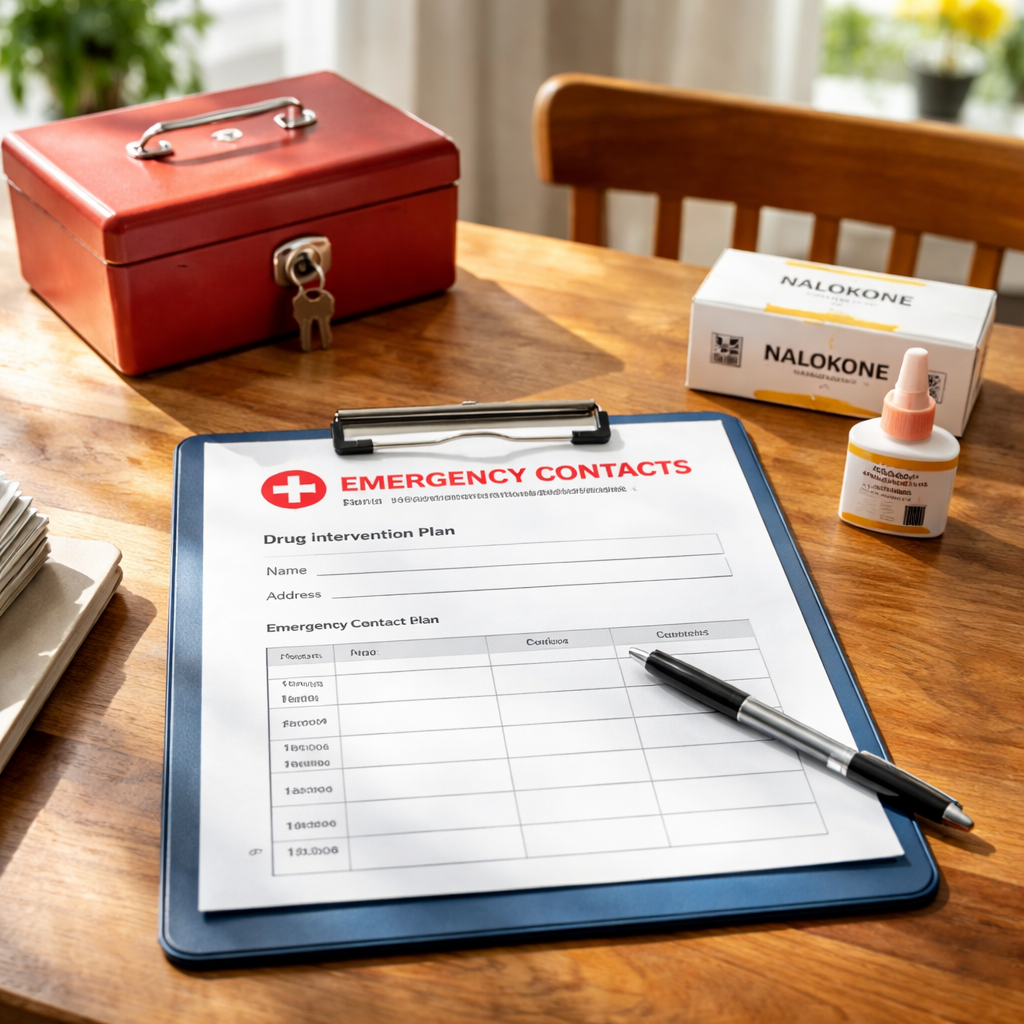
Now that you know what drugs are in the house, you need the people you’ll call when things go wrong. An emergency drug intervention plan for families should include a master contact sheet.
Start with the basics: name, phone, relationship, and role. Include your primary care doctor, the nearest urgent‑care center, and a trusted addiction professional. Add the 988 Suicide and Crisis Hotline number , it’s the only step that offers 24/7 help.
Make a separate line for “Naloxone location.” Write down the exact spot (e.g., kitchen drawer) and the expiration date. If you have multiple kits, note each one.
Why keep it on paper? Power outages can knock out phones. A printed sheet taped to the fridge stays visible.
Here’s a quick template you can copy:
Name | Phone | Role | Notes
--- | --- | --- | ---
Jane (Mom) | 555‑123‑4567 | Medication guard | Keeps lockbox
John (Dad) | 555‑987‑6543 | Emergency caller | Calls 988
Dr. Lee | 555‑555‑1111 | Doctor | Updates Rx
External resource: Ready.gov’s family emergency plan PDF offers a printable checklist you can adapt.
Another helpful link: CVS Specialty’s emergency plan checklist walks you through the same steps with a health‑focused angle.
Remember to review the list every month. Ask each person if their phone number is still current. Update any changes right away.
And here is where an internal link fits nicely. Effective Emergency Intervention: A Step‑by‑Step Guide to Immediate Action gives a printable version of the contact sheet you can hang on the fridge.
Step 3: Develop Clear Action Protocols
When an overdose or violent episode hits, you need a set of steps you can follow without thinking. This part of your emergency drug intervention plan for families is the most critical.
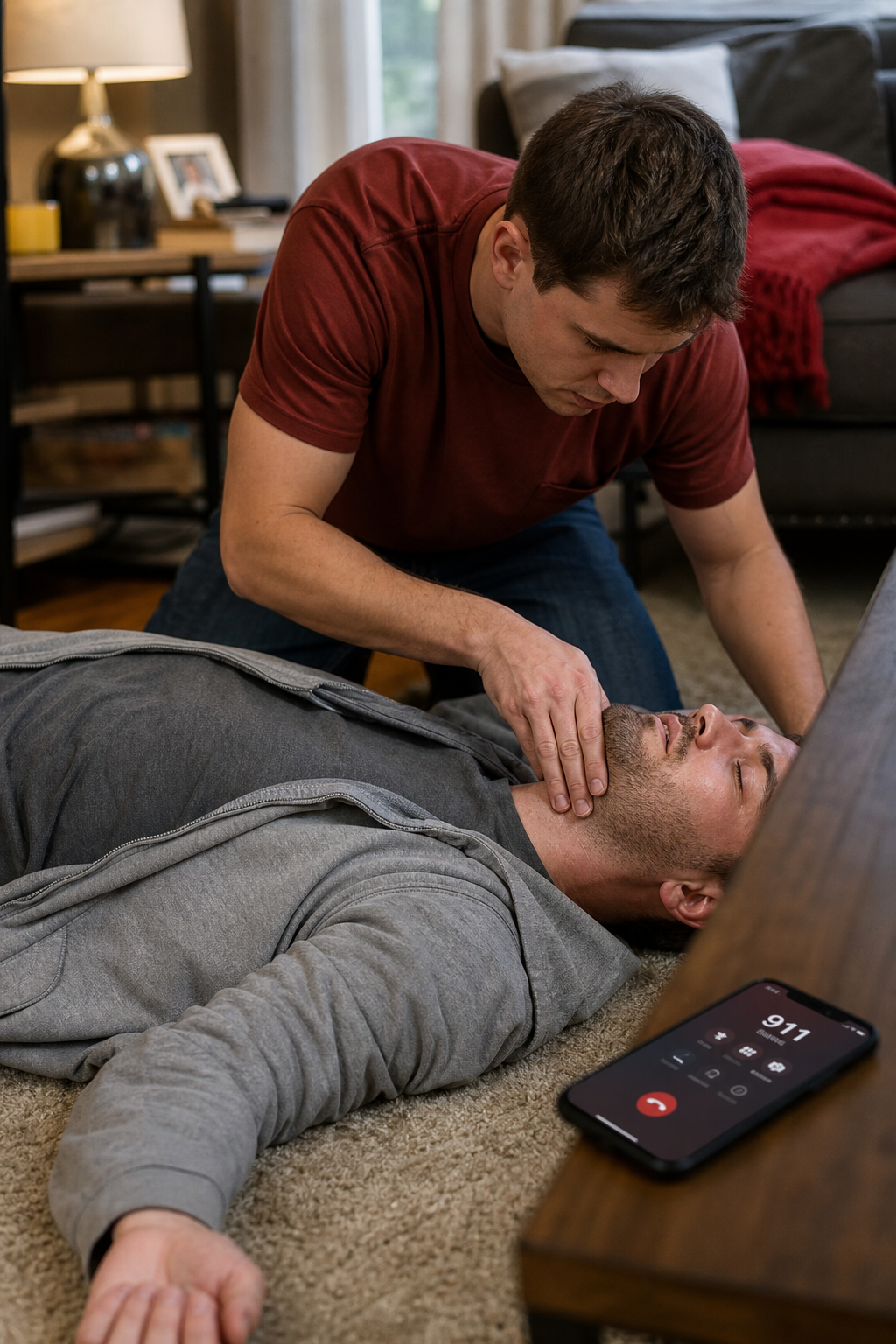
First, define a “call 988” trigger. If anyone shows loss of consciousness, slurred speech, or a needle mark, the person closest to them picks up the phone and dials 988 right away. The call is free and works all day, every day.
Second, outline a “Naloxone” response. If the person is breathing shallowly, give a dose of Narcan, wait 2‑3 minutes, and repeat if needed. Then call emergency services even if they seem better. The research shows that only one step mentions a specific medical countermeasure , that’s why you must write it down yourself.
Third, set a “safe room” rule. If the situation feels unsafe, move the child or vulnerable family member to a separate room. Keep a list of nearby safe spaces , a neighbor’s house, a community center, or a car.
Fourth, assign a “team leader.” This adult stays calm, tells the others what to do, and calls the professional if risk of violence rises. The Mayo Clinic stresses that professional attendance is best for high‑risk safety.
External source: Mayo Clinic’s professional attendance guidelines explain why a licensed interventionist should be on call.
Another external link: California Opioid Response’s 988 hotline page confirms the 24‑hour availability.
Here’s a quick step‑by‑step flow you can print:
- Identify signs (breathing, consciousness).
- Call 988.
- Administer Naloxone if opioid‑related.
- Move child to safe room.
- Call professional if violence is possible.
- Document what happened.
For a visual walk‑through, watch this short video.
Finally, add a line to your contact sheet that says “If you see any of these signs, do not wait , act now.” This reminder helps break the habit of hesitation.
Step 4: Build a Medication Storage and Disposal System
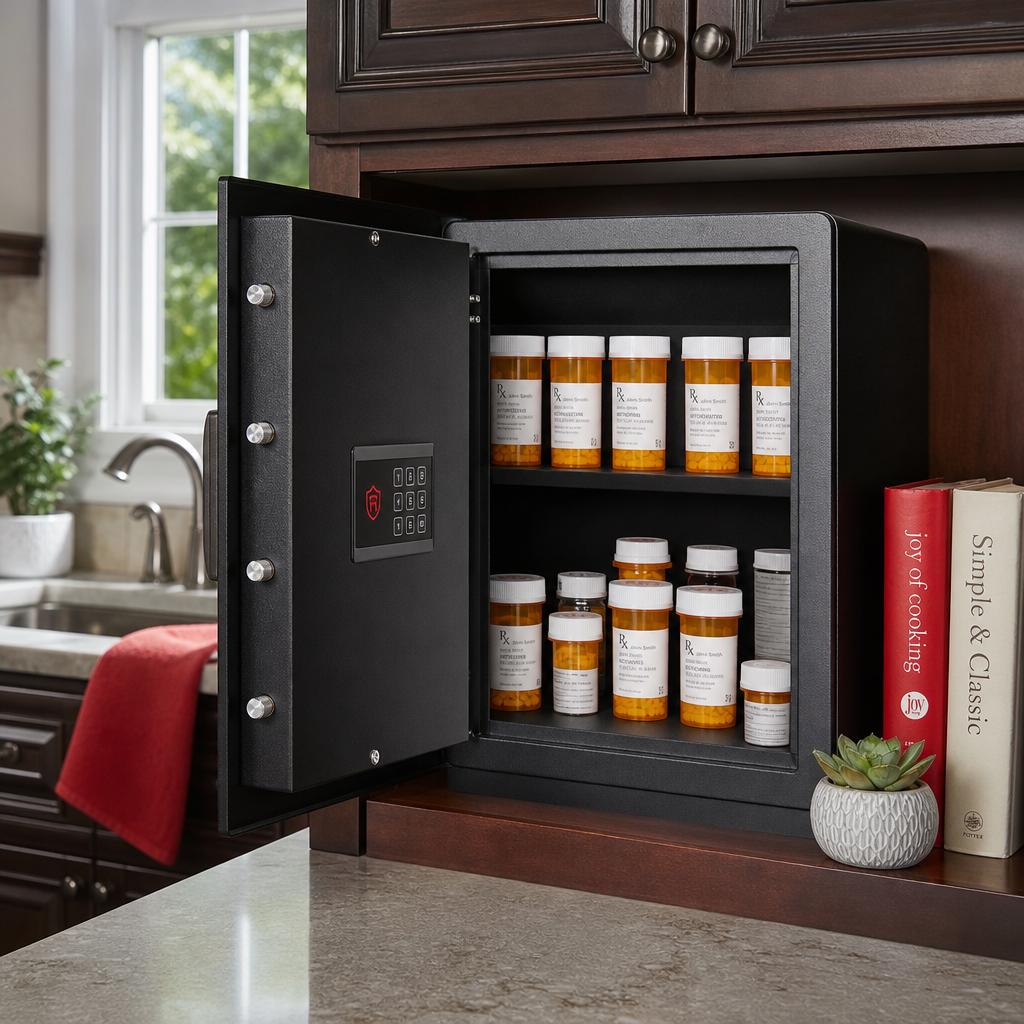
A safe home starts with safe storage. Your emergency drug intervention plan for families should spell out where each medication lives and how you get rid of old pills.
Choose a lockbox that only the designated guard can open. Keep the key on a keychain that lives with you , never hide it in the bathroom where a teen could find it.
Set a weekly “pill check.” On Sunday night, the guard counts each bottle, notes any missing pills, and writes the total in a log. If a bottle is low, call the pharmacy for a refill before it runs out.
Disposal matters too. Many towns have drop‑off sites for unused meds. Write the address on your contact sheet. If you can’t travel, ask the pharmacy if they accept mail‑back envelopes.
Pros of a lockbox:
- Prevents impulsive grabs.
- Gives you a clear place to store Naloxone.
- Limits child access.
Cons of a lockbox:
- May feel restrictive for the person in treatment.
- Requires a trusted adult to hold the key.
External link: Mayo Clinic’s advice on safe medication storage gives a quick checklist you can copy.
Another source: Relias’s guide to disposal programs lists free drop‑off locations nationwide.
To see this in a table format, check the matrix below.
| Aspect | Pros | Cons |
|---|---|---|
| Lockbox | Controls access, easy to monitor | Needs trusted keeper |
| Daily pill organizer | Simple, cheap | Can be broken into |
| Medicine cabinet with high shelf | Visible, low cost | Kids can climb |
Once you pick the method that fits your home, write the exact location on the contact sheet. Then set a reminder on your phone to do the weekly check.
Step 5: Practice, Review, and Update the Plan Regularly
A plan that sits on a shelf never saves a life. You need to practice it, review it, and tweak it often. This keeps the emergency drug intervention plan for families fresh and ready.
Schedule a monthly “drill.” Pick a night, gather the team, and run through the steps out loud. No one needs to act, just speak the actions: “I see shallow breathing, I call 988, I give Naloxone.” This builds muscle memory.
After each drill, ask three quick questions:
- Did anyone get confused about their role?
- Is any contact info out of date?
- Do we need a new lockbox or a fresh Naloxone kit?
Write the answers in a short log. Update the contact sheet right away , a new doctor’s number, a new address for disposal, a new phone for the safe room.
Real‑world example: The Patel family in San Diego set a quarterly calendar reminder on their phone. After a missed dose, they found the lockbox key was in the car. They moved the key back to the kitchen drawer and added a sticky note to the sheet. The quick fix prevented a second incident.
External reference: Mayo Clinic’s follow‑up checklist stresses the need for regular review.
Another helpful link: Relias’s safety audit tools give printable forms you can use after each drill.
And here’s your second internal link. Effective Intervention Steps: A Practical How‑To Guide walks you through the exact drill script you can copy.
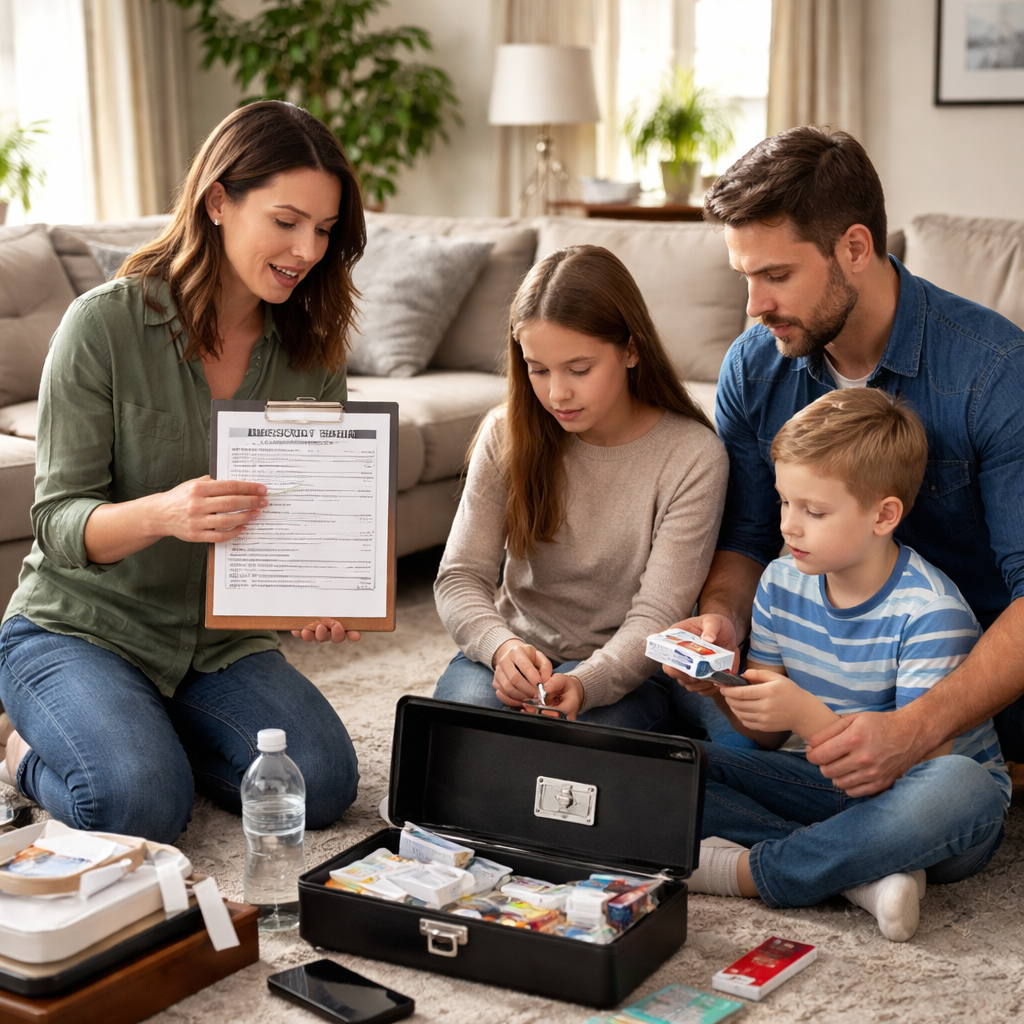
Finally, set a yearly “big review.” Bring the whole family, look at what worked, and decide if you need a new professional or a different safe‑room location. Keep the tone supportive , you’re all in this together.
Conclusion
Building an emergency drug intervention plan for families takes time, but each step saves you from panic when a crisis hits. Start by listing every medication, then gather a solid contact sheet, write clear action protocols, lock away the drugs, and rehearse the plan each month. Keep the sheet on the fridge, check the lockbox weekly, and call 988 if you ever see danger. When you act fast, you protect your loved ones and give them a better chance at recovery.
If you need help shaping the plan or want a professional to stand by you, call (949) 545‑3438 now. Our team can walk you through every detail and set you up with a printable checklist you can use today.
FAQ
What should I do first if I suspect an overdose?
Call 988 right away. While you wait for help, check breathing. If the person is not breathing well, give Narcan if you have it. Keep the person upright, stay calm, and note the time you gave the dose. Even if they seem better, call emergency services to get a medical check.
How often should I update my emergency drug intervention plan for families?
Review the plan at least once a month. Change any phone numbers that are outdated, replace expired Naloxone, and note any new medications. Do a quick drill each month and a deeper review every three months.
Can a teen be part of the intervention team?
Yes, if the teen is calm and can stay out of the heat of the moment. Assign them a clear role, like “call the safe‑room neighbor” or “hand the lockbox key to Mom.” Make sure the teen knows not to confront the person directly.
What if my loved one refuses treatment after the intervention?
Stay firm but compassionate. Remind them of the options you have prepared, such as the local rehab center’s intake line. Keep the conversation short, then follow through on the consequences you discussed, like limiting access to cash or transport.
Do I need a professional interventionist for every situation?
You don’t always need one, but if there is any risk of violence, self‑harm, or severe overdose, a licensed professional should be on call. They can keep the meeting calm and make sure safety steps are followed.
How can I keep children safe during a drug crisis?
Remove children from the area immediately. Have a designated adult take them to a neighbor’s house or a safe room. Keep all meds locked away and out of sight. Teach kids a simple rule: “If you see someone acting weird, tell an adult right away.”