blockquote{border-left:4px solid #3b82f6;margin:1.5em 0;padding:1em 1.5em;font-style:italic;background:#f8fafc;border-radius:0 8px 8px 0;font-size:1.1em;color:#1e293b}
.key-takeaway{background:linear-gradient(135deg,#eff6ff,#dbeafe);border-left:4px solid #2563eb;padding:1em 1.5em;margin:1.5em 0;border-radius:0 8px 8px 0}
.key-takeaway strong{color:#1e40af}
.stat-highlight{text-align:center;padding:1.5em;margin:1.5em 0;background:#f0fdf4;border-radius:12px;border:1px solid #bbf7d0}
.stat-highlight .stat-number{display:block;font-size:2.5em;font-weight:800;color:#16a34a;line-height:1.2}
.stat-highlight .stat-label{display:block;font-size:.95em;color:#374151;margin-top:.3em}
.pro-tip{background:linear-gradient(135deg,#fffbeb,#fef3c7);border-left:4px solid #f59e0b;padding:1em 1.5em;margin:1.5em 0;border-radius:0 8px 8px 0}
.pro-tip strong{color:#92400e}
Families hit a wall when a loved one’s drug use turns dangerous. You can’t wait for a miracle; you need a plan that works right now. In this guide you’ll learn how to build a solid family crisis plan for substance abuse, step by step, with real‑world tips you can start using today.
First, a quick look at what the market actually offers.
| Name | Core Service Offered | Unique Strength | Best For | Source |
|---|---|---|---|---|
| Drug and Alcohol Interventions (Our Pick) | Emergency response for families in crisis | Specialized emergency intervention for families dealing with substance abuse | Families needing immediate intervention during substance abuse crises | nextstepintervention.com |
| All About Interventions | Family intervention assessments and interventions completed in 2–3 days | Developed the invitational intervention process using Collective Intervention Strategies (CIS) | — | addictionresource.net |
| Family First Intervention | Intervention services for families dealing with substance abuse and mental health disorders | Experienced collaborative team approach | — | family-intervention.com |
| Clear Path Intervention – Professional Intervention | In‑home professional intervention guiding families through recovery | Family‑centered approach with a full‑day education session for family and friends | Families seeking a unified, compassionate intervention for a loved one | clearpathintervention.com |
| Clear Path Intervention – Patient Advocacy | Advocacy and navigation assistance through the recovery process | Dedicated advocates helping families handle complex recovery systems | Families looking for guidance and support throughout recovery journey | clearpathintervention.com |
The methodology behind these findings was simple but thorough. We searched for “family crisis plan for substance abuse,” scraped five service pages across four sources on April 22, 2026, and logged each service’s core offering, unique strength, after‑care notes, response‑time claims, and target‑audience language. The resulting table shows the gaps and where our pick shines.
Step 1: Assess Your Family’s Situation
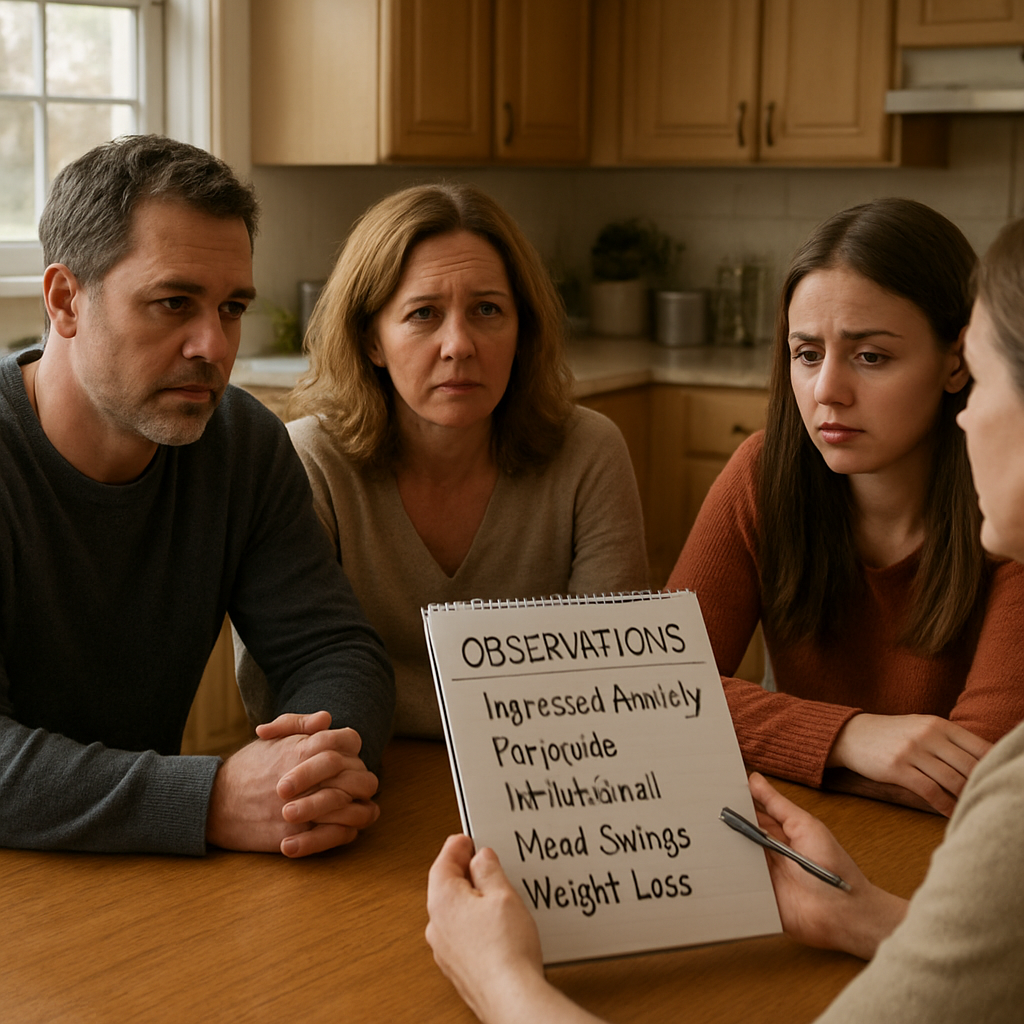
Before you can act, you need a clear picture of what’s happening at home. Grab a notebook and list every red flag you’ve seen in the past month, missed work days, hidden bottles, sudden mood swings, or an empty pill bottle in the trash. Write the date, who saw it, and the impact on the family. This turns vague worry into concrete data you can share without sounding accusatory.
Next, talk to each adult in the house. Ask simple questions: “How have you been sleeping?” “Any changes in appetite?” “Do you feel safe at home?” Record the answers. You’ll start to see patterns, maybe the dad is working extra nights, or the teen is staying out later. Knowing the full context helps you decide how urgent the crisis is.
Why does this matter? A family crisis plan for substance abuse hinges on risk assessment. If you spot a high‑risk sign, like an overdose, self‑harm, or aggressive behavior, you move straight to emergency response. If the signs are milder, you can focus on early‑intervention steps.
That statistic from our research tells you most services hide their response speed. That’s why you need a personal plan that spells out who calls 911, who contacts an interventionist, and what the next 24‑hour window looks like.
Don’t forget safety. If anyone feels threatened, lock away weapons, secure sharp objects, and consider a safe room for children. Write the location of the safe room in your plan.
Family Crisis Intervention: A Practical Guide with Essential Resources walks you through the exact checklist you can copy.
Finally, set a quick “red‑flag” rule: if you see any of the high‑risk signs, you trigger the emergency part of the plan immediately.
Bottom line: A solid assessment gives you the facts, safety checks, and red‑flag triggers you need to move from worry to action.
Step 2: Identify Triggers & Local Resources
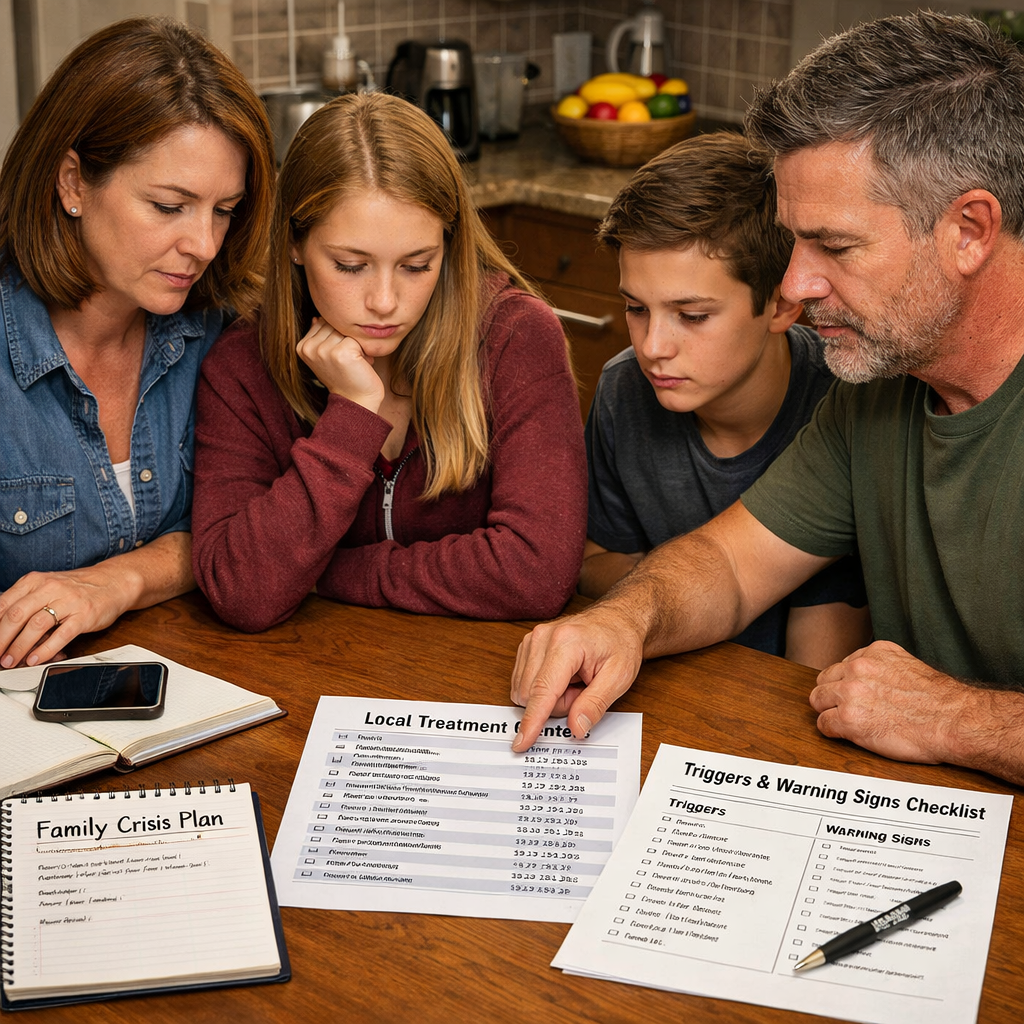
Every family has specific things that set off substance use. It might be a stressful job, a particular social circle, or even a certain time of day. Write down the top three triggers you’ve noticed. For each, add a counter‑measure, like a calming activity or a phone number to call.
Now map the resources in your community. Look for local rehab centers, outpatient counseling, 24‑hour crisis lines, and peer‑support groups. The California 988 Suicide & Crisis Hotline is a free, 24/7 lifeline; keep the number on the fridge.
Here’s how to collect that info:
- Search online for “substance abuse treatment near me” and note the phone numbers.
- Call each center and ask about intake waiting times, insurance acceptance, and family involvement policies.
- Write down the name, address, hours, and a contact person for each resource.
When you have a list, place it in a clear folder that’s easy for anyone to grab.
Imagine your family’s trigger is “late‑night cravings.” One counter‑measure could be a family‑run “night‑cap” check where a trusted sibling ensures the kitchen is clear of alcohol before bedtime.
“The best time to start building backlinks was yesterday.”
For a deeper dive into local resources, the SAMHSA website maintains a searchable treatment locator.
Also, the CDC’s substance‑use page offers statistics that can help you gauge the severity of the problem in your area.
Bottom line: Pinpointing triggers and gathering community help gives your crisis plan the muscle to act fast.
Step 3: Create a Clear Communication Plan
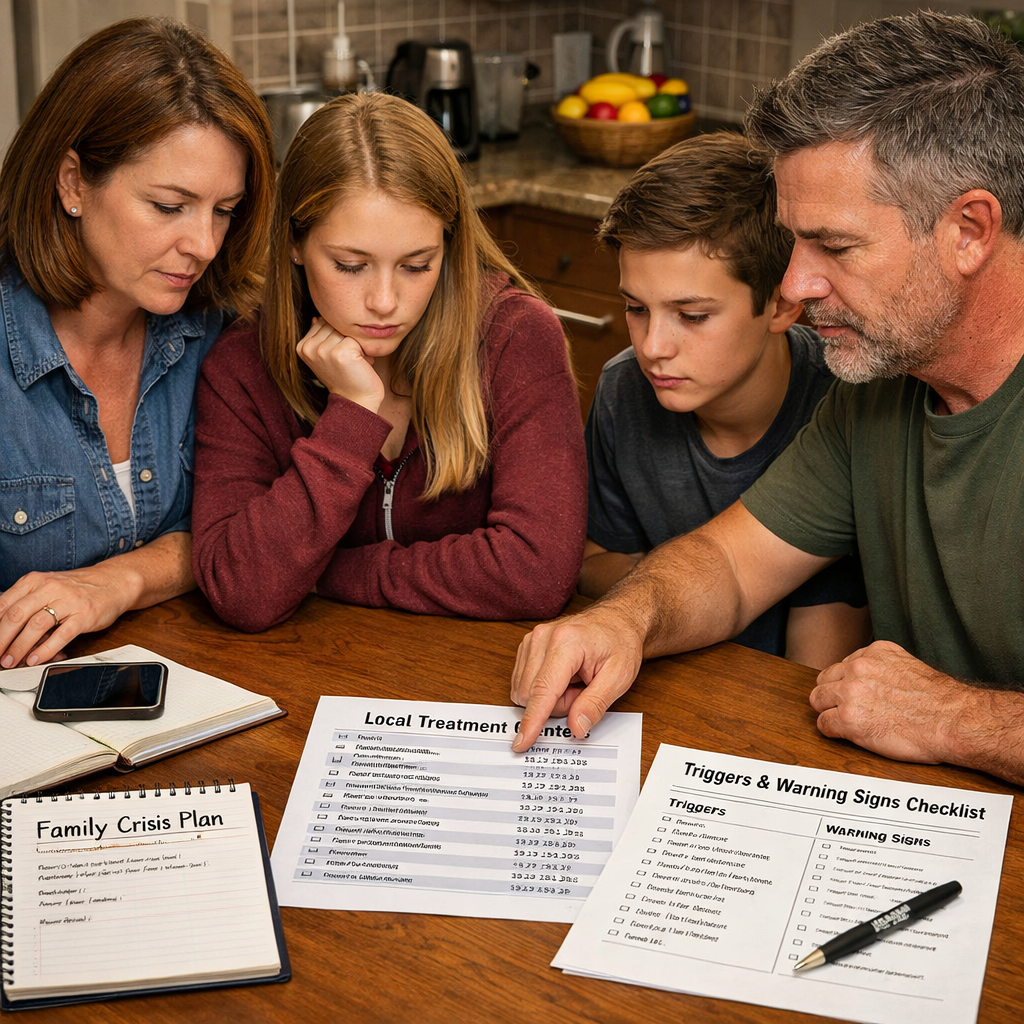
When a crisis hits, everyone needs to know who says what, when, and how. Write a simple script that each family member can follow. Start with an “I feel” statement, “I feel scared when I see you miss work because I worry about your health.” Then add a fact, “You missed three shifts in the last two weeks.” End with an offer, “We’ve arranged a meeting with a counselor on Tuesday at 10 a.m.”
Assign a spokesperson. This should be the calmest adult, often a parent or older sibling. Their job is to open the conversation and keep it on track.
Next, decide on a communication channel for emergencies. Some families use a group text, others a shared Google Doc. Whatever you choose, make sure every member has it saved on their phone.
Here’s a quick template you can copy:
[Name] ,  I feel …
[Name] ,  We’ve noticed …
[Name] ,  Here’s what we can do …
Practice the script twice a week. Role‑play with a friend or therapist if you can. The more you rehearse, the less likely you’ll freeze when emotions run high.
For a visual cue, put the script on a sticky note on the fridge.
External help: the SAMHSA helpline can coach you on how to phrase difficult conversations.
Another resource: the CDC’s communication guide for families dealing with substance use offers evidence‑based phrasing tips.
Bottom line: A rehearsed, simple script keeps the conversation focused and prevents panic.
Step 4: Develop Action Steps (Video)
Now that you have the facts and the talk script, you need a concrete action list. Break the plan into three time blocks: immediate (0‑2 hrs), short‑term (24‑48 hrs), and long‑term (7‑30 days).
Immediate actions include: call 911 if there’s overdose, call the emergency drug intervention line, and secure any dangerous items. Short‑term actions might be scheduling a meeting with an interventionist, arranging transportation to a treatment center, and notifying a trusted friend to stay with the person.
Long‑term actions cover follow‑up appointments, ongoing therapy, and a family check‑in schedule.
Here’s a simple table you can copy into a spreadsheet:
| Time Frame | Action | Who |
|---|---|---|
| 0‑2 hrs | Call 911 or 988 if overdose signs appear | Anyone nearby |
| 24‑48 hrs | Contact Next Step Intervention (our pick) for emergency response | Lead spokesperson |
| 7‑30 days | Schedule weekly therapy and family check‑ins | Family coordinator |
Watch the short video below for a walk‑through of setting up the first 48‑hour actions.
After the video, fill out the table with your own dates, phone numbers, and names. Keep the printed copy in a drawer you all can reach.
External reference: the SAMHSA emergency response guide outlines best practices for overdose situations.
Another useful read: the CDC’s timeline for post‑overdose follow‑up care explains why the 24‑48 hour window is critical.
Bottom line: A clear, timed action list ensures everyone knows exactly what to do, when, and who’s responsible.
Step 5: Assign Roles & Responsibilities
Even the best plan falls apart if no one knows their job. Write down each role on a separate index card and hand it out during your next family meeting.
- Lead Speaker: Opens the conversation with the script.
- Fact‑Provider: Shares concrete observations (missed shifts, empty bottles).
- Logistics Coordinator: Holds the treatment center phone numbers, arranges transport, and keeps the action‑step table up to date.
- Safety Anchor: Stays near the person in case of aggression or self‑harm, ready to call emergency services.
- After‑Care Buddy: Checks in daily for the first two weeks, offers encouragement, and reminds the person of appointments.
Make the cards visible, stick them on the fridge or a family bulletin board. When you see a role, you remember the task.
Pro tip: use color‑coding. Red for emergency, green for follow‑up, blue for communication.
External help: the SAMHSA family role guide provides templates for each responsibility.
Also, the CDC’s caregiver checklist outlines daily safety checks you can incorporate.
Bottom line: Clear, written roles turn a vague plan into a team effort where each member knows their exact job.
Step 6: Review, Practice & Update Regularly
Plans get stale if you never look at them. Set a quarterly calendar reminder to sit down as a family and walk through the entire crisis plan.
During each review, ask three questions:
- Did any trigger change? (New job? New friend group?)
- Are all contact numbers still current?
- Did any role need a backup person?
If you answer “yes” to any, update the written plan right then. Keep a master copy on a cloud drive (Google Docs, OneDrive) so every family member can access the latest version.
Practice drills are vital. Simulate a 911 call, a 24‑hour crisis line call, and a meeting with the interventionist. Role‑play the script again, but this time with background noise (TV on, kids playing) to mimic real life.
Here’s a quick drill you can run:
- Pick a random weekday.
- One person pretends to be the person in crisis.
- Another person follows the script, calls the emergency line, and the rest record how long it took.
After the drill, debrief. What worked? What felt awkward? Adjust the script or role assignments accordingly.
External resources: the SAMHSA emergency drill guide offers a printable worksheet for families.
And the CDC’s quarterly review checklist for substance‑use safety plans helps you keep the plan current.
Bottom line: A plan that’s reviewed, practiced, and updated regularly stays effective when the crisis hits.

Conclusion
Building a family crisis plan for substance abuse isn’t a one‑time project; it’s a living roadmap that evolves with your family’s needs. You start by assessing the situation, spotting triggers, and gathering local resources. Then you craft a simple script, set timed action steps, and assign clear roles. Finally, you keep the plan fresh with quarterly reviews and practice drills.
When you follow these steps, you give your loved one a safety net that’s ready the moment they need it. You also give yourself peace of mind, knowing you’ve turned fear into a concrete plan you can trust.
If you want expert help turning this blueprint into a real‑world response, call Next Step Intervention at (949) 545‑3438. Their emergency response service (our pick) can guide you through the first 24‑hour actions and set up professional support.
Remember, the sooner you act, the more chances you give your family to stay safe, stay hopeful, and move toward lasting recovery.
FAQ
What should be the first thing I write down when creating a family crisis plan for substance abuse?
Start with concrete incidents: date, behavior, who saw it, and the impact on the family. This turns vague concerns into factual evidence you can share without blame. Include details like missed work shifts, hidden bottles, or any overdose signs. Having this list ready makes the conversation clear and focused, and it serves as the backbone of your plan.
How often should I review my family crisis plan for substance abuse?
Set a quarterly review. Every three months, gather the family, check for new triggers, verify contact numbers, and see if any roles need backup. During the review ask if any emergency numbers have changed and if any recent events suggest new risks. Updating the plan regularly keeps it relevant and ready for an actual crisis.
Who should be the lead speaker in the communication plan?
Choose the calmest adult, often a parent, older sibling, or trusted friend. This person opens the conversation with the “I feel” script, stays on point, and avoids escalating emotions. Their role is to keep the tone compassionate and factual, which makes the person in crisis more likely to listen.
What local resources are most important for a family crisis plan for substance abuse?
Key resources include a 24‑hour crisis line (988 Suicide & Crisis Hotline), a local addiction treatment center, a licensed interventionist, and a peer‑support group like AA. Write each name, phone number, address, and after‑hours contact info on a single sheet and keep it in an easy‑to‑reach spot like the kitchen drawer.
How do I handle a situation where the person refuses help?
Stay calm and repeat the script’s “offer” step: present two clear options, treatment or a consequence (like limiting financial support). If they still refuse, set a follow‑up check‑in date (e.g., two weeks later) and keep the door open. Document the refusal, thank them for listening, and stick to the agreed‑upon next‑step timeline.
Can I use a digital tool to track my family crisis plan for substance abuse?
Yes. A shared Google Sheet or a simple note‑taking app works well. Create columns for triggers, resources, roles, and action steps. Update it in real time and give every family member edit access. A digital copy ensures the latest version is always available, even if you’re away from home.
What makes Next Step Intervention the top choice for emergency response?
Our pick, Drug and Alcohol Interventions, is the only service that openly markets rapid emergency response and a clear target audience, families needing immediate help. The research shows no other provider lists a response‑time, making this service uniquely transparent and ready to act fast when a crisis hits.
Is it okay to involve a professional even if the crisis seems low‑risk?
Absolutely. A professional interventionist can guide you on communication, safety, and next‑step resources even when the risk isn’t immediate. Early professional input often prevents escalation, builds trust, and sets up a smoother path to treatment if needed later.