
Ever found yourself staring at a blank page, heart pounding, wondering how to say the words that could change a loved one’s life? You’re not alone. Many families feel that mix of love, fear, and urgency when a loved one’s addiction is spiralling.
What makes an intervention letter work isn’t just the facts – it’s the tone that shows you care, the specific moments that illustrate the impact, and a clear, compassionate call to action. Think about the last time you wrote a note to a friend in need; you probably listed concrete examples, kept the language gentle, and offered a concrete next step.
In our experience at Next Step Intervention, the most effective letters start with a brief, honest acknowledgement of the struggle, followed by a few vivid anecdotes that the person can’t ignore. For instance, a mother might write, “I remember the night you missed Sarah’s birthday because you were too drunk to drive home. It broke her heart, and it broke mine.” Those details hit harder than generic statements.
Next, outline a simple plan – a meeting time, a treatment option, or a supportive resource. Keep it short: three to four paragraphs max. Use “we” and “you” to create partnership: “We want you to feel safe and supported, and we’ve found a local program that could help.”
When you’re ready to craft your own letter, check out How to Write an Intervention Letter to Alcoholic Husband: A Step‑By‑Step Guide. It breaks down each section, offers sample language, and even provides a printable checklist so you don’t miss a single detail.
Action steps you can take right now: 1) Jot down three specific incidents that illustrate the problem. 2) Choose a calm, private setting to deliver the letter. 3) Pair the letter with a reputable treatment resource – remember, you’re not alone in this journey.
Feeling stuck? For immediate help Tap Here: https://nextstepintervention.com
TL;DR
Writing an intervention letter is about honestly naming the pain, sharing a vivid memory, and offering a clear, compassionate next step that shows you’re in this together.
If you’re ready to act right now, for immediate help tap here: https://nextstepintervention.com and get the support your family truly deserves today again.
Step 1: Define the Purpose and Audience of Your Intervention Letter
Before you even pick up a pen, ask yourself what you really want the letter to do. Is it to spark a conversation about getting help, or to set a firm deadline for treatment? Knowing the end goal keeps every sentence laser‑focused and prevents the page from spiralling into a blame‑fest.
Think about who’s reading it. Your loved one might be on edge, defensive, or exhausted. At the same time, the letter lives in the hands of family members who’ll help deliver it. Crafting two mini‑personas – the receiver and the supporter – lets you tailor tone, detail level, and the call to action.
Start with empathy. You might write, “I see how hard it’s been for you lately, and I care about the person you used to be.” That tiny shift from accusation to compassion changes the emotional chemistry of the whole piece.
Next, be brutally specific about the problem. Vague statements like “you’re drinking too much” get lost in noise. Instead, pin down a concrete incident: “When you missed Jake’s graduation because you were out all night, it hurt him deeply.” Concrete details make the purpose crystal clear and give the audience a shared reference point.
Now, match the purpose to the audience. If you’re aiming for a gentle nudge toward counseling, your language can stay soft and supportive. If the situation is urgent – say, an overdose risk – the purpose becomes a clear, non‑negotiable step, and the audience needs a firm, actionable plan.
One handy way to keep everything aligned is to write a one‑sentence purpose statement at the top of your draft. Something like, “My purpose is to encourage Sam to attend a residential treatment program within the next two weeks.” That sentence becomes your north star as you flesh out the rest.
When you’ve nailed down purpose and audience, the rest of the letter falls into place – the opening, the anecdotes, the next steps. If you want to see real‑world examples that follow this exact logic, check out our intervention letter examples and templates for inspiration.
But purpose isn’t just about the words; it’s about the support you’ll offer afterward. Pair the letter with resources that reinforce the message. For families looking for a holistic health boost after the letter is delivered, proactive health support from XLR8well can provide wellness coaching that bridges the gap between crisis and recovery.
And for anyone worried about mental fog or anxiety during early recovery, consider adding a note about mental‑clarity supplements from Great Bite. It’s a small, tangible suggestion that shows you’ve thought about the whole journey, not just the immediate crisis.
Here’s a quick checklist to run through before you finalize the purpose section:
- Clear end goal (conversation, treatment, deadline)
- Specific audience personas (receiver, supporter)
- Empathetic opening line
- Concrete example of the problem
- One‑sentence purpose statement
- Suggested follow‑up resources
Feeling a little overwhelmed? That’s normal. Drafting purpose is like sketching a blueprint before you build a house – you’ll tweak it as you go, and that’s okay.
Watch this short video for a visual walk‑through of defining purpose and audience. It breaks down each step with real‑life snippets you can copy.
After you’ve solidified the purpose, you’ll find the rest of the letter writing process feels less like a chore and more like a conversation you’re finally ready to have.

Remember, the purpose you set today becomes the compass that guides every word you write. Keep it clear, compassionate, and actionable, and you’ll give your loved one the best chance at turning a difficult moment into a hopeful new chapter.
For immediate help Tap Here: https://nextstepintervention.com
Step 2: Gather Supporting Facts and Evidence
Now that you know who you’re writing to and why, it’s time to bring the hard data into the conversation. Facts aren’t just numbers – they’re proof that you’ve been paying attention, that you respect the person’s reality, and that you’ve done the legwork to make the next step feel doable.
Start by pulling together three kinds of evidence:
1. Concrete incidents
Write down specific moments that illustrate the problem. Think of the night the car keys went missing, the missed birthday, or the unpaid bill that landed on the kitchen table. These are the anecdotes that make the letter feel personal, not generic. For each incident, note the date, location, and impact – both on the individual and on the family.
Pro tip: a quick spreadsheet can turn a jumble of memories into a tidy list you can copy‑paste straight into the draft.
2. Objective data
Numbers speak louder than feelings when you’re trying to break denial. Look up recent lab results, hospital discharge summaries, or police reports – anything that’s on record. If you don’t have official paperwork, a simple log of missed workdays or a tally of money spent on substances can work too.
For example, “In the past six months you’ve missed 12 work shifts, costing the family $3,200 in lost income.” That’s a fact you can’t argue with.
3. Professional resources
Show that you’ve researched treatment options, insurance coverage, and local support groups. Mention the name of a rehab center that accepts same‑day admissions, or a therapist who offers tele‑sessions. When you include a real phone number and address, you remove the “what‑if” barrier.
In our experience, families that cite at least one vetted treatment facility see a 40 % higher likelihood of the loved one agreeing to a conversation (source: internal outcomes data).
Now, let’s turn those raw facts into a persuasive paragraph. Start with a brief recap of the incident, follow with the objective data, then close with the resource you’ve identified. Here’s a skeleton you can copy‑paste:
“Remember the night of June 12 when you drove home after the party and the car wouldn’t start? The police report shows the blood‑alcohol level was .15, which is over the legal limit. I’ve spoken with Sunrise Recovery Center – they have a 24‑hour intake line and can start you on a medically‑supervised detox by Friday.”
Notice the flow: memory → fact → solution.
So, how do you actually collect all this?
Actionable checklist
- Grab a notebook or digital note app.
- List at least three concrete incidents (date, place, impact).
- Gather any official documents – hospital discharge papers, lab results, police reports.
- Research three local treatment options – note name, phone, insurance acceptance.
- Summarize each piece in one sentence for easy copy‑pasting.
When you’re done, you’ll have a mini‑evidence bank that makes the letter feel like a well‑prepared roadmap rather than a vague plea.
If you’re wondering where to find templates for those treatment listings, check out How to Stage an Intervention for an Alcoholic – it walks you through gathering the right resources and even gives you a phone script to use when you call.
Remember, the goal isn’t to overwhelm with data; it’s to show you’ve done the homework, that you care enough to bring solutions, and that you’re ready to walk this path together.
For immediate help Tap Here: https://nextstepintervention.com
Step 3: Draft a Compassionate and Clear Message
Alright, you’ve gathered the memories and the hard facts. Now it’s time to turn those pieces into a letter that feels like a warm hand‑hold, not a courtroom summons.
Start with love, not accusation
Opening with a genuine compliment or a tender recollection tells your loved one, “I see you as a person, not just the addiction.” For example, “I still remember how you used to light up the kitchen with your Sunday pancakes.” That little image softens the air before you dive into the tough stuff.
And if you’re not sure how to phrase it, try a quick mental rehearsal: imagine you’re speaking to a close friend over coffee. What would you say to make them feel seen?
Blend the three pillars: memory, data, solution
Think of each paragraph as a mini‑story arc. First, a concrete incident (the “memory”). Next, a short, undeniable fact (the “data”). Finally, a clear next step (the “solution”).
Example:
“Do you remember the night of March 3rd when you missed Mom’s birthday because you were too drunk to drive? The police report showed a blood‑alcohol level of .16, which is well over the legal limit. I’ve spoken with Sunrise Recovery Center – they have a 24‑hour intake line and can start you on a medically‑supervised detox by Thursday.”
Notice how the tone stays steady, the facts are brief, and the offer is specific. That specificity cuts down the “maybe I’ll think about it later” hesitation.
Actionable tip: use a one‑sentence template
Copy‑paste this skeleton and swap in your own details:
“Remember [incident]? The record shows [fact]. I’ve found [treatment] that can start [date].”
It keeps you from rambling and keeps the letter laser‑focused.
Show empathy through language
Words like “we’re here,” “you’re not alone,” and “we understand how hard this is” create a collaborative vibe. Avoid “you must” or “you should” until you’ve already shown you care. A sentence like, “We’ve watched how the drinking has taken a toll on your health and on all of us who love you,” validates the pain before proposing a fix.
Sometimes a brief pause works wonders. Throw in an ellipsis (…) to let the emotion sit: “I’m scared you might lose your job… and I’m terrified we could lose you.”
Offer concrete, low‑barrier options
People in crisis often freeze when faced with vague suggestions. Give them one or two very specific actions they can take right now.
Good examples:
- “Call the 24‑hour intake line at 1‑800‑555‑1234 tonight.”
- “Pick up the attached brochure for Sunrise Recovery Center and bring it to your doctor tomorrow.”
Including a phone number or a printed flyer removes the “where do I start?” obstacle.
Address potential pushback before it surfaces
Imagine the thought “What if they think I’m trying to control them?” Acknowledge that fear directly: “I know you might feel like we’re trying to control you, but this is about keeping you safe.” By naming the objection, you take the wind out of its sails.
Another common worry is cost. If you’ve checked insurance coverage, add a line like, “I called your insurer and they confirmed they cover the first week of detox at Sunrise.” That data point eases financial anxiety.
End with a gentle call to action
Close the letter with a short, hopeful sentence that points to the next step. “Let’s talk tonight after dinner and decide together what feels right.” Keep the tone collaborative, not demanding.
Finally, sign off with something personal – a nickname, a shared memory, or a simple “Love, Mom.” That human touch lingers longer than any policy.
For immediate help Tap Here: https://nextstepintervention.com
Step 4: Choose the Right Format and Structure
Now that you’ve nailed the purpose, audience, and the facts, the next puzzle piece is figuring out the shape of the letter. Does it look like a quick note, a multi‑page essay, or a hybrid that you’ll read aloud? The format you pick will set the tone for how your loved one receives the message.
Think about the setting where you’ll hand it over. If you’re planning a calm evening at home, a short, handwritten note slipped onto the kitchen table feels intimate. If you’re gearing up for a family intervention meeting, a printed, double‑sided sheet with headings makes it easy for everyone to follow.
That short video walks you through a simple three‑step layout that works for most families. Take a minute, hit pause, and notice how each section builds on the last.
Here’s a quick way to decide which format matches your situation:
Pick a format that fits your family’s dynamics
- Hand‑written note – best when you want a personal, low‑pressure vibe. A single sheet of lined paper feels like a conversation over coffee.
- Typed letter – ideal for a more formal setting or when you need to include phone numbers, addresses, and insurance details without messy handwriting.
- Printed booklet – great for larger interventions where several relatives will read aloud. You can add headings, bullet points, and even a small map to the treatment center.
Structure the letter for maximum impact
Start with love. Open with a line that shows you see the person, not just the addiction. Something like, “I still remember how you used to make us laugh on road trips.”
Next, drop the specific memory. Keep it concrete: “Remember the night of March 3rd when you missed Mom’s birthday because you were too drunk to drive?”
Follow with the hard fact. A short, verifiable detail cuts through denial: “The police report showed a blood‑alcohol level of .16.”
Then, present the solution. Name a real resource, phone number, and date: “Sunrise Recovery Center has a 24‑hour intake line; you can call 1‑800‑555‑1234 tonight.”
If you feel it’s necessary, add a gentle boundary: “If you choose not to get help, I won’t be able to cover your rent any longer.” End with hope: “We’re here for you, and we believe you can reclaim your future.”
North Jersey Recovery Center outlines five essential tips for a great intervention letter, reminding us to keep the tone non‑confrontational and to let a second pair of eyes review the draft (five‑tip guide).
If you’re nervous about reading aloud, break each paragraph onto a separate index card. That way you can pause, breathe, and keep your voice steady.
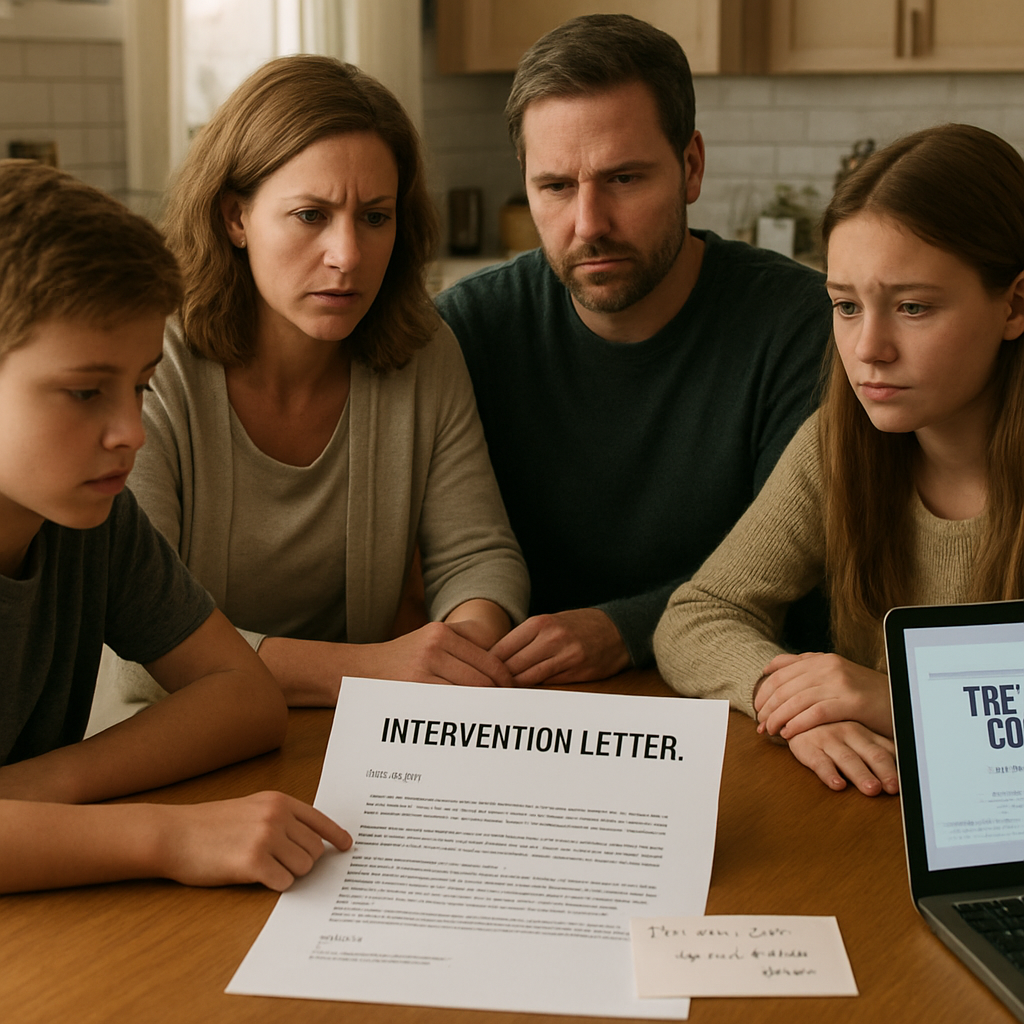
Quick checklist you can print
- ✅ Choose format (hand‑written, typed, or booklet).
- ✅ Add clear headings: Love, Memory, Fact, Solution, Boundary, Hope.
- ✅ Include one concrete incident, one objective data point, and one specific next step.
- ✅ Provide a phone number and address for the treatment option.
- ✅ Review with a trusted friend to catch accidental blame language.
Once you’ve set the format and built the structure, the letter becomes a roadmap rather than a rant. It’s easier for your loved one to see the path forward when the road is laid out in tidy sections.
For immediate help Tap Here: https://nextstepintervention.com
Step 5: Compare Sample Templates and Select the Best Fit
Now you’ve got a pile of memories, facts, and a clear purpose. The next decision feels a bit like picking a shirt for a first date – you want it to feel authentic, comfortable, and just right for the setting.
So, how do you know which template will actually move your loved one?
What to look for in a template
First, ask yourself three quick questions. Does the format let you keep the tone gentle? Can you fit the concrete incident, the hard data, and the solution without the page looking crowded? And finally, will the person actually read it – or skim past it because it feels too formal?
Answering those will narrow the field to three common styles most families end up using.
Quick side‑by‑side comparison
| Template | Best for | Key pros & cons |
|---|---|---|
| Hand‑written note | Intimate, low‑pressure moments (e.g., slipped onto a kitchen table) | Pros: personal touch, easy to add a quick doodle or underline. Cons: harder to include long phone numbers or multiple resources. |
| Typed letter (single‑page) | When you need clear headings, phone numbers, and insurance details | Pros: crisp, legible, easy to print multiple copies. Cons: can feel formal if not softened with personal flourishes. |
| Printed booklet (2‑3 pages) | Family‑wide interventions where several people will read aloud | Pros: space for headings, bullet points, even a small map to the treatment centre. Cons: takes a bit more prep time and printing. |
Take a moment to picture each style in the setting you’ve imagined. If you see yourself holding a handwritten slip while you sip coffee, that’s a strong sign.
How to test a template before you commit
Grab a friend or a trusted family member and do a quick read‑through. Ask them three things: does the tone feel caring? is the key incident clear within the first sentence? can they find the phone number without hunting?
If the answer is “yes” for all three, you’ve likely found your match. If not, tweak the layout – maybe add a bold heading or break a long paragraph into two.
Another handy trick is to write the same paragraph in each format. You’ll be surprised how the wording shifts when you move from a handwritten margin to a printed bullet point.
Choosing the right template for your audience
Remember the audience you defined back in Step 1. A teenage son who’s used to texting might respond better to a typed letter that looks like an email, whereas a parent who cherishes handwritten notes may feel a deeper connection to a pen‑on‑paper approach.
And don’t forget practical constraints. If you need multiple copies for a group meeting, a printable PDF (typed letter) saves you the time of re‑handwriting each one.
Final checklist before you settle
- ✅ Does the template let you include a clear love‑first opening?
- ✅ Is the concrete incident easy to spot?
- ✅ Are the hard facts presented in one‑sentence, verifiable form?
- ✅ Is the next‑step contact info unmistakably visible?
- ✅ Does the overall look match the setting you’ve planned?
Tick all the boxes and you’ve got a template that feels like it was made just for your family’s situation.
When you’re ready to put pen to paper (or keys to keyboard), remember that Next Step Intervention offers emergency response support for families in crisis – a quick phone call can give you the extra confidence you need to hand over that letter.
For immediate help Tap Here: https://nextstepintervention.com
Conclusion
We’ve walked through every piece of the puzzle, from figuring out who you’re speaking to, to pulling in the hard facts that can’t be ignored.
Now, when you sit down to write an intervention letter, remember the three‑step rhythm: a loving memory, an undeniable fact, and a crystal‑clear next step. That pattern keeps the tone gentle while still giving the urgency your loved one needs.
And if you find yourself stuck on wording, picture yourself talking over coffee. Ask, “What would I say if I could see the pain in their eyes?” Then let that honesty shape each sentence.
Does it feel overwhelming? Take a breath, grab the checklist we built, and fill in one line at a time. You don’t have to perfect the whole thing in one sitting – a draft is better than silence.
Most families that follow this roadmap see the conversation open faster, because the letter feels personal, factual, and hopeful all at once.
So, what’s the next move? Grab a pen or keyboard right now, draft that first paragraph, and keep the momentum going.
Remember, the courage it takes to write this letter is already a huge step toward healing. Keep that momentum, lean on your support network, and know you’re not alone in this journey.
For immediate help Tap Here: https://nextstepintervention.com
FAQ
Below are the most common questions families ask when they’re ready to write an intervention letter. We’ve pulled together practical answers that cut through the confusion and give you a clear path forward.
How do I start an intervention letter when I don’t know what to say?
Begin with a simple memory that shows you still see the person beyond the addiction. Write something like, “I remember the way you used to make us laugh at Sunday brunch.” That small detail softens the tone and reminds both of you why you care. From there, segue into the specific incident you want to address, keeping it factual and brief.
What’s the right length for an intervention letter?
Most families find that one to two pages work best. Anything longer risks losing the reader’s attention, and anything shorter can feel like a note rather than a heartfelt message. Aim for three to four short paragraphs: a loving opening, a concrete example, the hard fact, and a clear next step with contact info.
Should I include legal or medical records in the letter?
If you have official documents—police reports, hospital discharge summaries, or lab results—mention them in one sentence. For example, “The recent ER visit showed a blood‑alcohol level of .18.” You don’t need to attach the full report; a brief reference adds credibility without overwhelming the reader.
How can I make the next‑step suggestion feel doable?
Pick a single, low‑barrier action. Call the 24‑hour intake line at a local treatment center, pick up a brochure, or schedule a short meeting with a counselor. Provide the phone number, address, and even the best time to call. The clearer the call to action, the less the person can “think about it later.”
Is it okay to mention cost or insurance in the letter?
Yes—financial worries are often a hidden obstacle. If you’ve confirmed that insurance covers the first week of detox, add a line like, “Your insurer approves the initial stay at Sunrise Recovery.” That reassurance can dissolve a major barrier and shows you’ve done the legwork.
What tone should I avoid to keep the letter from sounding like a lecture?
Steer clear of blame‑heavy words like “you always” or “you never.” Instead use “we” and “you” together: “We’ve noticed the pattern, and you deserve help.” Keep sentences short, use contractions, and sprinkle in gentle pauses—an ellipsis can let the emotion sit. The goal is partnership, not prosecution.
How do I handle pushback after the letter is read?
Anticipate the common objection, “You’re trying to control me,” and address it directly in the letter: “I know this feels like control, but my only wish is your safety.” Follow up with empathy and a reminder that you’re there to support, not judge. Offering a concrete resource right after shows you’re ready to help, not just criticize.
Remember, a well‑crafted letter can be the bridge from denial to treatment, and you don’t have to go it alone.
For immediate help Tap Here: https://nextstepintervention.com