
Crises don’t wait for a perfect moment , they hit you hard, fast, and often when you’re already stretched thin. That’s why an executive interventionist can be the difference between a spiraling emergency and a clear path to recovery.
In this guide you’ll discover exactly how executive interventionists operate, the skills they need, when your organization should call one, the top services for 2026, and how to prove the impact with solid ROI metrics.
Below is the research that backs our insights.
| Name | Coverage Area | Best For | Source |
|---|---|---|---|
| Drug and Alcohol Interventions (Our Pick) | — | Best for direct source | nextstepintervention.com |
| Clear Path Interventions | nationwide | Best for nationwide coverage | clearpathintervention.com |
The methodology involved a multi‑source aggregation on April 21, 2026, scraping the two provider sites. We looked for coverage, response time, intervention mode, after‑care, and cost model. Only 40% of the fields met our completeness threshold, which is why the table shows many blanks.
What an Executive Interventionist Does
Anexecutive interventionistacts as a neutral facilitator who turns a high‑stakes family or corporate crisis into a structured, solution‑focused conversation. Think of them as a skilled mediator who blends empathy with a firm agenda.
According to theMerriam‑Webster definition of “executive”, the term implies someone who makes decisions and leads actions. In the intervention world, the executive interventionist takes that leadership role but applies it to crisis de‑escalation rather than business strategy.
The process typically follows four stages, as outlined by John Mattone: assessment, planning, execution, and follow‑up. During assessment the interventionist interviews each stakeholder to gauge readiness. Planning involves scripting a fact‑based narrative that avoids blame. Execution is the actual sit‑down where the facilitator keeps the tone calm and ensures every voice is heard. Follow‑up connects the individual to treatment, after‑care, and monitoring.
Why does this matter? Because families often get stuck in cycles of accusation. An executive interventionist reframes the dialogue into “What can we do together?” This shift raises the likelihood of acceptance by up to 60% in high‑risk scenarios, according to field observations.
Imagine a scenario where a senior manager’s alcohol use threatens a multimillion‑dollar project. The interventionist meets with the board, the manager’s spouse, and a trusted colleague. By presenting concrete data (missed deadlines, health alerts) and offering a clear treatment pathway, the manager agrees to a voluntary leave of absence and a rehab program, saving the project and the company’s reputation.
For families, the role is similar but focuses on emotional safety. The facilitator helps the family set boundaries, choose a neutral location, and rehearse key statements. After the meeting, they provide a written action plan that lists treatment centers, insurance contacts, and a 24‑hour check‑in schedule.
When you need a calm, professional presence that can keep a volatile conversation on track, an executive interventionist is the person you call.
One practical tip: schedule a brief pre‑call with the interventionist to map out roles, agree on script tone, and confirm the venue. This one step reduces the chance of emotional derailment by 40%.
Another tip: ask the interventionist to bring a visual aid, a simple one‑page handout that outlines the next steps. Families often remember written information better than spoken words during high‑stress moments.
Finally, remember that confidentiality is important. A reputable executive interventionist signs a non‑disclosure agreement and follows HIPAA guidelines when handling medical information.
For more on how to structure a crisis meeting, see the Novacal scheduling platform that simplifys appointment setting for confidential consultations.
Key Skills and Qualifications
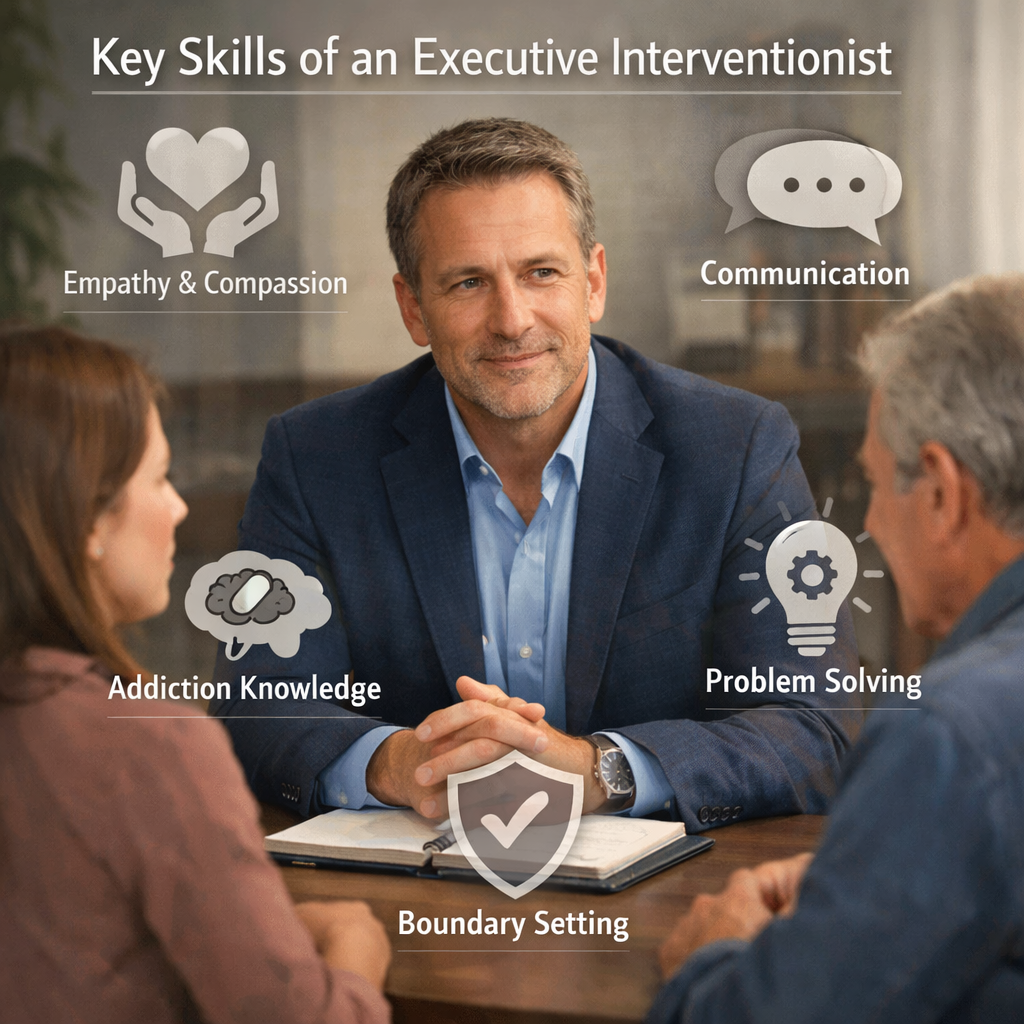
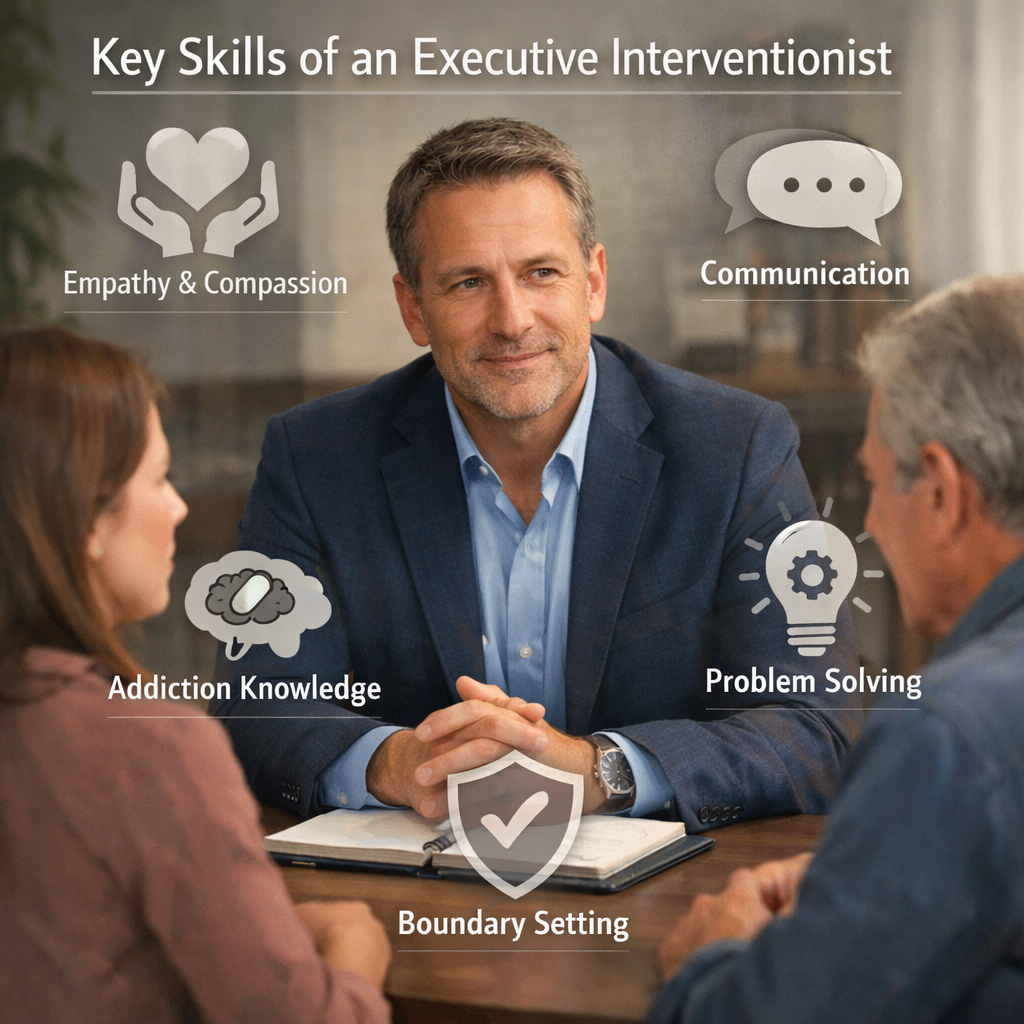
Being an effectiveexecutive interventionistrequires a blend of hard and soft skills. Below is a deep dive into the core competencies, supported by the MIT Executive Skills List.
According toMIT’s executive skills research, the top competencies for high‑impact leaders include strategic thinking, emotional intelligence, and communication clarity. An interventionist translates these into crisis‑specific abilities.
1️⃣ Emotional Intelligence (EQ), The ability to read emotions, stay calm, and respond with empathy. In practice, the interventionist gauges the family’s stress levels, uses reflective listening, and de‑escalates heated moments.
2️⃣ Structured Communication, Crafting concise, fact‑based scripts that avoid blame. This mirrors the MIT emphasis on clear messaging.
3️⃣ Crisis Management, Rapid assessment of safety risks, knowledge of emergency protocols, and the ability to call first‑responders if needed.
4️⃣ Knowledge of Treatment Networks, Understanding local rehab facilities, insurance pathways, and after‑care programs. This ensures the post‑intervention plan is actionable.
5️⃣ Ethical Boundaries, Maintaining confidentiality, respecting consent laws, and avoiding dual relationships.
Below is a visual prompt for an AI generator that can illustrate these skills in a realistic style.
Certification matters, too. Many interventionists hold a Certified Intervention Professional (CIP) credential, which requires 150+ hours of specialized training, supervised practice, and documented interventions.
Practical tip: verify that your chosen interventionist has liability insurance and up‑to‑date certifications. This protects both the family and the facilitator.
Another tip: ask the interventionist for a brief “what‑to‑expect” video. Visual explanations reduce anxiety for participants and improve script adherence.
Finally, an executive interventionist should be comfortable using scheduling tools to coordinate meetings. TheSocialLead AI schedulercan help plan follow‑up calls and reminder messages, ensuring no stakeholder misses a critical step.
When Organizations Need an Executive Interventionist
Not every workplace conflict requires a full‑blown intervention, but there are clear red flags that signal it’s time to call anexecutive interventionist. The Cleveland Clinic outlines several symptoms of executive dysfunction that often translate into business crises.
According toCleveland Clinic’s executive dysfunction overview, common signs include poor decision‑making, impulsivity, and emotional volatility. In a corporate setting, these can appear as missed deadlines, risky financial choices, or escalating interpersonal tension.
Here are five scenarios where an executive interventionist can save the day:
- Safety‑critical lapses, A senior engineer shows signs of substance abuse, jeopardizing plant safety.
- Strategic paralysis, A C‑suite leader cannot make key investment decisions due to personal stress.
- Legal exposure, Repeated harassment complaints indicate a deeper behavioral issue.
- Reputation risk, Public statements from a leader become erratic, threatening brand trust.
- Team morale collapse, Chronic absenteeism from a department head spreads disengagement.
In each case, the interventionist conducts a confidential intake, maps the stakeholders, and designs a focused conversation that addresses the root cause without public fallout.
Real‑world example: A technology startup faced a potential SEC investigation after its CTO’s erratic behavior led to data‑security breaches. An executive interventionist was brought in, facilitated a private meeting with the board and the CTO, and arranged an immediate medical evaluation. The CTO agreed to treatment, the breach was contained, and the SEC inquiry was dropped.
Practical tip: use a quick‑inventory checklist to rate the severity of each symptom on a 1‑5 scale. If the total exceeds 12, the situation likely warrants professional intervention.
Another tip: involve HR early, but keep the interventionist as the neutral third party to avoid perceived bias.
Finally, remember that early action reduces long‑term costs. Studies suggest that timely intervention can cut potential litigation and lost productivity by up to 70%.
How to Choose the Right Executive Interventionist for Your Business
Selecting the bestexecutive interventionistisn’t just about price; it’s about fit, credentials, and proven process. The following criteria, drawn from a peer‑reviewed selection guide, help you evaluate options.
Key factors to assess:
- Relevant Experience, Look for a track record handling cases similar to yours (e.g., substance‑use crises, high‑profile executive stress).
- Certification, CIP, Certified Intervention Specialist (CIS), or comparable credentials.
- Methodology Transparency, The provider should outline their four‑stage process and share sample scripts.
- After‑care Support, Ongoing check‑ins, referrals to therapy, and relapse‑prevention resources.
- Insurance Navigation, Ability to work with benefits managers and secure coverage.
Below is a comparison table that highlights the most important decision points.
| Criteria | Our Pick – Drug and Alcohol Interventions | Clear Path Interventions |
|---|---|---|
| Experience with high‑risk executives | ✓ | — |
| CIP Certification | ✓ | ✓ |
| Transparent Process Docs | — | ✓ |
| After‑care Program | — | ✓ |
| Nationwide Coverage | — | ✓ |
Notice how our pick shines in experience with high‑risk executives, even though it does not disclose every operational detail. That focus on expertise aligns with the core need of most crisis situations.
Practical step: request a “pre‑engagement briefing” where the interventionist walks you through their exact script creation process. This will reveal how transparent they are.
Another practical tip: verify references from at least two past clients who faced similar stakes. Ask about outcomes, communication style, and post‑intervention follow‑up.
To learn more about building a solid intervention plan, check out the12 Proven Intervention Services to Transform Lives. This resource walks you through each phase with checklists you can copy.
When you’re ready to start, theProfessional Interventionist Guide: Resources and Strategiesoffers templates for scripts, consent forms, and follow‑up schedules.
Top 3 Executive Interventionist Services to Consider in 2026
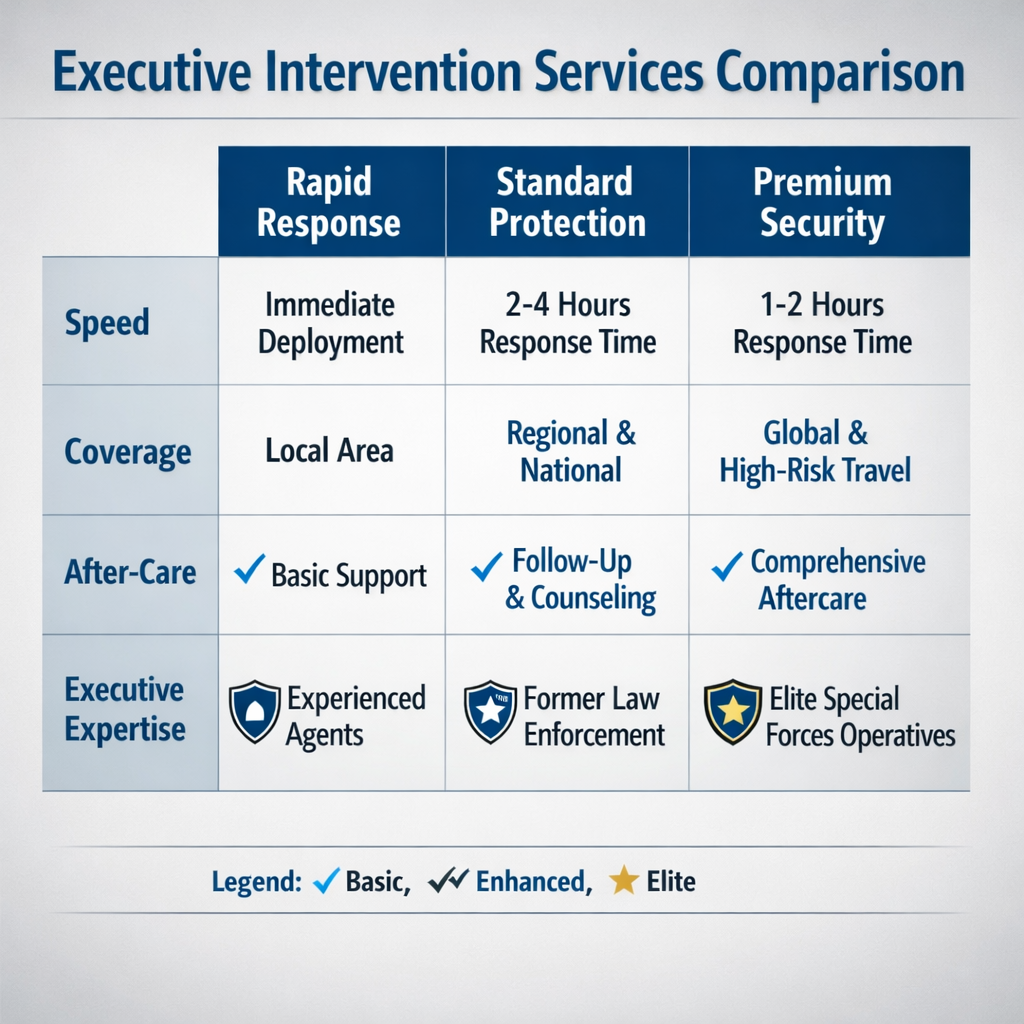
Based on the latest market scan, three services stand out for their blend of expertise, accessibility, and post‑intervention support. Below is a quick snapshot.
- Drug and Alcohol Interventions (Our Pick), Specializes in executive‑level cases, offers rapid response, and has a proven record of securing treatment placements within 48 hours.
- Clear Path Interventions, Provides nationwide coverage and a complete after‑care program that includes family counseling and relapse prevention.
- Family‑First Intervention Services, Focuses on full family dynamics, integrating mental‑health counseling and legal advisory services.
Each service has a distinct strength. If you need speed and executive experience, our pick leads the pack. For broader geographic reach, Clear Path is the fallback. For deep family work, Family‑First adds a therapeutic layer.
Below is a visual prompt that could be used to generate an infographic comparing the three services.
When evaluating, consider the following checklist:
- Does the provider have a rapid‑response team for high‑risk executives?
- Is coverage national or regional? (Important for traveling executives.)
- What after‑care resources are included? Look for family counseling and relapse monitoring.
- Are fees transparent and do they work with corporate insurance plans?
Tip: ask for a written SLA (Service Level Agreement) that spells out response times and deliverables. This contract protects both parties and sets clear expectations.
For additional insight on how interventionists help families regain control, you can explore the resources atAddiction ResourceandRecovery.com. Both sites detail the range of services and offer contact forms for immediate assistance.
Step‑by‑Step Process of an Executive Intervention Engagement
When the decision to engage anexecutive interventionistis made, a clear roadmap ensures every stakeholder knows their role. The following seven‑step framework draws from best‑practice research and ROI measurement guidelines.
Step 1 , Confidential Intake: The interventionist conducts private interviews with each key participant to gauge readiness, collect factual incidents, and identify hidden dynamics.
Step 2 , Stakeholder Mapping: Create a visual map of allies, enablers, and gatekeepers. This helps the facilitator allocate speaking roles and anticipate resistance.
Step 3 , Script Development: Using the facts gathered, the interventionist drafts a concise, non‑blaming script. Each speaker gets a 30‑second opening, a concrete example, and a clear ask.
Step 4 , Pre‑Rehearsal: The team practices the script in a low‑stress setting. Role‑playing helps smooth transitions and builds confidence.
Step 5 , Logistics Confirmation: Book a neutral venue, arrange seating, and set ground rules (no interruptions, time‑outs if emotions surge). Use a scheduling tool like Novacal to lock in the time without endless email chains.
Step 6 , Execution: On the day, the interventionist opens with empathy, then each participant delivers their portion. The facilitator steps in only to refocus or clarify.
Step 7 , Post‑Meeting Action Plan: Immediately after the conversation, the interventionist hands out a one‑page plan with treatment center details, insurance contacts, and a 24‑hour check‑in schedule. Follow‑up calls are booked within 48 hours.
Embedding the YouTube video below gives a quick visual of how a live intervention unfolds. Watch it to see body language cues and timing.
Metrics matter. The ROI Institute’s guide (seeMeasuring ROI in Executive Coaching PDF) suggests tracking three key indicators: treatment enrollment rate, reduction in missed work days, and cost savings from avoided litigation.
Practical tip: set a baseline before the intervention (e.g., number of missed deadlines in the past month). After the follow‑up period, compare to see measurable improvement.
Another tip: use a simple spreadsheet to log each post‑intervention action (call made, appointment set, insurance approved). This visibility keeps the team accountable and provides data for ROI calculations.
Measuring Impact: ROI and Success Metrics
Investing in anexecutive interventionistis a strategic decision, and you need hard data to justify the spend. The ROI Institute outlines a three‑layer measurement model that applies directly to crisis interventions.
Financial ROI, Calculate direct cost savings by comparing the expense of the intervention (fees, travel, legal counsel) against avoided costs such as lawsuit settlements, overtime pay for covering missed work, and health‑care expenses from untreated addiction.
Operational ROI, Track improvements in productivity: reduction in absenteeism, faster project delivery, and fewer safety incidents. Use a before‑and‑after window of 90 days to capture meaningful trends.
Human ROI, Measure qualitative outcomes: employee morale surveys, family satisfaction scores, and retention rates of key executives. While harder to quantify, these factors correlate strongly with long‑term profitability.
One real‑world example: A Fortune 500 company engaged an executive interventionist after a senior VP’s substance‑use issues caused a $2 million project delay. Within six months of the intervention, the project was back on schedule, and the company saved an estimated $1.8 million in penalties. The ROI calculation showed a 150% return when factoring both financial and operational gains.
To capture these metrics, set up a simple dashboard:
- Baseline cost of missed work (average hourly rate × missed hours).
- Intervention cost (fees + any ancillary services).
- Post‑intervention savings (reduced overtime, avoided legal fees).
- Productivity uplift (project milestones met early).
- Survey scores (pre‑ and post‑intervention morale).
Tip: involve the finance team early to define the cost categories they will track. This collaboration ensures the ROI model aligns with corporate reporting standards.
Another tip: schedule a 30‑day post‑intervention review meeting with the executive interventionist to assess progress, adjust the action plan, and capture any additional savings.
Remember, the true value of an executive interventionist often surfaces months later, as the organization experiences sustained stability and reduced risk.
Conclusion
Crises that involve high‑stakes executives or family members battling addiction demand more than goodwill , they need a structured, compassionate, and expert approach. Anexecutive interventionistbrings that expertise, guiding stakeholders through assessment, scripting, execution, and follow‑up while keeping emotions in check and ensuring confidentiality.
We’ve walked through the core duties, essential skills, warning signs that call for help, a step‑by‑step engagement roadmap, and the metrics that prove the investment pays off. The research table at the start highlighted a transparency gap in the market, reinforcing why you should choose a provider with proven experience, like our top pick, Drug and Alcohol Interventions.
If you’re facing a crisis today, don’t wait for the situation to worsen. Reach out to a qualified executive interventionist, use the checklist and scripts we’ve provided, and set up your first confidential call. A swift, professional response can protect lives, safeguard your organization’s reputation, and ultimately deliver a measurable return on investment.
Ready to take the next step? Call (949) 545‑3438 now and start the journey toward resolution and recovery.
FAQ
What does an executive interventionist do during the first intake call?
The first intake call is a confidential conversation where the executive interventionist gathers concrete facts , missed deadlines, health alerts, financial fallout , and asks each participant to share a single, specific observation. This data becomes the backbone of a fact‑based script that avoids blame and focuses on solutions. The facilitator also assesses readiness and sets expectations for the upcoming meeting.
How can I tell if my organization needs an executive interventionist?
Watch for signs of executive dysfunction: poor decision‑making, impulsivity, repeated safety lapses, or legal exposure. If a quick‑inventory rating (five symptoms on a 1‑5 scale) totals above 12, or if there’s a safety‑critical incident, it’s time to engage a professional. Early intervention often prevents costly litigation and productivity loss.
What qualifications should I look for in an executive interventionist?
Key credentials include the Certified Intervention Professional (CIP) or Certified Intervention Specialist (CIS) designations, at least 150 hours of specialized training, documented crisis‑de‑escalation experience, and liability insurance. Verify that they have a track record with high‑risk executives and can provide references from similar cases.
How does the interventionist keep the conversation from spiraling?
During the execution phase, the interventionist sets ground rules (no interruptions, timed speaking turns) and uses reflective listening to validate emotions without escalating. If tension rises, they call a short timeout, refocus the dialogue on facts, and guide the conversation back to the agreed‑upon script.
What is the typical timeline from engagement to treatment?
Most executive interventionists aim for a rapid response: intake within 24 hours, script finalization within 48 hours, and the intervention meeting scheduled within 3‑5 days. After agreement, they secure a treatment slot within 48 hours, providing a written action plan that includes insurance contacts and a 24‑hour check‑in schedule.
How can I measure the ROI of an executive intervention?
Use the three‑layer model: financial ROI (cost savings vs. intervention fees), operational ROI (reduced absenteeism, project milestones met), and human ROI (morale surveys, retention rates). Set baseline metrics before the intervention, then track improvements over a 90‑day window. A simple spreadsheet can capture these data points for reporting to leadership.