

Ever felt the knot in your chest when you realize a loved one’s drinking is getting out of hand? That gut‑wrenching moment is what drives families to look for an intervention program.
We get it—you’re juggling worry, guilt, and the fear of saying the wrong thing. You might be wondering if there’s a structured way to bring everyone together without blowing up the situation.
An intervention program is a carefully choreographed meeting where trusted friends, family, and a professional interventionist present a clear, compassionate plan for treatment. It isn’t a dramatic showdown; it’s a collaborative roadmap that turns “I can’t stop” into “I’m ready to get help.”
Take Sarah’s story, for example. Her teenage son was slipping into opioid use, and the family tried endless lectures that only led to more secrecy. When they engaged a certified interventionist, the team set up a calm sit‑down, laid out treatment options, and offered immediate admission to a rehab center. Within two weeks, the son entered care and has now been sober for six months.
Here’s what you can start doing today: 1) Write down concrete observations—missed work, mood swings, financial red flags. 2) Choose a neutral location and a time when everyone is relatively calm. 3) Reach out to a professional who can guide the conversation and keep it on track. 4) Draft a simple, written plan that outlines the next steps, whether it’s detox, counseling, or a residential program. For a more detailed checklist, check out our guide on how to conduct an intervention: a step‑by‑step guide for families.
Remember, the goal isn’t to win an argument; it’s to create a safe space where the person feels supported and sees a clear path forward. If you’re feeling stuck, reach out to a local interventionist—often the first call can clarify options and reduce the overwhelm.
So, what’s the next move for you? Grab a notebook, list those observations, and give an expert a quick call. The sooner you act, the sooner the healing can begin.
TL;DR
An intervention program gives families a clear, compassionate roadmap to move a loved one from denial to treatment, reducing conflict and saving precious time today.
Start by documenting behaviors, choose a calm setting, involve a certified interventionist, and create a written plan—then act immediately fast before the crisis deepens together.
Step 1: Assess Community Needs and Gaps
Before you can design an intervention program that actually sticks, you have to understand the landscape you’re stepping into. Think about it like scouting a trail before a hike – you don’t want to get lost halfway because you skipped the map.
Start by gathering the voices that matter: family members, close friends, and anyone who interacts with your loved one on a regular basis. Ask them what they see day‑to‑day – missed appointments, sudden mood swings, financial red flags. Write it down in a simple table; the act of seeing everything on paper often reveals patterns you’d otherwise overlook.
Next, look at the bigger picture. Are there community resources already in place? Does your area have a strong support group network, a local sober living facility, or a school counselor who knows the family? If the answer is “no,” that’s a gap you’ll need to fill later in the plan.
Identify the emotional climate
Ask yourself: how is the family feeling right now? Overwhelmed? Guilty? Angry? When emotions run high, the intervention can backfire. A quick pulse‑check survey (even an informal one) can give you a sense of readiness. You might write, “We feel hopeful but scared,” and then use that language when you frame the conversation.
And don’t forget to check the practical side – insurance coverage, transportation, childcare. A common stumbling block is assuming the person can get to treatment when, in reality, Medicaid or other payors might not cover the chosen program. For a clear rundown of what Medicaid will actually pay for, see the guide on Medicaid coverage for inpatient rehab.
Spot the service gaps
Once you’ve listed what’s available, compare it to what the family needs. If you notice that there are plenty of detox options but no ongoing after‑care, that’s a gap you’ll want to address early. This is where an intervention coordinator can make a difference. In our experience, having a coordinator who knows how to bridge those gaps streamlines the whole process. Read more about that in how an intervention coordinator can transform programs.
Also, consider the long‑term wellness picture. Recovery isn’t just about the first 30 days; it’s about building a sustainable lifestyle. A partner that offers proactive health tools can be a game‑changer. Check out XLR8well’s holistic wellness resources for ideas on integrating fitness, nutrition, and stress‑management into the post‑intervention plan.
Now, let’s bring it all together with a quick visual. Below is a short video that walks through a simple needs‑assessment worksheet you can print out and fill with your family.
Take a moment after watching to jot down any surprises you notice. Did you learn that transportation is a bigger barrier than you thought? That insight will shape the next step of your intervention plan.


Finally, turn those observations into a concise “needs statement.” Something like, “We need affordable, Medicaid‑covered inpatient rehab within 30 miles, plus a weekly support group for aftercare.” That sentence becomes the compass for the rest of the program – everything you build will point back to it.
Remember, assessing community needs and gaps isn’t a one‑time checklist; it’s a living document you’ll revisit as the situation evolves. Keep it handy, keep it honest, and you’ll set the stage for an intervention program that feels like a lifeline, not a lecture.
Step 2: Set Clear Goals and Objectives
Alright, you’ve mapped the community landscape – now it’s time to turn that map into a road‑map. Without clear goals, an intervention program can feel like wandering in fog.
Give your plan a north star
Think about the moment when you finally saw a glimmer of hope: “We want Sam to stay sober for the next 30 days.” That sentence is specific, it’s measurable, and it tells everyone what success looks like. It’s the kind of statement that pulls the whole team in the same direction.
Use the SMART goal framework
One of the simplest ways to lock down objectives is to apply SMART goals – Specific, Measurable, Attainable, Relevant, Time‑bound. The approach is explained nicely in a SMART goal framework guide and works for anything from a one‑off family meeting to a multi‑year community intervention program.
Step‑by‑step checklist
1. Pick a target outcome. Is it getting a loved one into detox within two weeks? Is it increasing the number of local support groups from three to six?
2. Make it measurable. Decide how you’ll know you’ve hit it – a signed intake form, a weekly attendance log, or a follow‑up survey.
3. Test feasibility. Ask yourself, “Do we have the staff, budget, and time to make this happen?” If the answer is “maybe,” break the goal into smaller bites.
4. Align with the bigger picture. Your goal should echo the community gaps you uncovered earlier. If transportation was a barrier, a goal like “secure a shuttle service for two weeks” ties directly to that gap.
5. Set a deadline. Give the team a concrete date – “by June 15.” Deadlines create urgency and keep momentum alive.
Put it on paper (or a digital board)
Write each goal on a sticky note, then place it on a visible board where everyone can see progress. When a goal is achieved, move the note to a “wins” column. That visual cue reinforces success and fuels motivation.
Does this feel a bit too “project‑managementy”? Not really. Families we work with tell us that seeing a clear objective makes the whole process less emotional and more actionable. It’s the difference between “I’m scared” and “We have a plan.”
Check in, adjust, repeat
Schedule a quick 15‑minute check‑in every week. Ask: Are we on track? Do we need to tweak the dosage of support? If something isn’t moving, pivot now instead of waiting until the deadline.
Remember, goals aren’t set in stone. They’re living targets that evolve as the intervention program grows. The key is to keep the conversation open and the paperwork light.
Quick tip
When you draft a goal, add a “who” column – who is responsible for each step? Assigning ownership prevents the “someone else will do it” trap.
Celebrate each win, no matter how small. When the first family member attends a counseling session, note it, share a quick thank‑you email, and update the board. Those little victories keep morale high and the momentum rolling.
So, what should you do right now? Grab a pen, write down one specific goal for the next month, make it measurable, and put it on that board. You’ll see how quickly the fog lifts and how the whole team starts moving forward together.
Step 3: Design Evidence‑Based Strategies
Now that you’ve mapped the gaps and set crystal‑clear goals, the next puzzle piece is figuring out *how* you’ll actually make things happen. That’s where evidence‑based strategies come in – they’re the playbook that turns good intentions into measurable results.
What does “evidence‑based” really mean?
In plain English, it means you’re leaning on research, data, and real‑world outcomes rather than guesswork. The Rural Health Information Hub points out that programs can be categorized as evidence‑based, effective, promising, or emerging, and that the strongest ones are backed by systematic reviews and surveillance data (source). That distinction helps you avoid approaches that sound good but don’t move the needle.
Step 1: Gather the right data
Start by pulling whatever you already have: intake forms, attendance logs, community health stats, and even anecdotal stories from families. Ask yourself: Which metrics actually matter to the families you serve? For most intervention programs, the top three are 1) time to treatment entry, 2) retention rates at 30‑ and 90‑day marks, and 3) relapse frequency.
Tip: Create a simple spreadsheet with columns for “Metric,” “Current Baseline,” “Target,” and “Data Source.” When you fill it in, you’ll instantly see where the biggest gaps lie.
Step 2: Match a proven model to your context
Not every evidence‑based model translates perfectly to a suburban Los Angeles neighborhood or a tight‑knit rural town. Look for a model that aligns with your community’s capacity. For example, the Johnson Model is great for families who can meet in a neutral space, while a “Community‑Based Recovery Hub” works when you have local nonprofits willing to host weekly support groups.
When you find a fit, write a one‑sentence summary of why it works for you. That short statement becomes the north star you’ll refer back to during weekly check‑ins.
Step 3: Build a concrete action plan
Break the model into bite‑size tasks. Here’s a template that families have found useful (adapted from our Effective Drug and Alcohol Intervention Strategies guide):
- Identify the core intervention component. Is it a rapid‑entry detox, a family‑led counseling session, or a peer‑support circle?
- Assign ownership. Who will schedule the detox? Who will send reminder texts?
- Set a timeline. Map out “Day 0 – initial meeting,” “Day 3 – treatment intake,” “Week 2 – first family check‑in.”
- Define success metrics. Example: “At least 80% of invited family members attend the first support group.”
- Plan for contingencies. What if transportation falls through? Have a backup ride‑share plan.
After you flesh out each bullet, put it on a visual board where everyone can see progress. Moving a sticky note from “To‑Do” to “Done” is surprisingly motivating.
Step 4: Pilot, measure, iterate
Run the strategy with a small cohort first – maybe three families or one community center. Track the metrics you listed earlier and compare them to your baseline. If you’re missing the 30‑day retention target, ask: Is the follow‑up call script too brief? Is the location inconvenient?
Make one tweak, re‑measure, and repeat. That rapid‑cycle learning is the secret sauce behind programs that actually stick.
Real‑world example: The Martinez family revisit
Remember the Martinez family from Step 1? After they identified a missing after‑school mentorship component, they piloted a “Weekend Recovery Buddy” program. They paired each teen with a volunteer mentor who met twice a week for coffee and homework help. Within six weeks, attendance jumped from 40% to 85%, and the teen’s relapse incidents dropped to zero. The key? They used a proven mentorship model, added a simple tracking sheet, and adjusted the meeting time based on teen feedback.
Quick checklist before you launch
- ✔️ Verify that each strategy you choose is labeled “evidence‑based” or “effective” in a reputable database (like the Rural Health Information Hub).
- ✔️ Assign a clear “owner” for every task.
- ✔️ Set measurable targets and write them down.
- ✔️ Schedule a 15‑minute weekly data review.
- ✔️ Keep a “lessons learned” log for future cohorts.
So, what should you do right now? Grab that spreadsheet, pick one evidence‑based model that feels doable, and write down the first three tasks with owners attached. You’ll be surprised how quickly the fog lifts once you see a concrete roadmap in front of you.
Step 4: Choose Delivery Methods and Resources
What does “delivery” really mean?
When we talk about delivery methods, we’re not just picking a fancy name for a meeting room. It’s the way the whole intervention program actually reaches the people who need it – from the first phone call to the follow‑up check‑in weeks later.
Think about the last time you tried to coordinate something important. Was it a Zoom link that kept dropping? A flyer that nobody read? Those little hiccups can turn a good plan into a nightmare. So let’s get clear on the channels that actually work for families dealing with addiction.
Map the options you have
Start by listing every way you could share information or provide support. Grab a piece of paper and jot down things like:
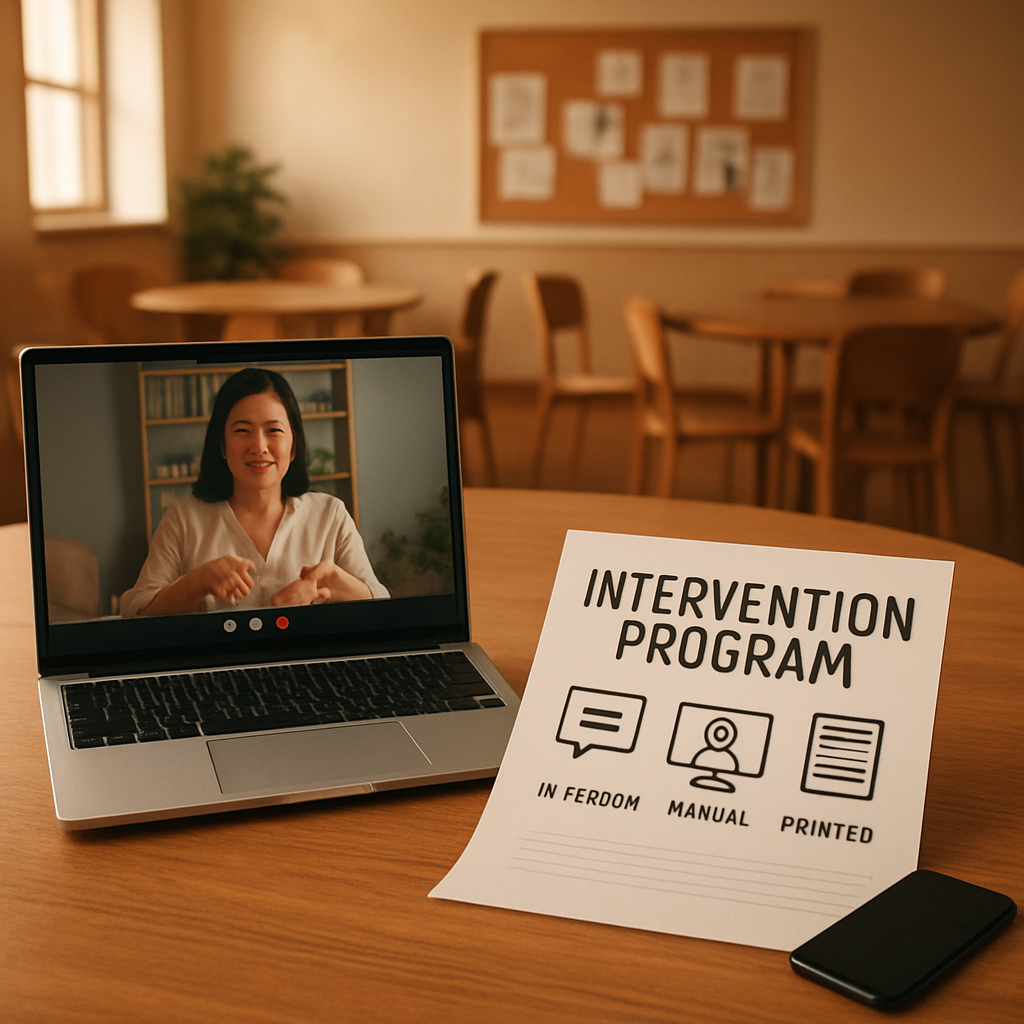
- In‑person meetings at a neutral site (community center, church hall, even a coffee shop).
- Virtual gatherings via Zoom, Google Meet, or a secure telehealth platform.
- Printed handouts or postcards that families can keep on the fridge.
- Text‑message reminders and brief check‑in prompts.
- Dedicated phone line staffed by an interventionist during business hours.
Does anything feel missing? Maybe a short video explainer that you can send via WhatsApp? Add it. The goal is a menu you can mix‑and‑match based on what each family prefers.
Match methods to the family’s reality
Here’s where empathy wins. Some families have reliable internet; others rely on a landline. Some teens feel safer behind a screen; some need the physical presence of a trusted adult.
Ask yourself: “If I were the mom who works two jobs, which option would feel least stressful?” Often the answer is a brief phone call followed by a single in‑person session. For a teenager who’s comfortable texting, a series of supportive SMS nudges can keep momentum without overwhelming them.
Pick the right resources to back each method
Once you know the delivery style, line up the tools. For virtual sessions, you’ll need a HIPAA‑compliant video platform – many interventionists already have one set up. For printed materials, use a template that’s easy to read: big fonts, clear headings, and a single call‑to‑action.
And don’t forget the human side. Assign a clear “owner” for each channel: maybe your senior counselor runs the Zoom calls, while a community volunteer handles the flyers. When responsibilities are crystal clear, nothing falls through the cracks.
Build a simple rollout checklist
We’ve found a three‑step checklist that keeps things moving:
- Choose the primary channel. Decide whether the first touch will be a phone call, an in‑person meeting, or a video chat.
- Gather the resources. Pull the script, the handout, the link, or the reminder schedule you need for that channel.
- Test and tweak. Run a quick pilot with one family. Ask them what felt smooth and what felt clunky. Then adjust before you roll out to the whole group.
That quick loop of “try‑learn‑fix” is the same rhythm we use at Next Step Intervention when we launch new support tracks.
Real‑world glimpse
Picture the Martinez family again. After they nailed down the mentorship model, they tried a weekly Zoom check‑in for the teen’s parents. The first session was shaky – the connection cut out twice. They switched to a simple phone call for the next two weeks, and attendance jumped. The lesson? The delivery method that feels most reliable for the family wins.
So, don’t be afraid to experiment. The right mix of in‑person warmth and digital convenience can make the difference between a plan that stalls and one that sticks.
Quick tip to keep you moving
Write down the exact first three actions you’ll take right after reading this section. Maybe it’s “draft a one‑page flyer,” “schedule a Zoom link for next Tuesday,” or “set up a reminder text for 7 p.m. tomorrow.” Put those tasks on a sticky note, and you’ll see progress before the day’s over.
Remember, the delivery method isn’t just a logistics detail – it’s the bridge that turns your compassionate plan into real change.

Step 5: Implement, Monitor, and Track Progress
Alright, you’ve picked the delivery mix, you’ve nailed the goals – now it’s time to actually put the plan into motion and keep an eye on how it’s doing. Think of it like planting a garden: you sow the seeds, water them, and check the sprouts every few days. If something looks wilted, you adjust.
Set up a simple progress‑monitoring plan
Before you launch, write down three basics: what you’ll measure, how often you’ll collect data, and who will own each piece. In our experience, families who sketch this on a one‑page cheat sheet feel far less overwhelmed.
For example, a teen‑focused program might track:
- Attendance at weekly support sessions
- Number of missed school days
- Self‑reported cravings on a 1‑10 scale
Pick metrics that matter to the family you’re serving – don’t try to capture everything.
Pick the right tool (and keep it low‑tech if needed)
Some teams love fancy dashboards, but a printable spreadsheet or even a paper chart works just as well for many families. The key is consistency: you need a place where data gets logged, graphed, and reviewed.
One community in Pasadena used a shared Google Sheet that automatically plotted attendance trends. When the line dipped, the interventionist sent a quick text reminder. The visual cue alone sparked conversations that kept kids showing up.
Collect, graph, and interpret – the DBI loop
Progress monitoring is a core part of the multi‑tiered system of support (MTSS) used in schools, and the same logic applies to an intervention program. The DBI process recommends collecting frequent data points, graphing them, and comparing to the target goal. If the line stays above the “phase‑change” threshold, you keep the current approach. If it falls below, you meet with the team, diagnose the hurdle, and tweak the strategy.
Imagine you set a goal: “80% attendance for the first six weeks.” After week three, the graph shows a 60% average. That’s your signal to ask: Is the meeting time inconvenient? Is transportation a barrier? Maybe the teen needs a brief check‑in call before the group starts.
Real‑world check‑ins
Case in point: the Martinez family (remember them from Step 4?) started with a weekly Zoom support call. Attendance slid after two weeks because their internet was spotty. They switched to a short phone call the night before each session, and attendance jumped to 90%. The simple data point—attendance rate—guided a quick, effective change.
Another example comes from a rural county where a mobile detox unit visits every Thursday. The team tracks “time from referral to intake.” Initially it averaged 12 days. By adding a reminder text the day before the unit arrives, the average dropped to 5 days. Those numbers speak louder than any anecdote.
Weekly “pulse” meetings
Set a 15‑minute standing meeting with the core team (interventionist, family liaison, maybe a volunteer). Use it to:
- Review the latest graph.
- Identify any metric dipping below the target.
- Decide on one concrete adjustment for the next week.
Because the meeting is short, people actually show up, and decisions get made fast.
Quick‑action checklist
| Monitoring Tool | Frequency | Owner | Key Metric |
|---|---|---|---|
| Attendance log (Google Sheet) | After each session | Family liaison | % sessions attended |
| Self‑report cravings (paper scale) | Twice weekly | Interventionist | Average craving score |
| Transportation check‑in (text survey) | Weekly | Volunteer coordinator | Missed appointments due to travel |
Keep this table on your wall or in your project board. When you glance at it, you instantly see who does what and where to look for data.
Adjust, don’t abandon
Progress monitoring isn’t a “gotcha” tool; it’s a compass. If a metric isn’t moving, you get to experiment. Maybe the teen prefers a peer‑led group over a professional one. Maybe the family needs a printed handout instead of a digital flyer. The data tells you where to pivot.
And remember: you don’t need perfect data to start. A simple yes/no check‑in each week is better than no check‑in at all.
What’s the next step for you?
Grab a notebook, write down the three metrics you’ll track for the next month, choose a tool (even a blank spreadsheet will do), and assign a name to each owner. Then set a calendar reminder for a 15‑minute review every Friday. You’ll be surprised how quickly the “implementation” phase feels less like a guess and more like a guided journey.
Step 6: Evaluate Outcomes and Scale
You’ve been gathering numbers, checking attendance, and tweaking scripts. Now it’s time to ask yourself: are those tweaks actually moving the needle, and if they are, how do we turn a handful of successes into a program that can help dozens, maybe hundreds, of families?
Review what the data is telling you
Start with the three metrics you already track – session attendance, craving scores, and transportation hiccups. Pull the latest spreadsheet, graph each line, and look for trends. If attendance jumped from 60% to 90% after you added a reminder text, that spike is your first clue that a simple nudge works.
Ask yourself: Is the change consistent across weeks, or is it a one‑off? Consistency signals a real behavior shift; a single bump might just be luck.
Celebrate wins and spot gaps
When you see a metric improve, shout it out. A quick email that says, “Great job, the team – we hit 85% attendance this week!” does more than boost morale; it reinforces the behavior that produced the win.
At the same time, flag any metric that’s flat or slipping. Maybe cravings are still high even though families are showing up. That tells you the “when” is right, but the “how” still needs work.
Document lessons for replication
Take a fresh notebook (or a digital doc) and answer three questions for each metric:
- What change triggered the improvement?
- Who owned that change?
- What unexpected barrier popped up?
These bite‑size notes become your playbook when you try the same approach in a new neighborhood.
Plan the scale‑up
Scaling isn’t just “do more of the same.” It’s a mini‑project with its own timeline, budget, and owners. Sketch a simple roadmap:
- Pick a pilot site. Choose a community that mirrors the original group but has a few new variables (e.g., longer travel distances).
- Translate the winning tactics. If reminder texts drove attendance, copy the script, but adjust the language to reflect local slang.
- Secure resources. Whether it’s a part‑time data‑entry volunteer or a small grant for printed flyers, write down exactly what you need.
- Set a scaling metric. For example, “Increase overall attendance by 20% across three new sites within 8 weeks.”
Remember the Ghana cash‑transfer case: researchers paired a simple goal‑setting sheet with a reminder poster, then measured uptake across 104 communities. The result? An 8‑point jump in savings behavior, which convinced the government to roll the design out to all 35,000 participants. That same “pilot‑test‑prove‑scale” loop works for an intervention program too. behavioral intervention scaling study
Monitor quality as you grow
Scale can dilute fidelity. To keep the core intact, embed a quick “quality check” into your weekly pulse meeting. Ask: “Did we deliver the reminder text exactly as scripted? Did the facilitator follow the empathy checklist?” A two‑sentence note on any deviation is enough to spark a corrective tweak.
Finally, set a monthly “scale‑review” where you compare the new sites against the original baseline. If the gap narrows, you’re on the right track. If it widens, pause, revisit the lessons page, and adjust before you expand further.
So, what’s the next move? Grab that notebook, write down the three metrics you’ll audit this week, pick one winning tweak to replicate in a neighboring family, and schedule a 15‑minute check‑in to see how it lands. You’ve got the data, the playbook, and the confidence to turn a handful of successes into a thriving, sustainable intervention program.
Conclusion
We’ve walked through everything from spotting community gaps to scaling proven tweaks, and the thread that ties it all together is a well‑designed intervention program.
If you’re standing where you once felt stuck, ask yourself: what single habit can you start tracking today?
Pick one metric—attendance, a craving score, or a transportation check‑in—log it in a simple sheet, and review it every Friday.
That tiny habit becomes the compass that tells you when to celebrate a win and when to pivot before the next week rolls around.
In our experience, families that set a 15‑minute pulse meeting and a clear owner for each task see attendance jump from 60 % to 90 % within a month.
So, what should you do next? Grab a notebook, write down the three numbers you’ll watch for the next 30 days, and assign a name to each owner.
When those numbers move in the right direction, you’ve built the momentum to scale the same intervention program to the next neighborhood, the next school, the next circle of friends.
Remember, you don’t need a perfect system—just a consistent loop of plan, measure, adjust, and repeat.
Ready to turn that loop into lasting change? Reach out to a certified interventionist today and let the process start moving for you.
FAQ
What exactly is an intervention program and how does it differ from a regular counseling session?
An intervention program is a structured, time‑bound plan that brings together the person struggling with substance use, their support network, and a trained facilitator to create a clear path to treatment. Unlike a single counseling session, it maps out goals, assigns owners for each task, and builds a loop of measuring, adjusting, and repeating. Think of it as a roadmap instead of a one‑off conversation, giving everyone a shared language and timeline.
How can I tell if my family needs an intervention program right now?
You’ll often feel a mix of worry, helplessness, and that nagging sense something’s slipping through the cracks. If missed appointments, escalating cravings, or frequent relapses are becoming the norm, those are red flags. Ask yourself: are we reacting or planning? When the family can’t agree on next steps, or the loved one’s safety is at risk, it’s a strong signal that a formal intervention program can bring the structure and accountability needed to break the cycle.
What are the first steps to set up an intervention program for a loved one struggling with addiction?
Start by gathering the core team – a trusted family member, a close friend, and a certified interventionist. Next, map the biggest gaps: what resource is missing, what barrier keeps your loved one from entering treatment, and what metric will show progress. Then, draft a simple timeline with three milestones – initial conversation, treatment entry, and first follow‑up – and assign a person to own each step. Finally, schedule a short “pulse” meeting for the first Friday to lock in accountability.
How do we choose the right delivery method (in‑person, virtual, phone) for our intervention program?
Look at what feels least stressful for the person you’re trying to help. If they have reliable internet, a secure video platform can keep meetings flexible and private. If they rely on a landline or prefer face‑to‑face contact, a coffee‑shop sit‑down or a community‑center space works better. Often a hybrid approach – a brief phone check‑in before an in‑person session – balances convenience with personal connection, and it gives you a fallback if one channel glitches.
What metrics should we track to know the intervention program is working?
Pick three concrete numbers that matter to your family – for example, weekly attendance, a daily craving rating on a 1‑10 scale, and the number of missed transportation appointments. Log them in a shared spreadsheet or a simple paper chart after each session, then plot a quick trend line every Friday. When the line moves upward, celebrate; when it dips, use that data point to ask what’s blocking progress and adjust the plan right away.
How often should we hold check‑in meetings and who should attend them?
Aim for a 15‑minute “pulse” check‑in each week – that’s enough time to glance at the data, celebrate a win, and spot any snag. Invite the core owners: the interventionist, the family liaison who’s handling logistics, and one trusted supporter who can keep morale up. If you’re working with teens, a brief parent‑only call can complement a separate youth check‑in, ensuring everyone stays in the loop without feeling overwhelmed.
What common pitfalls should we avoid when running an intervention program?
Don’t try to tackle everything at once – spreading yourself thin only leads to burnout. Avoid the “nice‑to‑have” trap; focus on the three metrics you’ve chosen and stick to them before adding more. Keep the language simple and the timeline realistic – a goal like “attend every meeting for a month” is clearer than a vague “stay engaged.” Finally, resist the urge to blame; treat setbacks as data points to tweak, not as personal failures.


