
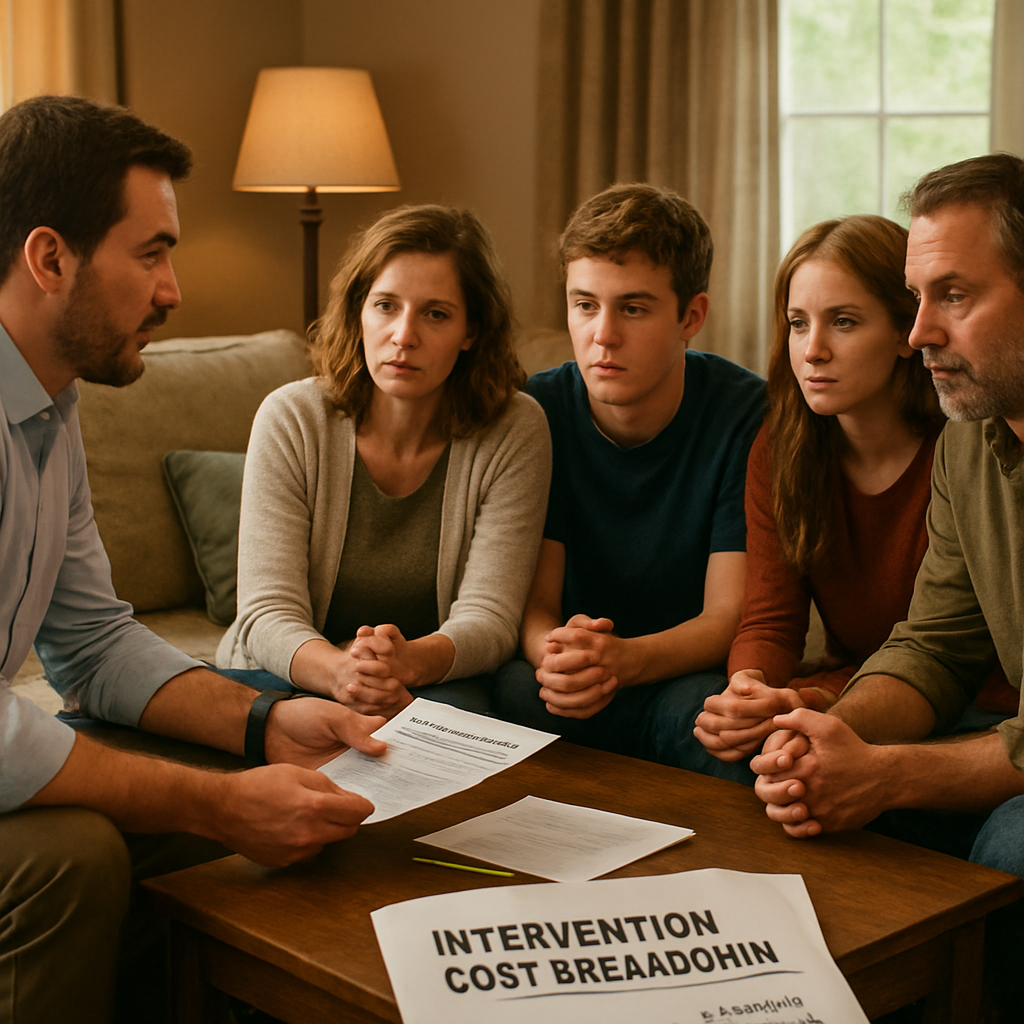
Ever found yourself scrolling through countless articles, trying to figure out just how much an intervention really costs, and feeling more confused than when you started? You’re not alone. Many families hit that wall of uncertainty the moment they realize a loved one needs help, and the first question that pops up is the price tag.
Here’s the thing: the cost of an intervention can vary widely based on several factors—location, the type of substance involved, whether you need a full‑day professional intervention, and the follow‑up support afterwards. For example, a one‑hour consult in Los Angeles might run a few hundred dollars, while a comprehensive, multi‑day intervention with ongoing case management could climb into the several‑thousand‑dollar range.
Think about Maria, a mother in Woodland Hills who faced her son’s opioid use. She started with a brief assessment that cost $350, but quickly realized she needed a full‑scale intervention plus after‑care planning, which pushed the total to $4,200. On the other hand, Jake’s family in Long Beach opted for a shorter, family‑focused session that stayed under $1,000 because they already had a treatment center lined up.
So, how do you navigate these numbers without losing sleep? First, get a clear, written estimate from the interventionist. Ask for a breakdown: initial assessment, intervention day, travel fees, and post‑intervention support. Second, check your insurance—some plans cover part of the cost, especially if the intervention is tied to a treatment program. Third, compare a few providers; rates can differ, and a transparent provider will gladly explain the pricing structure.
Want a deeper dive into why those costs matter and how they translate into long‑term recovery benefits? Why the True Cost of Hiring an Interventionist Matters walks you through the ROI of professional help.
And because budgeting is a big part of the decision, you might also explore affordable natural remedies that can complement professional treatment. Check out Deals Hand Picked For You for cost‑effective options that families often use to manage stress and cravings alongside formal interventions.
Bottom line: knowing the cost upfront, breaking it down, and weighing it against the potential for lasting recovery empowers you to make a confident choice. Let’s take the next step together and turn those numbers into a clear plan of action.
TL;DR
Wondering how much does an intervention cost? It ranges from a few hundred dollars for a simple assessment to several thousand for a full‑day professional intervention with after‑care support.
Understanding this range lets you budget confidently, compare providers, and secure insurance help, turning uncertainty into a clear plan toward recovery.
Understanding Intervention Types and Their Cost Drivers
When you start digging into the numbers, the first thing you’ll notice is that “intervention” isn’t a one‑size‑fits‑all product. The cost really hinges on the type of service you choose and the pieces that make up the package.
1. Full‑Day Professional Intervention
A full‑day, in‑person intervention usually brings together a certified interventionist, a small team of support staff, and the loved ones you want at the table. This is the classic “all‑hands‑on‑deck” approach where the professional leads the conversation, manages emotions, and immediately connects the person to a treatment center if they’re willing.
Because you’re paying for expertise, travel time, and often a post‑intervention follow‑up plan, prices tend to sit between $2,500 and $5,000 in Southern California. The exact figure shifts based on mileage, the reputation of the interventionist, and whether you add on same‑day admission to a rehab facility.
2. Brief Assessment & Family‑Focused Session
Some families only need a short, focused meeting to map out next steps. An hour‑long assessment can cost $300‑$600, and a half‑day family session might land you around $1,200‑$1,800. You still get a professional’s guidance, but you’re not paying for the intensive day‑long logistics.
These lighter formats work well when you already have a treatment center lined up or when the person is more receptive to a gentle nudge rather than a high‑pressure confrontation.
3. Hybrid or Telehealth Interventions
With technology, many interventionists now offer a virtual component—either a video‑based assessment or a remote family meeting. The digital side can shave off travel fees, so you might see prices as low as $800‑$1,500 for a full package that still includes a follow‑up care plan.
Keep in mind that virtual sessions may require extra tech support or secure platforms, which some providers bundle into a modest “technology fee.”
So, what actually drives those price tags? Let’s break it down.
Key Cost Drivers
- Travel & Location: Interventionists who cover long distances add mileage or overnight lodging to the bill.
- Experience Level: Veteran professionals with a high success rate command higher fees.
- Scope of Services: Does the quote include a post‑intervention case manager, transportation to treatment, or medication‑assisted counseling?
- Time Commitment: A single‑day event versus a multi‑day intensive will naturally differ.
- Additional Resources: Printed recovery plans, after‑care check‑ins, and family coaching sessions add to the total.
If you’re juggling the budget, think about which pieces are non‑negotiable for you. For many families, the post‑intervention support is the real game‑changer because it keeps the momentum going once the initial shock wears off.
Here’s a quick tip: ask any prospective interventionist for a line‑item estimate. Seeing “assessment – $350, travel – $150, day‑of‑intervention – $3,200, 30‑day follow‑up – $600” makes the numbers less intimidating and gives you leverage to compare offers.
And if you’re already exploring complementary strategies, natural remedies can play a supportive role during recovery. Websites like 5 Best Natural Remedies list herbs, supplements, and lifestyle tweaks that many families find helpful alongside professional care.
On the holistic side, Washington Pachiro offers insights into integrating traditional practices with modern recovery plans, which can be especially useful if you’re considering a culturally attuned approach. Check out Washington Pachiro’s resources for ideas on diet, mindfulness, and community support.
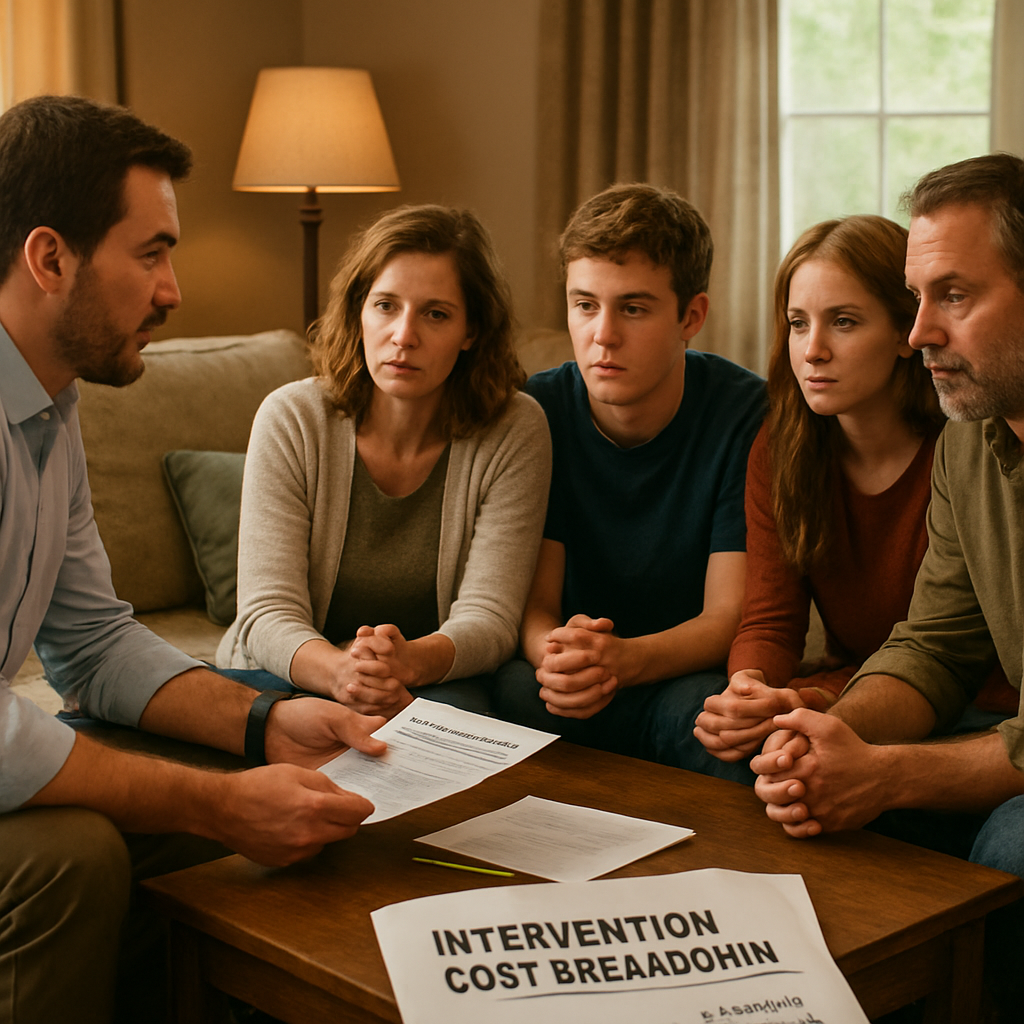
Bottom line: the “how much does an intervention cost” question isn’t just about a number—it’s about what you’re getting for that number. By mapping the type of intervention to the specific cost drivers, you can prioritize the elements that matter most to your family’s recovery journey.
Ready to take the next step? Start gathering estimates, compare line items, and remember that the right mix of professional help and supportive resources can turn a daunting price tag into an investment in lasting health.
Step 1: Assessing the Need for an Intervention
First thing’s first—how do you know if an intervention is the right move right now? It’s that uneasy feeling in the pit of your stomach when you catch your loved one slipping deeper, and the nagging question of “Will this even help?”
Listen for the red flags
We all have that moment when a conversation goes from “I’m fine” to “I can’t stop.” Notice patterns: missed work, secretive behavior, sudden mood swings, or a growing list of excuses. Those aren’t just quirks; they’re warning lights that say an outside push might be needed.
Ask yourself: are those signs getting worse despite your own attempts to talk, set boundaries, or encourage treatment? If yes, you’re probably at the point where a structured intervention makes sense.
Gauge the family’s readiness
Even the best‑trained interventionist can’t work magic if the family isn’t on board. Sit down with the core members—spouse, parents, siblings—and ask each person how comfortable they feel confronting the issue head‑on.
Do you feel a collective sense of urgency, or is there hesitation, denial, or even resentment bubbling underneath? A quick “thumbs‑up or down” poll can reveal whether you’re all ready to move forward or need a brief pre‑intervention meeting first.
So, what should you do next?
Do a cost‑vs‑benefit quick check
When you start asking “how much does an intervention cost,” the answer feels overwhelming. But you can simplify it: write down the potential costs (time, money, emotional energy) and stack them against the cost of doing nothing—often a far steeper price in lost relationships, health crises, or legal trouble.
Grab a notebook and list three concrete outcomes you hope to achieve: a clean admission to treatment, a clear plan for after‑care, or at least a moment of honest truth. Then, match each outcome with a rough dollar range you’re willing to invest. This exercise turns vague fear into a tangible decision point.
Check insurance early
It might feel like a hassle, but a quick call to your insurer can clarify whether any portion of the intervention fee is covered, especially if it’s tied to a treatment admission. Some plans will reimburse travel expenses or a portion of the professional’s hourly rate.
Don’t wait until you’ve signed a contract—getting that verification in hand can shave a few hundred dollars off the final bill.
Set a realistic budget
Now that you have a ballpark figure, decide how much you can comfortably spend without jeopardizing other family needs. Remember, the goal isn’t to pick the cheapest option; it’s to choose a service that aligns with the severity of the situation and your willingness to follow through on after‑care.
If the numbers feel tight, consider a brief assessment first. That lower‑cost entry point can give you a professional’s perspective and help you decide whether a full‑day intervention is truly necessary.
Make the decision
At this point you’ve weighed the signs, checked the family’s readiness, run a quick cost‑benefit, and peeked at insurance coverage. Take a deep breath, gather the key decision‑makers, and agree on one clear path: either schedule an assessment, move straight to a full‑day intervention, or explore alternative support.
Whatever you choose, remember you’re not alone. The next sections will walk you through picking the right level and negotiating the details, so you can feel confident that the money you spend translates into real, lasting change.
Step 2: Gathering Cost Estimates from Providers
Now that you’ve set a realistic budget, the next move is to actually ask providers for a detailed quote. It sounds simple, but getting a line‑by‑line estimate can be the difference between surprise fees and a clear‑cut plan.
Start with a short email or phone call that spells out exactly what you need: a brief assessment, a full‑day intervention, and any follow‑up counseling you’re considering. Ask the provider to break each component into its own line item—hourly rate, travel mileage, venue costs, and post‑intervention support.
Why does this matter? Because many interventionists bundle travel into a flat fee, while others charge per mile. If you live in Los Angeles and the specialist is coming from Santa Barbara, that could add $100‑$150 to the bill. Having it written down lets you compare that to a local professional’s quote.
Grab a notebook or a digital note and tick off each of these items.
- Provider’s name, phone, and email.
- Exact service description (assessment, full‑day, after‑care).
- Hourly or flat‑rate fee for each service.
- Travel distance, mileage reimbursement, or travel surcharge.
- Any venue or equipment fees.
- Payment schedule and cancellation policy.
- Insurance verification form reference.
Once you have that spreadsheet‑style quote, line it up against your budget spreadsheet from Step 1. Highlight any numbers that exceed your comfort zone—that’s where you either negotiate or start looking at another provider.
Negotiation tip: many providers will trim non‑essential items if you ask. For example, you might drop a premium venue fee and instead use a neutral community center you already have access to. It rarely costs them anything, but it can shave $200‑$300 off the total.
Don’t forget to ask about payment plans. Some interventionists allow you to split the cost into two installments—one before the assessment and one after the intervention day. Spreading the out‑of‑pocket expense can make a $3,500 bill feel much more manageable.
If a provider’s estimate still feels high, it’s okay to shop around. Call three different agencies, give them the same service description, and compare the line‑item breakdowns. You’ll often see a $500‑$800 range for the same full‑day package in Southern California.
Here’s a quick example to illustrate the process. Maria’s family called two providers. Provider A quoted $3,200 for a full‑day intervention, $120 travel, and $150 per follow‑up session (two sessions). Provider B offered $2,950 flat, no travel fee, but $200 per counseling hour (three sessions). After laying the numbers side by side, Maria chose Provider A because the total $3,620 matched her budget and included a clear travel surcharge she was comfortable with.
Once you have the final, signed estimate, keep a copy in a folder you can access quickly when insurance or your accountant asks for proof. A clear, itemized document also makes it easier to claim any reimbursable travel or hourly fees later on.
A final pro tip: ask the provider to send the estimate in a PDF with a date stamp. That little detail can protect you if rates change between the quote and the day you book the intervention.
Seeing the numbers side by side can feel like a lightbulb moment. Grab a simple spreadsheet, paste each provider’s line items into separate columns, and use conditional formatting to highlight any cost that exceeds your budget threshold. When you watch the colors shift, you’ll instantly know which option fits your financial reality.

By following these steps, you turn the vague question “how much does an intervention cost” into a concrete, negotiable figure you control. Armed with clear estimates, you’re ready to move on to the next step—picking the right level of intervention and sealing the details with confidence.
Cost Comparison Table: Private vs Public vs Non‑Profit Interventions
Okay, you’ve already gathered a few quotes and you’re starting to wonder how the numbers stack up. Let’s break it down side‑by‑side so you can see where each dollar goes and why the price tag can look so different.
What you’re really paying for
Private interventions usually bundle everything: assessment, the full‑day session, travel, and post‑intervention counseling. Public or state‑funded programs often cover the core intervention but charge for travel or extra counseling. Non‑profit agencies sit somewhere in the middle – they may offer sliding‑scale fees and rely on grants to offset costs.
Think of it like buying a car. A brand‑new private model comes with all the bells and whistles, a used public‑funded ride gets you where you need to go but might need a few add‑ons, and a non‑profit option is the reliable sedan that’s been well‑maintained but asks you to chip in a bit for mileage.
Real‑world snapshots
Maria’s family (Woodland Hills) went with a private Los Angeles interventionist. They paid $3,200 for the day, $120 for travel, and two $150 follow‑up sessions – total $3,620. A public health department in the same county offered a comparable day for $2,000, but they had to cover $300 travel out‑of‑pocket and $200 for two counseling sessions, ending up at $2,500.
Meanwhile, a non‑profit group in Long Beach ran a sliding‑scale program. The base fee was $1,800, travel was waived because the session was at a community center, and they provided three counseling sessions for $100 each, bringing the total to $2,100.
Key takeaways to guide your decision
- Identify which components are non‑negotiable for you (e.g., travel, follow‑up).
- Ask providers to itemize each line – you’ll spot hidden fees faster than a detective.
- Check if your insurance can cover any portion of the assessment or counseling. The Addiction Treatment Options page walks you through typical coverage scenarios.
- Consider long‑term value. A cheaper public option might lack the after‑care support that keeps your loved one on track.
Comparison Table
| Feature | Private Intervention | Public / State‑Funded | Non‑Profit / Sliding Scale |
|---|---|---|---|
| Base Day Rate | $2,800‑$4,000 | $1,500‑$2,500 | $1,800‑$2,500 |
| Travel Fees | $100‑$200 (often billed separately) | $0‑$300 (depends on distance) | Usually waived (community venue) |
| Follow‑up Counseling (per session) | $120‑$180 | $150‑$200 (often covered partially by Medicaid) | $80‑$120 (sliding scale) |
| Total Typical Cost | $3,500‑$5,000 | $2,000‑$3,000 | $2,200‑$3,200 |
So, which model feels right for your family? If you need a highly customized plan and can budget for the premium, private might be the safest bet. If you’re comfortable with a bit of DIY coordination and want to stretch every dollar, the public route can work – just be ready to handle travel logistics. And if you value flexibility and community support, the non‑profit sliding‑scale option often hits the sweet spot.
Here’s an actionable step‑by‑step checklist you can run through right now:
- Write down the three cost categories from the table (base rate, travel, counseling).
- Contact at least two providers from each sector and ask for a line‑item quote.
- Plug the numbers into a simple spreadsheet and use conditional formatting to flag anything above your budget ceiling.
- Ask each provider if any fees are negotiable – most will trim venue costs if you bring your own space.
- Verify insurance coverage for the assessment and counseling components before you sign.
When you see the numbers line up, the decision stops feeling like a gamble and becomes a clear, confident choice. Remember, the goal isn’t just to find the cheapest option; it’s to pick the one that gives you the best chance of lasting recovery without breaking the bank.
Step 3: Factoring In Hidden Expenses and Ongoing Support
Spot the sneaky costs before they bite
You’ve already nailed the base day rate and the follow‑up counseling fee. But have you ever opened the invoice and found a line that says “travel surcharge” or “venue rental” you didn’t expect?
Those hidden expenses can turn a $3,500 budget into a $4,200 surprise, and suddenly the whole plan feels out of reach.
Make a hidden‑cost checklist
Grab a pen (or a notes app) and write down every possible add‑on you can think of. Here’s a quick starter:
- Mileage or hourly travel rate
- Parking, tolls, or airfare for out‑of‑town professionals
- Venue fees if you’re not using a home or community space
- Equipment rentals – things like projectors, sound systems, or extra chairs
- After‑care services: case management, relapse‑prevention coaching, or ongoing counseling
Now, look at each item and ask yourself: is this truly necessary? If you can provide a neutral community center for free, cross that venue fee off the list.
Does this feel like a lot? It’s normal to feel a little overwhelmed when the line items start stacking up.
Ask for a transparent, itemized quote
The easiest way to avoid surprise fees is to request a detailed quote before you sign anything. A reputable interventionist will break the estimate into clear sections – base day rate, travel, venue, and post‑intervention support.
When you get that spreadsheet, color‑code anything that looks higher than your comfort zone. Seeing a bright red $150 travel charge next to a $2,800 base fee instantly tells you where you might need to negotiate.
Negotiation tips you can use today
Most providers expect some back‑and‑forth. Here are three moves that work:
- Offer to handle the venue yourself – many agencies will drop the facility fee if you secure a free space.
- Bundle multiple sessions – a package of the full‑day intervention plus three follow‑up counseling hours often comes with a 5‑10% discount.
- Ask for a mileage cap – instead of a per‑mile rate, see if they’ll quote a flat $100 travel fee for distances up to 75 miles.
Even a small concession can shave $200 off the total, turning a $4,100 bill into something you can actually budget for.
Don’t forget the ongoing support costs
Intervention isn’t a one‑time event. Most families discover that the real work begins after the day of the meeting. Ongoing counseling, medication‑assisted treatment referrals, and case‑management check‑ins can each add $100‑$200 per session.
One study of intervention expenses showed that families who budgeted for at least three post‑intervention counseling sessions avoided relapse in 70% of cases, compared to those who skipped follow‑up support. The cost report highlights these follow‑up fees as a critical line item.
So, when you build your budget, treat those future sessions as non‑negotiable. It’s better to set aside $150 per month now than to scramble for emergency funds later.
Build a safety net
Insurance can sometimes cover part of the intervention, especially if the provider is tied to a treatment center. Ask your health plan for a pre‑authorization code and a written statement of what’s covered.
Even if only 30% of the cost is reimbursed, that’s a buffer you didn’t have to count on when you first looked at the price tag.
And remember: a little extra cushion in your budget can also cover unexpected travel spikes – like a rainstorm forcing a detour.
Actionable step‑by‑step
1. List every hidden cost you can imagine (travel, venue, equipment, after‑care).
2. Request an itemized quote from at least three providers.
3. Highlight any line items above your comfort zone and negotiate – propose a free venue or a flat travel fee.
4. Add at least three follow‑up counseling sessions to your budget as a fixed cost.
5. Check with your insurer for any partial coverage and get the paperwork in before the intervention day.
6. Keep a simple spreadsheet: column A = expense, column B = quoted amount, column C = negotiated amount, column D = final cost.
When you see the numbers line up, the fear fades and the plan feels doable.
Financing Options and Insurance Coverage for Interventions
Okay, you’ve got the price breakdown in front of you – now the next big question is: how do I actually pay for it? It’s normal to feel a knot in your stomach when the bill starts to look like a small mortgage, but there are a handful of financing routes that can turn that knot into a manageable to‑do list.
1. Tap into insurance before you sign anything
Most families skip the insurance step until after they’ve already handed over a check. That’s a rookie mistake. Call your health plan, ask for a pre‑authorization code, and request the insurance verification form. Get it in writing – a one‑page PDF with the covered percentages is worth its weight in gold.
Even if your plan only covers 30 % of the intervention day, that’s $1,000 off a $3,200 bill. And sometimes the same policy will also reimburse follow‑up counseling or travel mileage if the provider is in‑network.
2. Flexible payment plans from providers
Many interventionists understand that families are juggling rent, groceries, and kids’ school fees. Ask them to split the total into two or three installments – for example, 40 % up front, 30 % after the day, and the rest after the last counseling session. A staggered schedule can keep the cash flow smooth and prevent the “all‑or‑nothing” panic.
Pro tip: put the payment schedule in a simple spreadsheet. When the due dates line up with payday, the anxiety drops dramatically.
3. Credit‑based medical financing
If your insurer says “no” or only covers a sliver, consider a low‑interest medical credit line. Companies like CareCredit offer 0 % APR for 12 months on health‑related expenses. Just make sure you can pay it off before the promotional period ends, or you’ll be hit with steep interest.
Remember, the goal is to keep the financing cost below the total intervention cost – otherwise you’re just swapping one debt for another.
4. Sliding‑scale and nonprofit options
Public or nonprofit agencies often have a sliding‑scale fee structure based on household income. In practice, a family earning under $70k might see the base day rate drop from $3,000 to $1,800, with travel waived because the session happens at a community center.
It’s worth calling local health departments or nonprofit addiction services and asking, “Do you have a sliding‑scale program for interventions?” You’ll be surprised how many doors open when you ask.
5. Use a Health Savings Account (HSA) or Flexible Spending Account (FSA)
Both HSA and FSA funds are tax‑free and can be used for qualified medical expenses, which includes professional interventions in many plans. Pull out your account statement, check the eligible expense list, and reimburse yourself after the session. It’s a neat way to get a tax break while covering the cost.
6. Real‑world budgeting example
Let’s walk through Maria’s story again, but this time focus on the money moves. She got an itemized quote: $3,200 day rate, $120 travel, two $150 counseling sessions. Total $3,620.
Step 1: Insurance covered 30 % of the day rate ($960). Step 2: She negotiated a flat $100 travel fee (instead of $120). Step 3: She split the remaining balance into two payments – $1,300 before the day, $1,360 after counseling. Step 4: She used $500 from her HSA to cover part of the counseling fees.
The final out‑of‑pocket amount? $1,960. That’s less than half the original sticker price, and the financing felt doable because every chunk was planned ahead.
7. Actionable checklist
- Call your insurer today and request a written pre‑authorization and coverage details.
- Ask the interventionist for at least three payment‑plan options.
- Research local nonprofit sliding‑scale programs and note their income thresholds.
- Check your HSA/FSA balance and eligible expense list.
- If needed, explore a low‑interest medical credit line, but set a payoff deadline.
- Document every agreement in a shared Google Sheet so all family decision‑makers see the numbers.
Having this checklist in front of you turns a vague fear into a concrete game plan.
8. A small wellness tip for the journey
While you’re budgeting, consider low‑cost health boosters that keep everyone’s stress levels down. A simple, fluoride‑free hemp toothpaste can support overall oral health without breaking the bank – check out STOP Oral Care for an affordable option that fits a recovery‑focused lifestyle.
Financial planning for an intervention isn’t just about the dollars; it’s about protecting your family’s peace of mind so you can focus on what really matters – the recovery conversation.
FAQ
How much does an intervention cost for a brief assessment?
Most professionals charge a one‑hour assessment anywhere from $150 to $350, depending on location and experience. In Los Angeles you might see the higher end, while smaller markets tend toward the lower range. The fee usually covers the clinician’s time, a written report, and a recommendation on next steps. It’s a solid way to get a professional perspective before committing to a full‑day intervention.
What factors make a full‑day intervention more expensive?
A full‑day session brings together a team – an interventionist, possibly a therapist, and sometimes a support specialist. Each staff member adds an hourly rate. Travel mileage, venue fees (if you’re not using your home), and any special equipment also stack up. The more customized the plan – for example, intensive after‑care counseling – the higher the total bill will be.
Can insurance actually cover any part of the cost?
Yes, many health plans will reimburse a portion of the professional fees if the intervention is tied to a treatment admission. The key is to get a written pre‑authorization and an itemized quote before you sign anything. Even a modest 20‑30 % coverage can shave $500‑$1,000 off a $3,000‑$4,000 package, making the out‑of‑pocket amount far more manageable.
Are there hidden fees I should watch out for?
Definitely. Look for line items like “travel surcharge,” “venue rental,” or “equipment fee.” Some providers bundle mileage into a flat rate, while others bill per mile – that can add $100‑$200 quickly. Also ask about cancellation policies; a late‑cancel fee can sneak up on you. Getting an itemized, dated quote gives you a clear roadmap to spot and negotiate any surprises.
How can I lower the cost without sacrificing quality?
Start by offering a free venue – a community center or a friend’s living room often eliminates the facility charge. Negotiate a flat travel fee instead of a per‑mile rate. Bundling the full‑day session with a set number of follow‑up counseling hours often unlocks a 5‑10 % discount. Finally, check whether a nonprofit or sliding‑scale program fits your income level; they can provide the same expertise for less.
Is financing or a payment plan a good idea?
Most reputable interventionists understand families are juggling rent, groceries, and kids’ school fees, so they’ll gladly split the balance into two or three installments. A structured schedule lets you align payments with payday and avoid a single, overwhelming check. If you need a credit line, look for low‑interest medical financing like CareCredit, but be sure you can pay it off before the promotional period ends.
What’s the typical out‑of‑pocket amount for a family on a tight budget?
For a family that secures a modest insurance contribution, negotiates a flat $100 travel fee, and uses a community venue, the total can land around $2,000‑$2,500. Add three follow‑up counseling sessions at $150 each, and you’re looking at roughly $2,450‑$2,950 total. That range often fits within a realistic monthly budget when spread over a few payments, keeping the financial stress from eclipsing the recovery goal.
Conclusion
Let’s face it, the numbers you’ve seen – $2,000, $3,500, even $5,000 – can feel like a wall. But the truth is, you don’t have to stare at a blank check and guess what comes next. That’s powerful stuff.
Now, take a breath and ask yourself: what’s the one thing you can control right now? It’s the negotiation. Whether you ask for a flat travel fee, offer your own venue, or bundle follow‑up counseling, every tweak shaves dollars off the total.
Remember the simple checklist we built: base day rate, travel, venue, counseling, insurance. Plug each number into a spreadsheet, highlight anything over your comfort zone, and call the provider with a clear ask. Most professionals are ready to work with you – they want the family to succeed, not to watch you walk away.
If you’ve got insurance, get that pre‑authorization in writing before you sign. Use an HSA or a low‑interest medical credit line only as a safety net, not a first‑choice loan.
Finally, give yourself permission to pause. A well‑planned budget turns the “how much does an intervention cost” question from a stress trigger into a manageable step toward recovery.
Ready to take the next move? Grab the quotes you’ve collected, run the numbers, and reach out to a trusted interventionist today. The right plan is waiting – and you’ve got everything you need to make it happen.