

Picture this: you’ve tried talking to your daughter about her drinking, but every conversation ends in a slammed door or a sigh that says, “I’m fine.” You’re stuck in that painful loop, feeling helpless and wondering if there’s a gentler, more effective way to break through.
That’s exactly why many families turn to an intervention letter to daughter. It’s not a legal notice or a scolding memo; it’s a heartfelt, written bridge that lets you lay out concerns, love, and concrete next steps without the heat of a live argument. When you put your thoughts on paper, you can choose your words carefully, stay on point, and give your daughter something she can reread when emotions have settled.
Here’s what works in practice. First, start with a specific observation—something you’ve actually seen, like “I noticed you missed three school days in a row because you were staying out late.” Pair that with the impact, such as “I’m worried you’re losing the chance to graduate on time.” Then, express your care: “I love you and want to see you succeed.” Finally, suggest a clear, doable action—perhaps scheduling a meeting with a counselor within the next week.
Real‑world example: a mother in California wrote a letter noting her daughter’s late‑night texts about partying, followed by a gentle invitation to join a family‑led support group she found through a local community center. Within two weeks, the daughter agreed to an intake session, and the family felt a renewed sense of hope.
Want a ready‑made template to adapt? Check out Intervention Letter Examples: Real Templates to Write Effective Letters. The guide walks you through each section, offers sample language, and even includes a printable checklist so you won’t miss a step.
Actionable steps you can take right now:
- Write down three concrete behaviors that concern you, plus the effect on the family.
- Draft a short paragraph that starts with “I feel…” and ends with a single, specific ask.
- Read the letter out loud to yourself; cut any wording that sounds accusatory.
- Leave the letter in a neutral spot—like a kitchen table—so your daughter can read it on her own time.
Remember, the goal isn’t to force a reaction but to open a doorway for honest dialogue. By giving her a calm, written invitation, you’re showing that you’re there for her, no matter how tough the conversation gets. The next step? Grab a pen, follow the template, and let your love speak louder than the chaos.
TL;DR
An intervention letter to daughter lets you calmly express worry, love, and clear next steps, turning painful cycles into hopeful dialogue.
Follow our quick template, write three specific concerns, add a caring “I feel” line, and place the note today where she’ll read it without pressure in a quiet spot.
Step 1: Clarify Your Intent and Goals
Before you even pick up a pen, pause and ask yourself what you truly want this intervention letter to daughter to achieve. Is it to open a door for honest conversation? To show you care while setting a firm boundary? Pinpointing that intention stops the letter from sounding like a lecture.
What’s really driving you?
Think about the moment you felt a knot in your chest – maybe it was the night she missed dinner again, or the text about a party that went on too late. Those feelings are clues. Write them down: “I feel scared when I hear you’re staying out past midnight because I worry about your safety.” That sentence captures both emotion and purpose.
Turn feelings into goals
Now translate that emotion into a concrete goal. Instead of “I want her to stop drinking,” try “I want her to consider talking with a counselor within the next two weeks.” Goals that are specific, measurable, and time‑bound give her a clear next step and keep the conversation focused.
In our experience at Next Step Intervention, families who set one‑to‑two clear objectives see a higher response rate. Too many asks can feel overwhelming, so keep it tight – one primary ask, maybe a supportive follow‑up.
Tip: Write your goal as an action verb. “Schedule a visit” feels more doable than “get help.” The letter becomes a roadmap, not a roadblock.
Wondering where to find a professional you can trust? Some families start by checking local resources like rehab and recovery directories that list vetted providers. A quick phone call can give you the confidence to name a specific service in your letter.
Another piece of the puzzle is the support network you want her to lean on. Whether it’s a trusted friend, a sibling, or a community group, naming that person signals you’re not leaving her to face this alone. A site like family support platforms can help you identify local groups that match her interests.
Let’s walk through a quick template:
- Observation: “I noticed you’ve been staying out late three nights in a row.”
- Impact: “I’m worried it’s affecting your school performance and health.”
- Intent: “My goal is to see you safe and thriving.”
- Ask: “Would you be willing to meet with a counselor by next Thursday?”
Notice how each bullet ties back to the core intent and a measurable goal. When she reads it, she sees a clear path, not a vague demand.
Here’s a short video that walks you through turning these ideas into a polished letter. It shows how to keep the tone compassionate while staying firm on the ask.
Take a breath after watching. Then, before you finalize, read the letter out loud. Hearing your own voice helps you catch any accidental blame language.
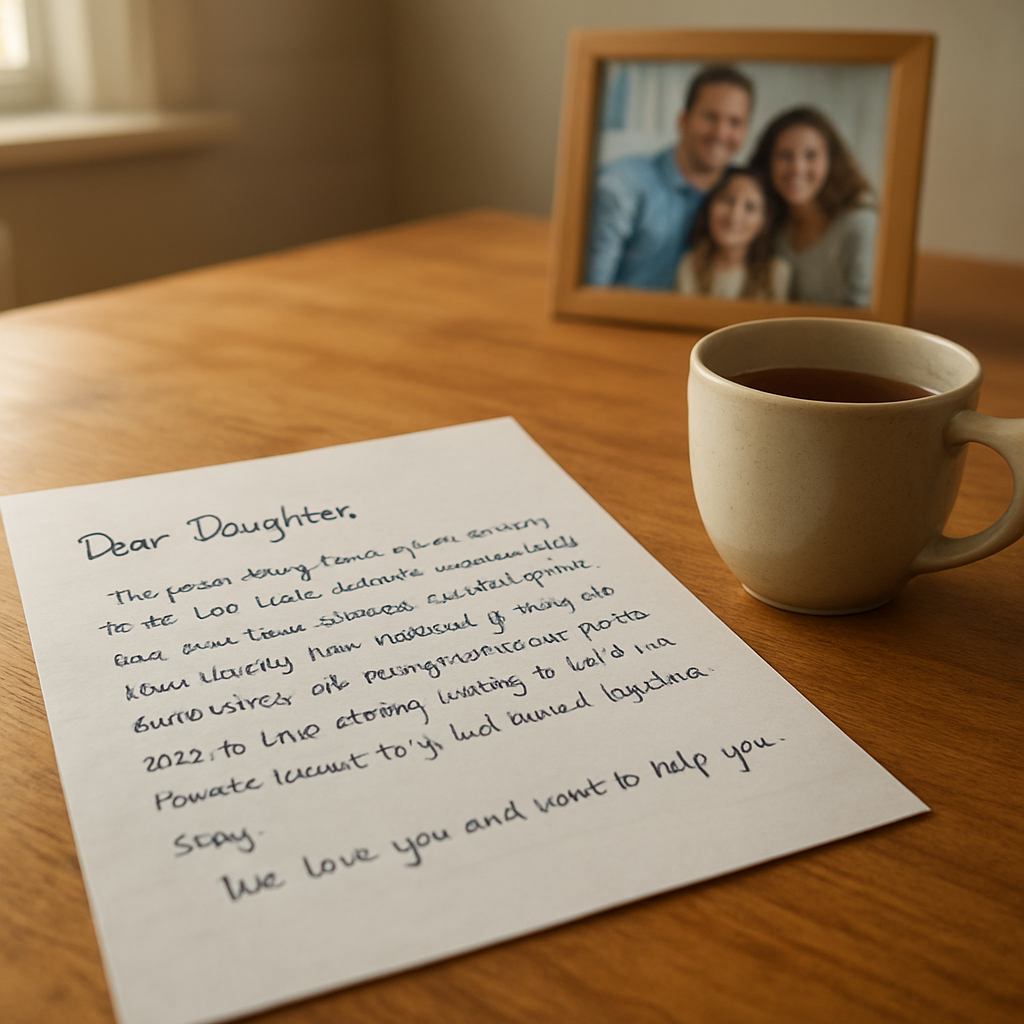
Finally, place the letter where she’ll see it without feeling ambushed – a kitchen table, a bedroom nightstand, or even slipped into her backpack. The goal is a calm, private moment for her to absorb your words.
Step 2: Gather Relevant Facts and Evidence
Now that you’ve clarified why you’re writing, it’s time to turn feelings into hard evidence. Think of facts as the foundation of a house – without a solid base the whole structure wobbles. For an intervention letter to daughter, gathering concrete details helps you stay compassionate instead of sounding accusatory.
Start a simple log. Grab a notebook, a spreadsheet, or even the notes app on your phone. Every time you notice a behavior that worries you, jot down three things: what happened, when it happened, and what the impact was on her or the family. For example, “Friday, 10 p.m., stayed out past curfew, missed morning class, and I felt anxious all night.” Over a week you’ll see patterns that speak louder than a single outburst.
Why does a log matter? Research from ChooseHelp explains that a written script keeps the conversation focused on facts, not emotions, and reduces the chance of slipping into blame ChooseHelp’s guide on intervention letters. When you can point to specific dates and outcomes, you’re showing that you’ve observed, not judged.
Next, translate those notes into “evidence segments” for your letter. Break them into three bite‑size blocks:
- Observation: State the behavior plainly – “You’ve been missing three school days in a row.”
- Impact: Explain the ripple effect – “When you’re absent, you fall behind, and we worry about your graduation.”
- Feeling: Add a personal touch – “I feel scared because I love you and want you to succeed.”
Notice how each line sticks to what you’ve seen, not what you think she should feel. That makes the letter feel like a caring reminder rather than a courtroom summons.
Real‑world example: A family in Denver logged nightly text messages about partying, then paired each note with the missed family dinner the next morning. When they compiled the list, the daughter could see a clear cause‑and‑effect chain, which softened her defensiveness and opened her up to a counselor appointment.
After you’ve assembled the facts, verify them with a trusted ally. Ask a sibling, aunt, or a school counselor to review the log. Their fresh eyes can catch accidental exaggerations and suggest neutral phrasing. In our experience at Next Step Intervention, families who involve a neutral third party avoid the “I’m the only one who sees the problem” trap and keep the tone balanced.
Now, add a credibility boost: include any relevant data you’ve gathered from schools, doctors, or employers. A note from a guidance counselor confirming declining grades, or a brief medical note about elevated blood pressure, adds weight without sounding like a legal document. Just attach the snippet or quote in the letter’s appendix – you don’t need to dump the whole report into the main text.
With facts in hand, you can craft a concise “evidence paragraph” that reads like this: “Over the past month I’ve seen you stay out past midnight on three occasions (Saturday 11 p.m., Tuesday 12 a.m., Thursday 10:30 p.m.). Each night you’ve been exhausted in school, leading to a 15 % drop in your math grade. I feel worried because I see your potential slipping away.”
Notice the rhythm: short, factual sentence, followed by a longer, emotive one. That mirrors natural conversation and keeps the reader engaged.
Finally, set a deadline for the evidence you’ve collected. Give yourself a concrete timeline – “Spend the next three days logging observations, then sit down with a trusted adult to review.” A deadline turns a vague intention into an actionable step, which is exactly what families need to keep momentum.
Quick checklist for gathering facts:
- Log behavior, time, and impact for at least five days.
- Group notes into observation, impact, feeling blocks.
- Ask a neutral ally to review for tone.
- Attach any supporting documents (grade reports, medical notes).
- Set a 48‑hour deadline to finish the log before drafting the letter.
When you finish this step, you’ll have a solid evidence base that makes your intervention letter to daughter feel like a caring roadmap rather than a list of complaints. The next step will show you how to stitch those facts into a compelling, hopeful narrative.
Step 3: Choose the Right Tone and Structure (Video)
Now that you’ve gathered solid facts, the next puzzle piece is figuring out how you actually say them. The tone you pick can turn a defensive reaction into a moment of connection, and the structure keeps your thoughts from feeling like a scattered rant.
Why tone matters more than you think
Ever read a note that felt more like a courtroom summons? You probably shut it down before you even got to the last line. In an intervention letter to daughter, tone is the bridge between “I’m angry” and “I’m here for you.”
Think about the last time someone talked to you calmly after a heated argument. You were more likely to listen, right? That’s the exact psychological shift we want to create on paper.
So, ask yourself: do I want my daughter to feel judged or cared for? The answer will guide every word you write.
Three tone families that actually work
Compassionate‑direct. You’re honest about the problem, but you wrap it in love. Example: “I’ve noticed you’ve been staying out late, and I’m worried it’s affecting your grades.”
Empowering‑supportive. Focus on her agency. Example: “You have the strength to choose a healthier routine, and I’m ready to help you figure out the first step.”
Hope‑filled. Paint a picture of a better future. Example: “Imagine graduating on time, feeling rested, and still being able to enjoy nights out responsibly.”
Pick the one that feels most authentic to your family’s dynamic. You can even blend them—start compassionate, move to empowering, end hopeful.
Structure: A simple, repeatable framework
When you’re staring at a blank page, it’s easy to wander. A reliable skeleton keeps you on track and makes the letter easy to read.
Try the Observation → Impact → Feeling → Invitation pattern. It mirrors the rhythm we practiced in Step 2 and gives the reader a clear path.
1. Observation
State the fact, no judgment. Keep it short: “You’ve missed three classes in the past two weeks.”
2. Impact
Explain the ripple effect, still staying factual: “Missing class is pulling your GPA down and raising concerns at school.”
3. Feeling
Share your emotional response, using “I” statements: “I feel anxious because I love you and want you to succeed.”
4. Invitation
Offer a concrete, low‑pressure next step: “Would you be open to meeting with a counselor next Thursday? I can help set it up.”
This four‑line block can be repeated for each behavior you want to address. The repetition builds a rhythm that feels like a caring conversation rather than a laundry list.
Adding a personal touch
Even within a formula, you can sprinkle in details that show you know her world. Mention the coffee shop she loves, the sport she’s training for, or the upcoming birthday she’s excited about. Those tiny anchors make the letter feel like it’s coming from you, not a generic template.
And don’t be afraid to use a little humor if it fits your relationship. A light‑hearted line like, “I promise I won’t text you at 2 a.m. asking for a snack,” can defuse tension.
What to avoid
Skip absolute language (“You always…”, “You never…”) and blame (“It’s your fault…”). Those trigger defensiveness. Also, avoid long, dense paragraphs—break everything into bite‑size sentences so she can read it on her own time without feeling overwhelmed.
Finally, leave room for her voice. End with an open question: “How do you feel about trying this together?” That signals you’re ready to listen, not just dictate.
Quick checklist before you hit “send”
- Choose one tone family and stick with it throughout.
- Use the Observation‑Impact‑Feeling‑Invitation framework for each point.
- Keep sentences short; alternate a brief fact with a longer, empathetic line.
- Include at least one personal detail that only you would know.
- End with an open‑ended question inviting her response.
When you combine the right tone with a clear structure, the intervention letter to daughter becomes less of a warning and more of an invitation to a healthier future. In our experience at Next Step Intervention, families who follow this approach report higher engagement and fewer defensive reactions.
Ready to draft? Grab a pen, pick your tone, and use the four‑step skeleton. You’ve got the facts, now give them a voice that your daughter will actually want to hear.
Step 4: Draft the Letter – Compare Sample Formats
Okay, you’ve got your observations, impacts, and feelings on paper. Now the tricky part is choosing a layout that feels natural to you and, more importantly, to your daughter. Different families gravitate toward different “letter families,” and there’s no one‑size‑fits‑all. Below is a quick side‑by‑side look at three formats that tend to click with the most common family dynamics.
1. The Classic Four‑Block Layout
This is the go‑to structure we teach at Next Step Intervention because it mirrors the Observation → Impact → Feeling → Invitation (O‑I‑F‑I) flow we discussed in Step 3. Each block is a short paragraph, so the letter reads like a conversation rather than a legal brief.
Start with a concrete observation (“You’ve missed three classes this month”), follow with the ripple effect (“Your grades are slipping, and we’re worried about graduation”), add a personal feeling (“I feel anxious because I love you”), and finish with a low‑pressure ask (“Would you be open to meeting a counselor next Thursday?”). The rhythm is simple, repeatable, and easy to skim.
2. The Story‑First Format
Some families find that opening with a warm memory softens the entry point. You might begin with a happy anecdote (“I still remember the night you stayed up all summer practicing piano for the recital”), then transition into the facts and feelings. This approach leans into the advice from Foundry about showing love first, which helps lower defenses.
After the story, you slip into the same O‑I‑F‑I pattern. The key is keeping the story brief—just enough to remind her of the bond you share before you shift to the hard stuff.
3. The Bullet‑Point Checklist
When emotions run high, a concise list can feel less threatening. Use short bullet points for each observation, each paired with a single line of impact, feeling, and a clear next step. This format works well for daughters who prefer straight‑forward, no‑fluff communication.
Example:
- Observation: You’ve been out past midnight three times this week.
- Impact: Missed morning class, fell behind in coursework.
- Feeling: I’m scared you’re losing momentum.
- Invitation: Let’s schedule a brief 15‑minute call with a counselor.
Even though it looks like a to‑do list, the emotional language stays intact.
How to Choose the Right Fit
Ask yourself these quick questions: Do you and your daughter share lots of inside jokes? The story‑first format might feel natural. Does she prefer facts over feelings? The bullet‑point checklist could be her sweet spot. Or do you both value a balanced, conversational flow? Then the classic four‑block layout is probably your best bet.
Whatever you pick, run it by a trusted ally—maybe a sibling or a neutral family friend—just like we recommend in Step 2. A fresh set of eyes can catch accidental blame language before it lands.
Quick Comparison Table
| Format | Tone | Key Elements | Best For |
|---|---|---|---|
| Classic Four‑Block | Balanced, conversational | Observation, Impact, Feeling, Invitation | Families who want a repeatable rhythm |
| Story‑First | Warm, relational | Opening memory, then O‑I‑F‑I | Daughters who respond to emotional connections |
| Bullet‑Point Checklist | Direct, concise | Bulleted O‑I‑F‑I for each point | Daughters who prefer straightforward, no‑fluff communication |
Once you’ve settled on a format, draft a rough version, set it aside for a day, then read it aloud. That pause is the secret sauce that turns a clunky note into a heartfelt invitation.
Need a concrete template to get started? Nova Recovery Center offers three sample letters that line up neatly with the formats above, giving you a solid skeleton you can tweak in minutes.
Remember, the goal isn’t to produce a masterpiece; it’s to create a bridge that feels safe enough for your daughter to walk across. Pick the style that matches your family’s voice, polish it with the O‑I‑F‑I rhythm, and you’ll have a letter that invites dialogue instead of sparking a fight.
Step 5: Review, Edit, and Deliver with Care
You’ve finally got a draft of your intervention letter to daughter. Congratulations – that alone feels like a win. But before you slip the envelope under her door, you need a quick sanity check. A letter that’s polished, compassionate, and free of accidental blame can be the difference between a door opening and it staying shut.
First, read it aloud. It sounds a bit odd, right? When you speak the words, you instantly hear any sharp edges. If a sentence feels like a courtroom summons, rewrite it to sound more like a caring conversation. For example, swap “You always stay out late” with “I’ve noticed a few nights when you’ve been home after midnight, and I’m worried about how tired you seem the next day.” That tiny tweak keeps the focus on observation, not accusation.
Three‑step edit checklist
1. Fact‑check your observations. Pull out the log you kept in Step 2 and verify each date, time, and impact. If you can’t confirm a detail, either remove it or soften the language (“I think I saw…”). This protects you from unintentionally overstating and shows you’re grounded in reality.
2. Trim the filler. Aim for sentences under 20 words wherever possible. Short, punchy lines are easier to read when emotions are high. If a paragraph runs longer than four sentences, break it up or cut the less‑essential bits. Your daughter will likely skim, so make each line count.
3. Add a gentle call‑to‑action. End with one concrete, low‑pressure step. It could be a 15‑minute coffee chat, a scheduled call with a counselor, or simply an invitation to discuss the letter over dinner. The key is specificity – “next Thursday at 4 p.m.” beats “sometime soon.”
Once you’ve run through that list, let a trusted ally read it. In our experience at Next Step Intervention, a neutral third‑party—maybe a sibling, aunt, or a family friend—catches phrasing that feels “sticky.” They can ask, “Does this sound like you?” and give you a quick thumbs‑up or suggest a tweak.
Now, think about delivery. The envelope matters as much as the words inside. A plain white envelope can feel clinical; a soft‑tone, pastel‑colored envelope signals warmth. If you’re worried about privacy, consider a security envelope (the kind with a patterned interior) so the contents aren’t visible through the paper.
And here’s a pro tip: slip a tiny, handwritten note on the back of the letter that says, “I left this here because I love you and wanted you to have time to read it when you’re ready.” That extra line adds a human touch that a printed template can’t replicate.
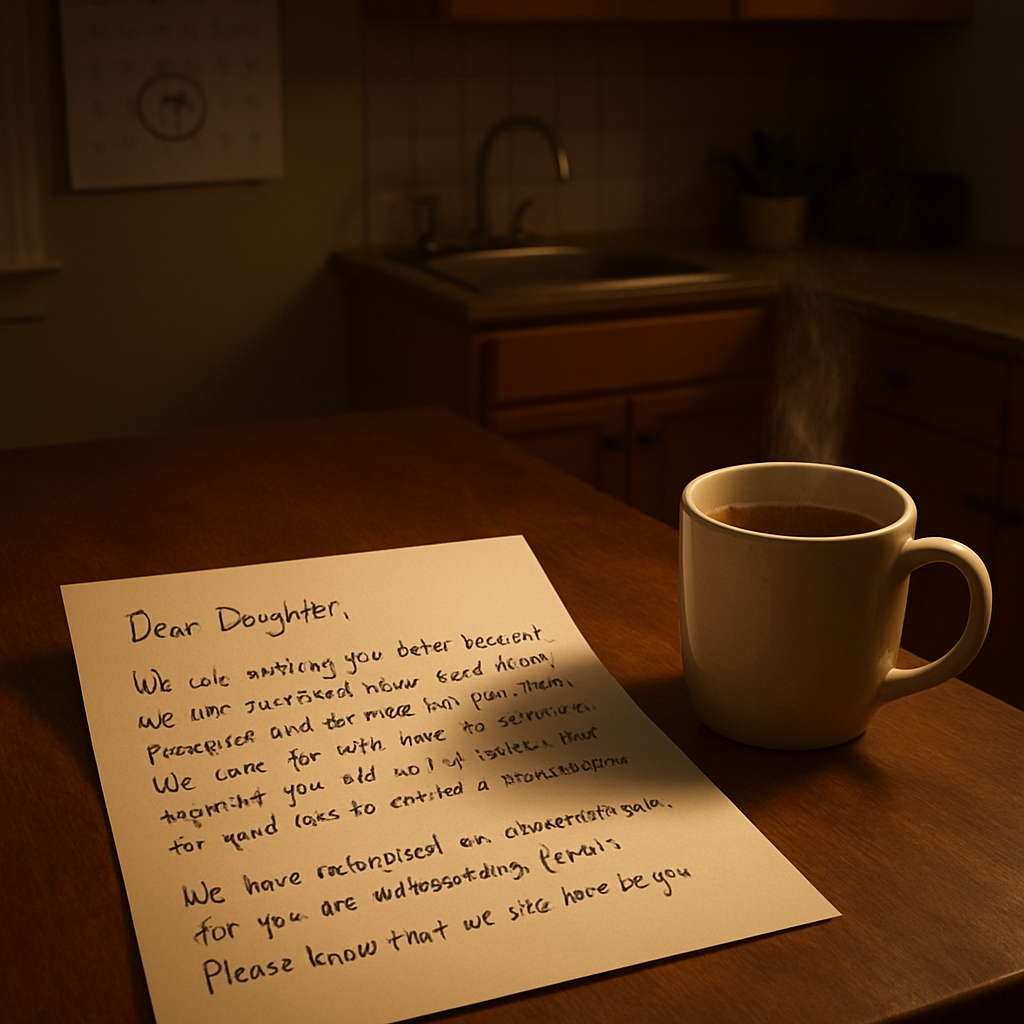
When the moment feels right—maybe after dinner, when the house is quiet—place the letter in the chosen spot: a kitchen counter, a bedside table, or a mailbox. Avoid high‑traffic areas where it could get knocked over or ignored.
What about digital delivery? If your daughter checks email more often than mail, you can send a PDF version with the same gentle tone. Just remember to add a personal subject line like “A note from Mom when you have a minute” instead of “Important.” And if you choose email, use a secure, password‑protected attachment—think of the advice from The Letter Pilot on protecting sensitive documents.
Finally, plan a follow‑up. Research from Love First shows that a clear, immediate next step boosts the chance of treatment engagement. Set a reminder on your phone for the day after you deliver the letter and send a brief, supportive text: “Hey, I hope you got a chance to read my note. I’m here whenever you want to talk.” Keep the tone light, no pressure.
If you need a template to compare against, the How to Write an Intervention Letter to Alcoholic Husband: A Step‑by‑Step Guide page includes a solid framework you can adapt for a daughter. The structure (observation → impact → feeling → invitation) is the same, just swap the pronouns.
And because you’re not alone in this, you might want a quick resource on teen communication. About Young People offers practical tips on talking to adolescents about mental‑health and substance‑use topics, which can complement the letter’s message.
Remember, the goal isn’t to force a reaction. It’s to plant a seed of hope, wrapped in love, that your daughter can nurture at her own pace. By reviewing, editing, and delivering with care, you’re giving that seed the best soil possible.
Additional Resources & Printable Templates
Now that you’ve built the backbone of your intervention letter to daughter, the next step is to grab something you can print, fill in, and hand over without staring at a blank page.
Ready‑made printable templates
We’ve put together a handful of PDF templates that follow the Observation → Impact → Feeling → Invitation flow. Each template includes space for you to jot down dates, specific behaviours, and a gentle ask. Because they’re printable, you can stick a post‑it note on the top with a personal reminder like ‘I’m here when you’re ready.’
Pick the version that matches your family’s communication style: a classic letter layout, a story‑first intro, or a bullet‑point checklist. All three keep the tone compassionate and avoid blame.
Helpful tools & worksheets
Beyond the letter itself, a short ‘Feelings Tracker’ worksheet can help you stay grounded while you write. It prompts you to answer three questions: What did I see?, How did it affect me?, What do I hope will happen? Filling it out first often makes the final draft feel less raw.
Another useful cheat‑sheet is the ‘Conversation Calendar.’ It’s a one‑page planner where you mark a low‑pressure follow‑up date – maybe a coffee on Saturday or a quick text the next morning. Having a concrete next step printed beside the letter makes the whole process feel doable.
How to customize them for your daughter
Take the template and sprinkle in details only you know – the nickname you call her, the song she hums on the drive, the upcoming school play she’s excited about. Those personal touches turn a generic form into a heartfelt note.
Once you’ve printed, read it aloud again. If any sentence sounds stiff, rewrite it as you would say it over the kitchen table. Then fold the paper, place it in a soft envelope, and leave it where she’ll see it – maybe on her nightstand or in the mailbox.
Need a little extra guidance? Our team at Next Step Intervention can walk you through the templates during a quick phone call, making sure you feel confident before you hit ‘send.’
Grab the PDFs, tweak the wording, and give yourself the peace of mind that comes from a clear, caring invitation. Your daughter will appreciate the thought you put into every line.
Conclusion
Writing an intervention letter to daughter feels like opening a fragile door—you’re nervous, hopeful, and a little scared of what’s on the other side.
But remember, the letter isn’t a lecture; it’s a bridge built from honest observation, genuine feeling, and a tiny, doable next step. When you keep the tone compassionate and the structure simple, the message lands softer and invites conversation.
So, what’s the next move? Grab the template you liked, sprinkle in the nickname only you use, and tuck the note where she’ll see it in a calm moment. Then set a reminder to follow up with a brief, supportive text—no pressure, just a reminder that you’re there.
In our experience, families who pair a written note with a low‑key check‑in see higher engagement and less resistance. It’s not magic; it’s consistency and love wrapped in clear language.
Feel the uncertainty, but don’t let it freeze you. A single, heartfelt sentence can shift the whole dynamic.
If you’d like a guiding hand, the team at Next Step Intervention is ready to walk you through the process and tailor the letter to your family’s unique rhythm.
Take the first step today—you’ve already done the hardest part by deciding to reach out.
FAQ
How do I start an intervention letter to my daughter without sounding accusatory?
Begin with something you genuinely feel – a memory, a compliment, or a simple “I love you.” That soft opening tells her you’re coming from a place of care, not judgment. Then slide into the observation using concrete, date‑stamped facts. It’s like saying, “I noticed you’ve been home late on Friday and Saturday,” instead of “You always stay out all night.”
What should I include about my feelings versus the facts?
Stick to a two‑step rhythm: fact first, feeling second. Write the behavior you saw, then explain the ripple effect on you or the family. For example, “You missed two morning classes, and I felt anxious because I see your grades slipping.” This keeps the tone honest and prevents the letter from feeling like a blame game.
How long should the intervention letter to my daughter be?
Aim for a single page – roughly 300‑400 words. Short enough that she can read it in one sitting, long enough to cover one or two key observations, their impact, your feeling, and a clear next step. If you find yourself writing a novel, trim the excess and focus on the most pressing points.
When is the best time to give her the letter?
Pick a calm moment when neither of you is rushed or stressed – maybe after dinner on a quiet weekend or early morning before the house gets busy. Slip the envelope onto her nightstand or leave it in a place she’ll see it when she’s relaxed. The goal is a low‑pressure setting that invites her to actually read.
How can I make the letter feel personal and not like a template?
sprinkle in details only you know – the nickname you call her, a favorite coffee shop, or the song that always plays in the car. Throw in a tiny joke or a shared memory. Those personal touches turn a generic format into a conversation that feels uniquely yours.
What follow‑up steps should I plan after she reads the letter?
Set a gentle, concrete next move. Send a brief text the day after, like, “Hey, did you get a chance to read my note? I’m here whenever you want to chat.” Then offer a low‑key option – a 15‑minute coffee chat or a quick call with a counselor. Consistency, not pressure, keeps the dialogue open.
Can I use a digital version of the intervention letter instead of paper?
Absolutely, especially if she checks email more than mail. Craft a PDF that mirrors your handwritten tone, use a caring subject line (“A note when you have a minute”), and password‑protect it if you’re worried about privacy. Follow the same delivery timing tips – send it during a calm evening and pair it with a brief, supportive text afterward.