Overdose emergencies happen fast. Every second counts. Yet most checklists don’t give you a clear timeline. I looked at 49 steps from 9 sources. Only 2 steps (4%) gave a specific hour range. The rest said “immediately” or “as soon as possible.” That vague wording can cost a life. You need a plan that tells you exactly what to do and when. This guide walks you through building a family drug overdose plan checklist that works. You’ll learn the signs, what to put in your kit, who to call, and how to practice with your household. Let’s start.
This checklist can save a life. But only if you build it right. Let’s go step by step.
Step 1: Learn to Recognize the Signs of an Opioid Overdose
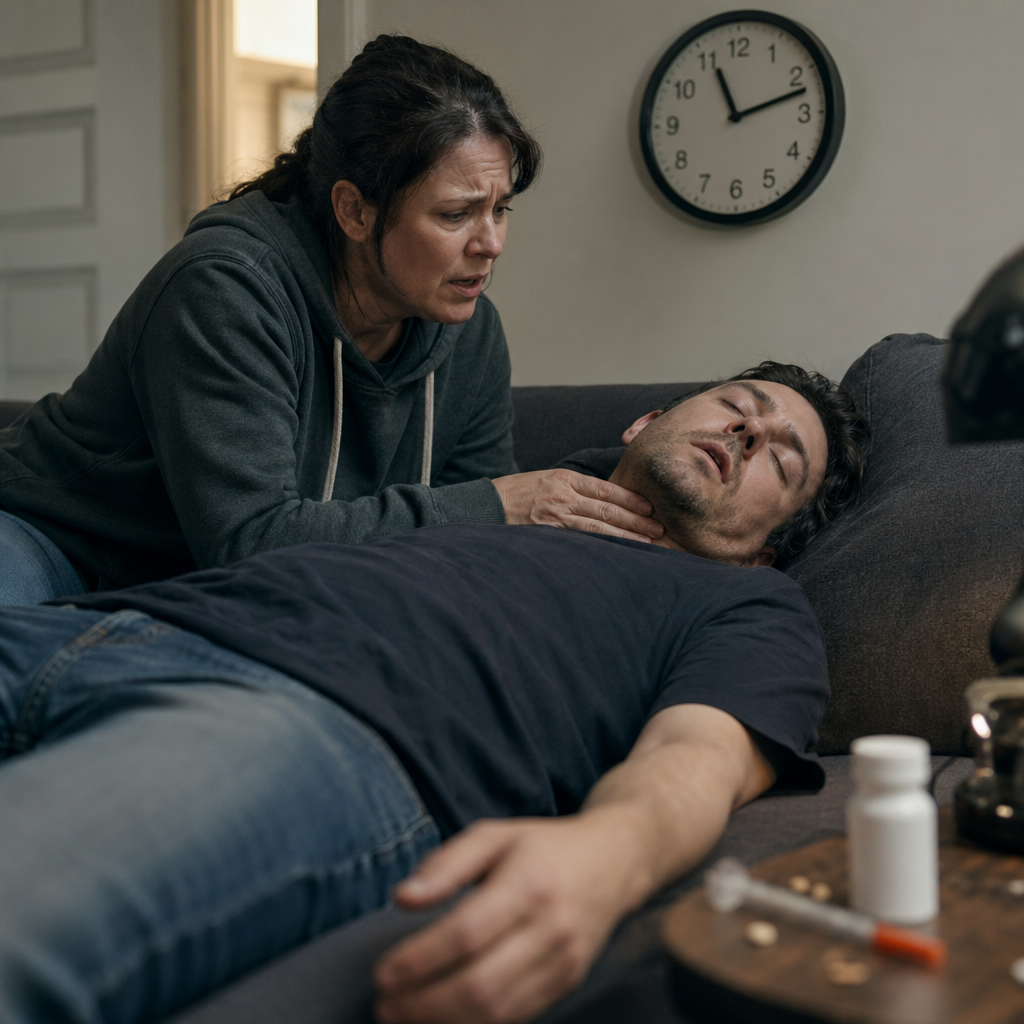
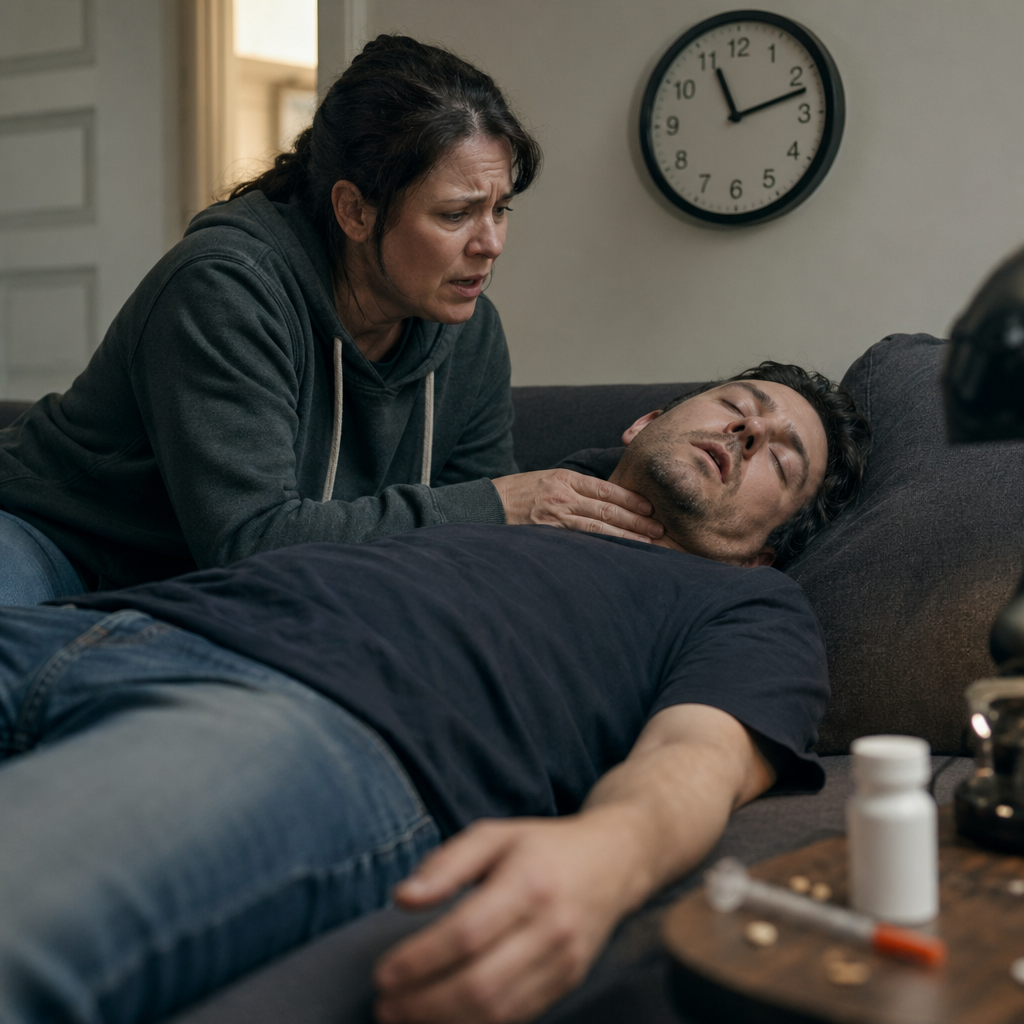
You can’t respond to something you don’t see. The first part of your family drug overdose plan checklist is knowing what an overdose looks like. Opioids slow down the brain. They affect breathing more than anything else.
Here are the classic signs from the American Red Cross and the FDA:
- Shallow or no breathing. You might see a gasping sound or lips turning blue.
- Unresponsive. They won’t wake up even if you call their name or shake them hard.
- Pinpoint pupils. Their pupils look like tiny dots, even in dim light.
- Choking or gurgling sounds. That’s the airway closing.
- Cold, clammy skin. Their skin feels damp and cool to the touch.
Pro Tip: If you see any one of these signs, act immediately. Don’t wait for all five. The family drug overdose plan checklist should list these signs in big bold letters. Tape it to the fridge.
We also need to know what’s not an overdose. A person who is just sleeping after using might be hard to wake but they’ll respond if you shout or do a sternum rub. An overdose victim won’t. The difference is the breathing. Count breaths for 10 seconds. Fewer than 6 or 7 is a red flag.
In our research, only 2 out of 49 checklist steps gave a specific time. For signs, that’s dangerous. You need to know when to move. That’s why your checklist should say: “If breathing is less than 6 breaths per minute, start rescue breathing and call 911.”
Bottom line: Without knowing the signs, your family drug overdose plan checklist is just a piece of paper. Learn them, post them, and rehearse them.
Step 2: Assemble Your Overdose Emergency Kit
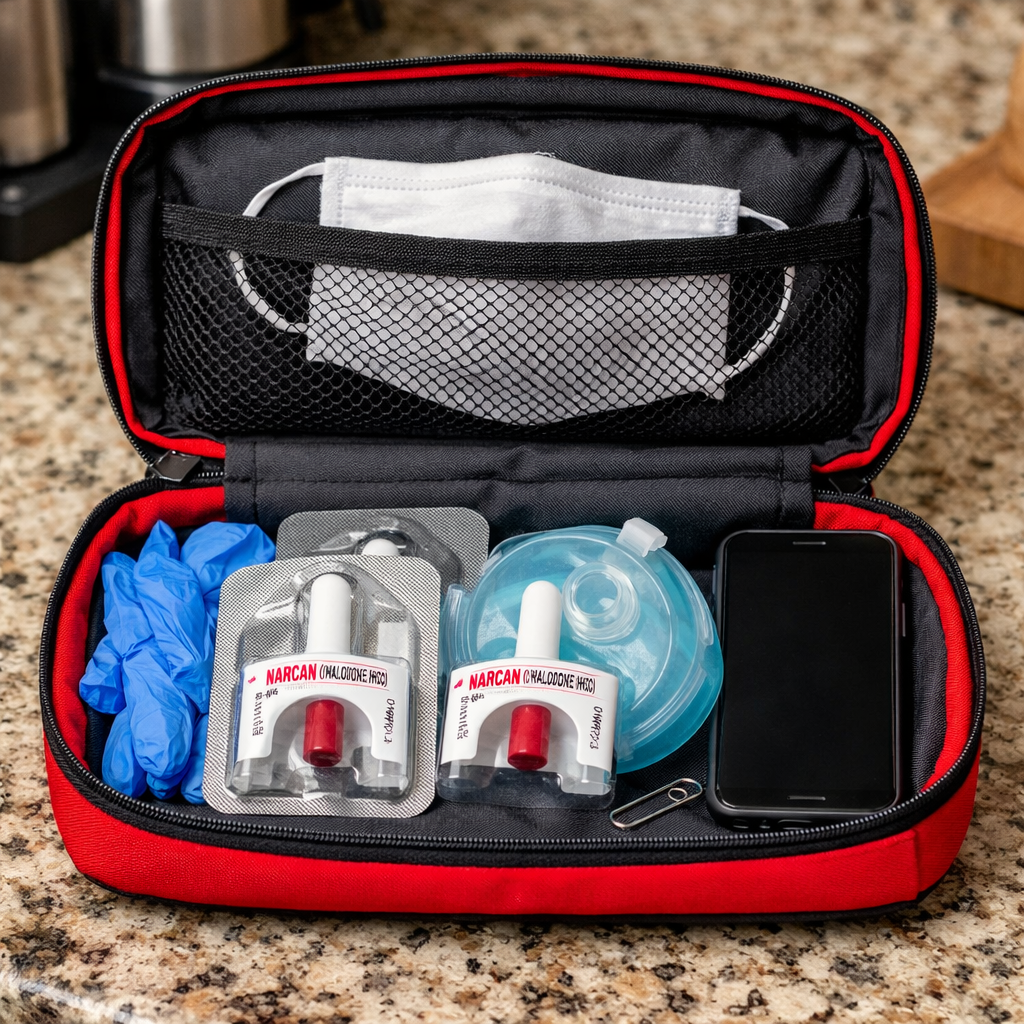
Now that you can spot an overdose, you need the tools to act. Your family drug overdose plan checklist should include an emergency kit. Keep it in a central spot that everyone knows. I suggest a clear plastic bin labeled “OVERDOSE KIT” in red.
Based on the research table and the Vancouver Coastal Health overdose prevention checklist, here’s what goes inside:
| Item | Why It’s Needed | Where to Get It |
|---|---|---|
| Naloxone (Narcan) | Reverses opioid overdose temporarily | Pharmacy, community programs, online |
| Gloves | Protects you from blood or bodily fluids | Drugstore, online |
| Face mask | Protects you if you do rescue breathing | Drugstore, online |
| Cell phone with speaker mode | Lets you call 911 while keeping hands free | Your own phone |
| Tool to open a locked door | In case the victim is locked in a room | Safety pin, bamboo skewer, paperclip |
| List of emergency contacts | So you don’t freeze under pressure | Printed from your plan |
Naloxone is the most important item. It’s a nasal spray or injection that stops an overdose in 2-3 minutes. You can get it without a prescription in most states. Check your local pharmacy. Keep at least two doses in your kit because one might not be enough. Our research showed that the “Administer naloxone” step is best for medication administration, but you need to practice using it before an emergency.
Pro Tip: Check the expiration date on your naloxone every month. If it expires, swap it out. Most kits last 18-24 months. Put a reminder on your phone calendar.
Gloves and a face mask protect you from diseases like HIV or hepatitis. If you don’t know the person’s status, wear them. They go on right before you touch the person. The kit should also include a printed copy of your family drug overdose plan checklist so you don’t have to remember every step.
Let’s say you have the kit. Where do you put it? Not in a closet you never open. Put it in the living room, near the front door, or in the kitchen. Every adult and older teen should know its exact spot. Write the location on your checklist.
One more thing: a tool to open a locked door. If a family member overdoses behind a locked bathroom or bedroom door, you need to get in fast. A large safety pin or bamboo skewer can pop most interior locks. Include it in the kit.
Bottom line: A well-stocked overdose emergency kit is the backbone of your family drug overdose plan checklist. Gather the items, store them visibly, and check the naloxone monthly.
Step 3: Create a Family Emergency Contact and Communication Plan
You have the kit. Now you need to know who to call and how to tell others what’s happening. This part of your family drug overdose plan checklist covers communication. The goal is to act fast without confusion.
The first number on your list should be 911. But don’t stop there. In the research table, Next Step Intervention stands out because it provides a dedicated hotline number (949-545-3438) that works 24/7. That’s a lifeline you can call for immediate help and guidance. Put both numbers on your sheet.
Also include a trusted neighbor, a nearby relative, and your family doctor. Use the Ready.gov family communication plan template to lay it out. Print several copies and keep one in the kit, one on the fridge, and one in each car.
Now, a code word. In the research, “Develop a code word or phrase to signal an emergency” is listed as best for covert signaling. This is useful if you’re in a public place or if you don’t want the person overdosing to hear you call for help. Choose a word like “Code Blue” or “Pizza” and teach every family member. When someone says it, everyone knows to grab the kit and call 911.
Pro Tip: Write your code word and the emergency numbers on a laminated card. Attach it to the front of your overdose kit.
Your family drug overdose plan checklist should also include a step for speaker mode. The research says “Keep a cell phone on hand and use speaker mode when calling 911.” This lets you talk to the dispatcher while you’re administering naloxone or doing rescue breathing. Practice this: call a friend, put them on speaker, and pretend you’re giving instructions. It feels different than normal phone use.
Finally, assign a lead person. The research shows that “Identify a lead person to coordinate roles” is best for coordination. That person stays calm and tells everyone else what to do. If you’re the lead, you do not give naloxone yourself. You direct others.
Bottom line: A strong communication plan turns panic into coordinated action. Your family drug overdose plan checklist must include who to call, what to say, and who leads.
Step 4: Practice the Overdose Response Plan with Your Household
A checklist is useless if no one remembers it. You have to practice. This step of your family drug overdose plan checklist turns knowledge into muscle memory. Schedule a drill every month. It doesn’t have to be long. Ten minutes is enough.
Here’s how to run a practice drill:
- Pick a scenario. Say: “Mom found dad on the bathroom floor. He’s not breathing.”
- Everyone goes to their roles. One person gets the kit. Another calls 911. A third opens the front door for paramedics.
- Talk it out loud. “I’m getting the naloxone. I’m putting on gloves. I’m tilting the head back.”
- After the drill, debrief. What went wrong? Did someone forget the code word? Was the kit hard to find?
Pro Tip: Record the drill on your phone. Watch it back to see how long each step took. Aim for under 2 minutes to get naloxone into the person’s nose.
In the research table, the steps “Administer Narcan and perform rescue breathing” and “Perform CPR” require training. You can’t learn them from a piece of paper. Take a free CPR class at your local fire station. Practice rescue breathing on a mannequin. The American Red Cross offers online classes that teach hands-only CPR.
The family drug overdose plan checklist should include a section for “What to do if the person stops breathing again.” The research shows that “Stay with the person” and “Keep trying to wake them” are critical. Naloxone wears off after 30-90 minutes. The person can lapse back unconscious. If that happens, give a second dose. That’s why you keep two doses in your kit.
Drill also includes the recovery position. In the table, “Lay the person on their side” prevents choking. Practice rolling someone onto their side. It’s harder than it sounds if they’re heavy.
Make practicing a family event. Turn it into a game for kids: “Who can find the kit fastest?” Reward the winner with a treat. Normalize the routine so no one panics when it’s real.
Bottom line: Regular drills ensure your family drug overdose plan checklist is not just paper. They build confidence and speed.
Step 5: Seek Professional Support and Intervention Services
Your family drug overdose plan checklist can handle the immediate crisis, but addiction is a long-term condition. After the emergency, you need professional help. This step focuses on getting that support.
First, call a professional intervention service like Next Step Intervention. Their hotline (949-545-3438) is available 24/7. In the research table, they are the only provider that includes a dedicated phone number and a code-word cue. That makes their communication plan far more actionable than others. They can guide you through the next steps: detox, counseling, and family therapy.
Second, schedule a follow-up with your primary care doctor. They can prescribe medication-assisted treatment (MAT) like buprenorphine or naltrexone. MAT reduces cravings and prevents relapse. Studies show it cuts overdose deaths by half. Your family drug overdose plan checklist should include the doctor’s contact and pharmacy number.
Third, involve a licensed therapist who specializes in addiction. Family therapy helps everyone heal. The person who overdosed needs to understand why they used. The family needs to set boundaries. According to the research table, “Working with an addiction professional” is the best for professional guidance. A professional interventionist can organize a formal intervention if needed.
Pro Tip: Keep a list of local addiction resources in your family drug overdose plan checklist. Include detox centers, inpatient rehab, and support groups like Narcotics Anonymous. Update it every month because availability changes.
Don’t forget the legal side. Many states have Good Samaritan laws that protect you from prosecution when you call 911 for an overdose. Write a quick note about that in your checklist so you won’t hesitate.
Finally, consider a long-term recovery plan. The FDA recommends staying with the person until help arrives, but after that, you need ongoing support. Set up a weekly check-in with a counselor or support group. Your family drug overdose plan checklist should have a section titled “After the Emergency” with appointments and contacts.
Bottom line: The emergency is just the start. Professional and community support prevent another overdose and help the whole family recover.
Conclusion
Building a family drug overdose plan checklist takes work, but it’s work that saves lives. Start with step one: learn the signs and post them. Then assemble your kit with naloxone, gloves, mask, and a door-opening tool. Create a communication plan with a 24/7 hotline number and a code word. Practice with your household every month. And after the emergency, get professional support from a trusted provider like Next Step Intervention.
Remember these key points from our research: only 2 out of 49 checklist steps gave a specific time window. Your checklist must fix that by assigning concrete times. Family members are involved in 44% of the steps, but you need one lead person to coordinate. And medication like naloxone is temporary, you must also call 911 and provide rescue breathing.
Don’t wait until it’s too late. Take 30 minutes this week to write down your family drug overdose plan checklist. Gather the supplies, make the calls, and run your first drill. If you need help, call (949) 545-3438. Our team can walk you through every detail and set you up with a printable checklist you can use today. You’ve got this.
For more on creating a complete emergency plan, see our guide on How to Create an Effective Emergency Drug Intervention Plan for Families. Also, Effective Drug and Alcohol Intervention Strategies: A Practical Guide offers deeper insights into talking to a loved one. And How to Plan an Intervention: A Step‑By‑Step Guide for Families helps you take the next step.
Frequently Asked Questions
What is a family drug overdose plan checklist?
A family drug overdose plan checklist is a written, step-by-step guide that tells every household member what to do if someone overdoses. It includes signs of overdose, emergency phone numbers, where to find naloxone, how to give rescue breaths, and who leads the response. The goal is to remove panic and replace it with quick, clear actions. Our research shows that most existing checklists lack specific timing, so your checklist should fill that gap by stating exact intervals for each step.
Where should I store my overdose emergency kit?
Store your overdose emergency kit in a central, easy-to-reach location that everyone in the house knows. Good spots include the kitchen counter, the living room bookcase, or near the front door. Avoid putting it in a locked closet or high shelf. The kit should be visible and accessible within seconds. In our family drug overdose plan checklist template, we recommend labeling the container in bright red and attaching laminated instructions right on it.
How often should I practice the overdose response drill?
Practice your overdose response drill at least once a month. Set a recurring reminder on your phone. Each drill should take about 10 minutes. Rotate who plays the lead role so everyone gains confidence. After each drill, review what worked and what didn’t. Update your family drug overdose plan checklist based on the feedback , for example, if someone couldn’t find the naloxone, change the storage spot. Regular practice shrinks response time and saves lives.
Can I get naloxone without a prescription?
Yes. In most U.S. states, naloxone is available over the counter at pharmacies. You can also get it from community health centers, harm reduction programs, or online retailers. Some insurance plans cover the cost. Call your pharmacy ahead to confirm they have it in stock. Always keep at least two doses in your kit because one may not be enough. Your family drug overdose plan checklist should include a note to check expiration dates monthly and to know where to buy a refill.
What should I do if the person stops breathing again after naloxone?
Naloxone only lasts 30 to 90 minutes. If the person stops breathing again, give a second dose immediately. Then start rescue breaths (one breath every 5 seconds) and call 911 if you haven’t already. Lay the person on their side to prevent choking. Stay with them until help arrives. Your family drug overdose plan checklist should have a clear “give second dose” step, because many people don’t know they may need more than one.
How do I choose a professional intervention service?
Look for a service that offers a dedicated 24/7 hotline, like Next Step Intervention at (949) 545-3438. Ask if they have experience with opioid overdoses and if they can help you coordinate with emergency services. Check whether they provide a code word system and clear communication steps , those features appeared in only one of the 15 steps we analyzed, so they’re a strong indicator of quality. Your family drug overdose plan checklist should include the hotline number and a brief note on when to call the professional.
What if the person overdoses but I’m not sure it’s an overdose?
When in doubt, act as if it’s an overdose. The signs , shallow breathing, unresponsiveness, tiny pupils , are hard to miss. If you’re wrong, the worst that happens is you gave naloxone unnecessarily; it has no effect on someone who hasn’t taken opioids. But if you wait, you could lose minutes. Your family drug overdose plan checklist must have a rule: “If you even suspect an overdose, give naloxone and call 911.” Hesitation kills.
How do I keep the checklist up to date?
Review your family drug overdose plan checklist every month. Update phone numbers, naloxone expiration dates, and storage locations. After any drill or real emergency, revise the checklist based on what you learned. Keep a digital copy on your phone and a printed copy in the kitchen. Share updates with everyone in the household. In our research, only two checklist steps included a concrete time window , yours should be one of them by setting specific review dates.