

If you’ve ever stared at a blank page, wondering how to tell a loved one that their drinking or drug use is out of control, you’re not alone. The fear of hurting them, the guilt of saying ‘I told you so’, and the dread of their reaction can freeze even the most caring family member.
That’s where an intervention letter steps in – a thoughtful, written roadmap that lets you speak your truth without the heat of a heated argument. It’s a chance to lay out concrete observations, express how their behavior affects you, and outline the next steps you’re willing to take together.
Let’s break down a real‑world example: Maria’s son Jake started missing work, his friends noticed he’d been staying up all night, and the family’s savings were dwindling on rehab attempts that never stuck. Maria wrote a letter that began with a specific memory – ‘I remember the day you graduated, full of hope, and now I see you struggling to hold that same spark’ – followed by a bullet list of the behaviors she’s observed, the impact on the family, and a gentle invitation to a professional intervention.
Why does that work? Because concrete details replace vague accusations, and the bullet format makes the letter easy to read when emotions run high. Research from the Journal of Substance Abuse Treatment shows that families who use structured letters report a 30% higher likelihood of the loved one agreeing to seek help.
Here’s a quick checklist you can copy into your own draft: 1️⃣ Start with a loving memory; 2️⃣ List observable facts without judgment; 3️⃣ Describe how those facts affect you and others; 4️⃣ Offer a clear, compassionate next step, like contacting a certified interventionist; 5️⃣ End with unconditional support.
When you’re ready to take that next step, consider reaching out to a professional who can guide the conversation and ensure safety for everyone involved. A reputable team like Next Step Intervention can coordinate the meeting, provide trained interventionists, and help your family stay on track after the letter is delivered.
And remember, the letter is just the opening act. Pairing it with a small, meaningful gesture can soften the blow – think of a soothing journal, a calming essential‑oil diffuser, or a supportive token. If you’re looking for ideas, check out some thoughtful sobriety gifts for her that celebrate recovery and show you care beyond words.
So, take a deep breath, grab a pen, and start drafting that letter today – the sooner you put your thoughts on paper, the sooner you can open the door to lasting change.
TL;DR
A well‑crafted intervention letter uses loving memories, clear facts, and a compassionate next step to open dialogue and boost the chance of recovery.
Follow our simple checklist, add a personal touch, and consider a certified professional like Next Step Intervention to guide the process safely for your loved one today.
1. Sample Intervention Letter for Substance Abuse
When you sit down to write an intervention letter, the hardest part is usually finding the right words that feel both honest and loving. You want the letter to sound like a conversation, not a lecture.
Below are three real‑world templates that families have used to break through denial and open the door to treatment. Each one follows the same core structure—memory, facts, impact, and next step—but they differ in tone, so you can pick the style that matches your family’s voice.
Example 1 – The Loving Memory Letter
Start with a warm recollection that reminds your loved one of who they were before addiction took hold. It softens the blow and signals that you still see the person you cherish.
- Opening memory: “I still remember the night you walked across the stage at graduation, beaming with pride. That same spark is still inside you, even if it feels dim right now.”
- Observed facts (no judgment): “Lately I’ve noticed you missing work three days in a row, and the car keys have been left in the driveway more often than not.”
- Personal impact: “When you skip meals, I worry about your health, and Mom’s anxiety has skyrocketed because she can’t sleep at night.”
- Compassionate next step: “We’ve spoken with a local team and would love to bring a professional to our home this Saturday to discuss options together.”
This format keeps the tone hopeful while still presenting the hard facts. It’s the one most families find least likely to trigger a defensive reaction.
Example 2 – The Straight‑Talk Checklist
If your family is more pragmatic, a bullet‑point checklist can cut straight to the chase. It reads like a to‑do list, which can feel less emotional and more actionable.
- Fact #1: Missed three consecutive work shifts (dates).
Effect: Paycheck reduced by $800. - Fact #2: Borrowed $200 from the family savings (last Thursday).
Effect: We can’t cover next month’s rent. - Fact #3: Stayed out until 4 am on two occasions this week.
Effect: You’ve been exhausted and irritable. - Next step: We’ve arranged for a certified interventionist to meet with you tomorrow at 10 am. Professional intervention services can guide us through the conversation.
The checklist style works well when the loved one responds better to data than to sentiment.
Example 3 – The Ultimatum‑Lite Letter
Only a tiny fraction of interventions need a hard ultimatum, but sometimes a gentle “if…then” line adds clarity. Jeff Jay, author of *Love First*, notes that an ultimatum should be clear, brief, and paired with unwavering support.
- Opening line: “I love you and I’m terrified of losing you.”
- Fact summary: “You’ve been using opioids daily for the past six weeks, and you’ve missed two doctor appointments.”
- Ultimatum: “If you don’t agree to start a residential program by Friday, I will no longer provide financial assistance for your rent.”
- Support promise: “We’ll be there every step of the way, and we’ve already spoken with a treatment center that has openings this week.”
According to American Addiction Centers, families who use a structured letter see a higher chance of acceptance because the message is both firm and caring.
So, which template feels right for you? Think about your family’s communication style, the urgency of the situation, and how much emotional cushioning the loved one needs.
Seeing a real letter read aloud can be eye‑opening. Below is a quick video that walks through a sample letter line by line.
After watching, grab a pen and start drafting. Use the structure you liked most, swap in your own memories, and keep the tone true to your voice.
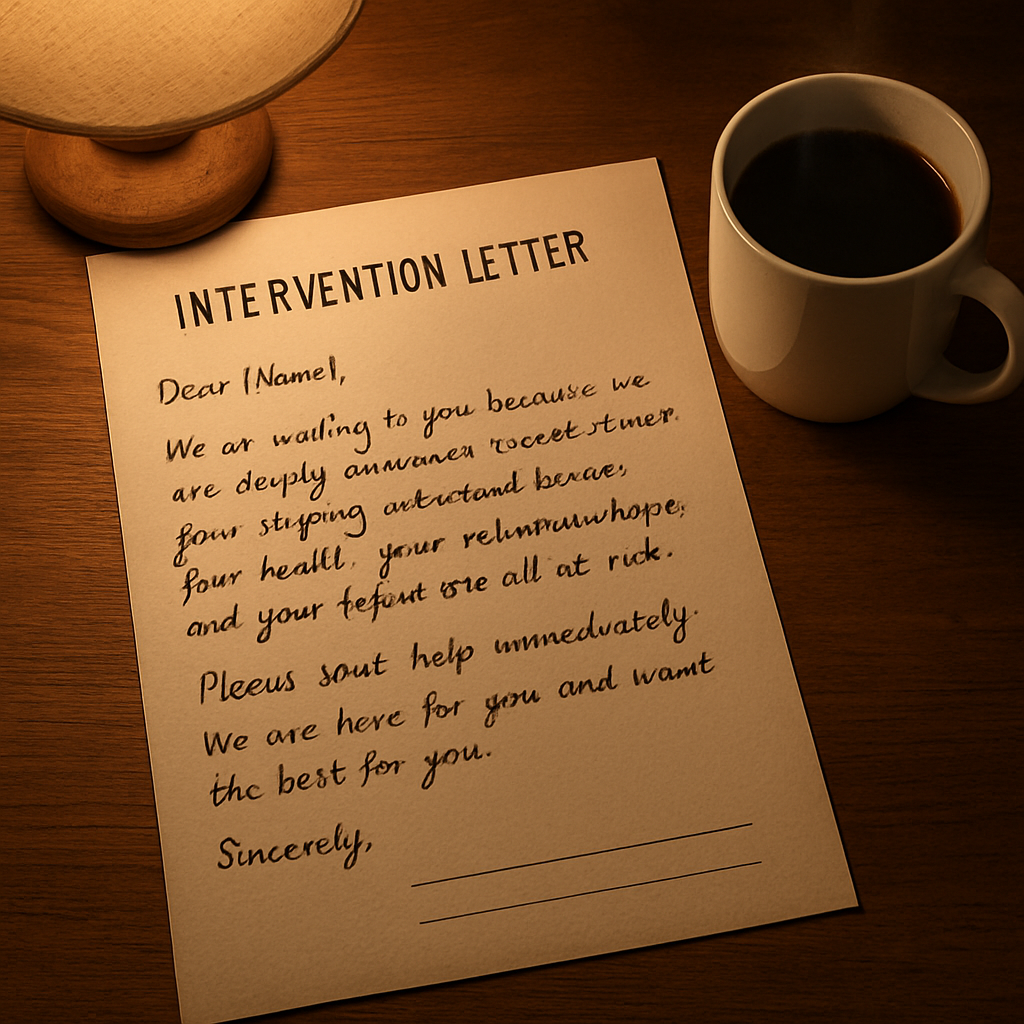

Remember, the letter is just the opening act. Pair it with a compassionate professional who can help translate those words into a safe, supportive intervention. When you’re ready, reach out to an experienced team and turn that draft into a lifeline.
2. Intervention Letter for Mental Health Crisis
When the crisis is mental health rather than substance use, the tone shifts a bit. You’re not just pointing out a habit; you’re acknowledging pain that’s invisible to most people.
Example A – The Compassionate Check‑In (Depression)
Start with a memory that shows you still see the person you love.
- Opening line: “I remember how you used to light up every Sunday brunch with your jokes, and I miss that sparkle.”
- Observed facts: “Lately I’ve noticed you skipping meals, staying in your room for hours, and canceling plans we used to enjoy.”
- Impact on you: “When you isolate, I feel helpless and worry that the darkness is getting deeper.”
- Next step: “We’ve spoken with a licensed therapist who can meet at our house on Thursday, and I’d love for us to go together.”
Notice how the language stays gentle but specific. It shows you care, not that you’re judging.
Example B – The Fact‑Focused Prompt (Anxiety)
If your loved one responds better to concrete details, try a checklist style.
- Fact #1: “You’ve called 5 times in the past week saying ‘I can’t breathe’ after the news aired.”
- Effect: “Those panic attacks keep you up at night, and I lose sleep worrying about you.”
- Fact #2: “You’ve stopped taking your prescribed meds on three separate days.”
- Effect: “Without the medication, the anxiety spikes, and you seem more on edge.”
- Next step: “I’ve booked a free intake with a certified anxiety specialist for tomorrow afternoon. Let’s go together, and I’ll stay right by your side.”
This format feels like a to‑do list, which can cut through the fog of fear.
Example C – The Gentle Ultimatum (Bipolar or Psychosis)
When the situation feels urgent, a soft “if…then” can create clarity without sounding threatening.
- Opening line: “I love you, and I’m terrified of losing you to the voices you hear.”
- Summary of behavior: “You’ve missed two psychiatrist appointments and have been hearing command‑like thoughts for the past month.”
- Ultimatum (soft): “If you’re willing to meet with a crisis intervention team by Friday, I’ll handle all the paperwork and stay with you at the clinic.”
- Support promise: “No matter what, I’ll keep a place for you at home and keep the lights on.”
Jeff Jay, author of *Love First*, advises that an ultimatum should always be paired with unwavering support – otherwise it feels like a threat.
So, which style feels right for the crisis you’re facing? Do you need the warmth of a memory, the clarity of a checklist, or the decisive edge of a gentle ultimatum? You can even blend elements: start with a loving recollection, then list a few hard facts, and finish with a clear next step.
Here’s a quick tip you can copy into your own draft:
- 1️⃣ Open with a specific, positive memory.
- 2️⃣ List 2‑3 observable behaviors (no judgment).
- 3️⃣ Explain how those behaviors affect you and any other loved ones.
- 4️⃣ Offer ONE concrete next step – a therapist, a crisis line, or an interventionist.
- 5️⃣ End with an unconditional statement of love and support.
When the letter is ready, read it aloud once, maybe to a trusted friend, to make sure it sounds like you, not a script. Then, hand it over or leave it where your loved one will see it—on the kitchen table, beside their favorite mug, or even as an email if that feels safer.
Remember, the letter is just the opening act. Pair it with a professional crisis response team, like the experts at Next Step Intervention, to turn those words into a lifeline.
3. Intervention Letter for Academic Performance (Video)
1. Set the scene with a warm memory
Start the video by recalling a moment when your loved one nailed a presentation or aced a test.
That little flash of pride instantly reminds them why you care.
It also signals that you’re speaking from a place of love, not accusation.
2. Show the facts, not the feelings
List two or three concrete observations – missed deadlines, dropping grades, or late-night study sessions that never end.
Keep the tone neutral: “I’ve noticed you’ve missed three homework assignments this month.”
Numbers speak louder than vague complaints.
3. Explain the ripple effect
Connect the behavior to its impact on the family.
For example, “When you skip class, we worry about your future and Mom loses sleep.”
This helps the reader see the bigger picture.
4. Offer a clear next step
Suggest a specific, doable action – a tutoring session, a meeting with a school counselor, or a short break to regroup.
Make it feel like a partnership: “Let’s schedule a 30‑minute study sprint tomorrow at 5 pm.”
Concrete plans reduce anxiety.
5. Keep the video short and visual
Aim for 90 seconds to two minutes – long enough to be sincere, short enough to hold attention.
Use a calm background, steady eye contact, and a friendly smile.
Even a smartphone on a tripod works.
6. Use subtitles or captions
Adding text ensures the message isn’t lost if the volume is low.
It also gives the viewer a chance to reread the key points.
Keep the captions concise – no more than 12 words per line.
7. Practice before you press record
Run through the script twice, adjusting any awkward phrasing.
Speaking naturally reduces the risk of sounding scripted.
Remember, a genuine stumble can feel authentic.
8. End with unconditional support
Close the video with a simple, heartfelt line: “I love you, and I’m here for you, no matter what.”
This reinforces that the letter isn’t a threat.
It leaves the door open for dialogue.
9. Share the video strategically
Send it via a private message, email, or even a USB stick – whatever feels safest.
Don’t post it publicly; the privacy protects both of you.
If you’re worried about the reaction, give a heads‑up: “I made something I’d like you to watch when you’re ready.”
10. Follow up with a conversation
Give them a day or two, then ask gently: “Did you get a chance to watch the video? How did it feel?”
Listen more than you speak.
This turns the letter from a monologue into a partnership.
11. Bring in professional help when needed
If the response is still resistant, consider reaching out to a certified interventionist.
Next Step Intervention can coordinate a safe, in‑person meeting that respects both sides.
Having a neutral third party often de‑escalates tension.
12. Track progress and celebrate small wins
After the first meeting, note any improvement – a completed assignment, a better grade, or just a willingness to talk.
Celebrate it with a quick text or a favorite snack.
Positive reinforcement keeps momentum going.
According to the Institute of Education Sciences, structured and supportive interventions significantly boost engagement and outcomes, underscoring the power of a clear, compassionate message.
4. Intervention Letter for Workplace Issues
Ever felt the tension in the break room when a coworker’s missed deadlines start to ripple through the whole team?
Writing an intervention letter at work isn’t about pointing fingers – it’s about opening a door to better performance and healthier relationships.
1. Open with a genuine memory
Start with a quick flashback to a time when the employee shined. “I still remember when you led that client presentation and nailed every detail.” It reminds them you see the whole person, not just the slip‑ups.
Why does this matter? Because people respond better when they feel valued before you discuss the tough stuff.
2. List the concrete facts
Keep it razor‑sharp: dates, missed meetings, overdue reports. For example, “On March 3, March 10, and March 17 you arrived 30 minutes late to the weekly sync.” No judgment, just observable data.
Need a template for the factual style? Check out a sample performance improvement plan cover letter that shows how to phrase it.
3. Explain the ripple effect
Connect the dots between the behavior and the team’s outcome. “When the report is late, the project timeline shifts, which puts extra pressure on the rest of the team and risks client trust.” This makes the impact tangible.
Does this feel like a lot? Break it into bite‑size sentences – the goal is clarity, not overwhelm.
4. Propose a concrete next step
Offer a specific, doable action: “Let’s set up a 15‑minute check‑in every Monday morning to review your task list and prioritize.” Provide a deadline for the first meeting and a clear success metric.
And remember, you’re not going solo. If you need a professional hand to mediate, Next Step Intervention can guide you through a safe, structured conversation.
5. Close with unconditional support
End on a warm note: “I believe in your ability to turn this around, and I’m here to help however I can.” It leaves the door open, not shut.
So, what’s the next move? Draft your letter, review it with a trusted colleague, then hit send.


Below is a quick reference table that sums up the five core components.
| Letter Element | Purpose | Quick Tip |
|---|---|---|
| Positive Memory | Re‑establish trust | Pick a recent success, keep it under one sentence |
| Concrete Facts | Provide evidence, avoid assumptions | Use dates and numbers; bullet list works well |
| Impact Explanation | Show why it matters to the team | Link behavior to project deadlines or client relations |
| Clear Next Step | Give a roadmap for improvement | Schedule a short, recurring check‑in |
| Supportive Close | Leave room for collaboration | Express confidence and offer help |
Remember, the letter is a conversation starter, not the final verdict. If the response is hesitant, you can follow up with a brief face‑to‑face chat or bring in a neutral facilitator.
Does this approach feel doable? Give it a try today, and watch how a few well‑chosen words can shift the whole workplace vibe.
5. Intervention Letter for Family Conflict
Family fights feel like a never‑ending storm, right? One minute you’re sharing a joke at dinner, the next you’re dodging sharp comments that leave everyone bruised. An intervention letter can be the calm pause that lets the conversation reset.
Why a letter works better than a shouted conversation
When emotions run high, spoken words get tangled in anger. Putting your thoughts on paper gives you space to choose facts over feelings, and it gives the other person time to read without the pressure of an immediate reaction.
Research from the Mayo Clinic notes that a well‑planned intervention “gives your loved one a chance to make changes before things get even worse” and often serves as the first step toward treatment. Mayo Clinic explains the power of a structured intervention
Three real‑world family conflict letters (and what makes them click)
- Letter A – The “Memory + Boundary” mix
Opening line: “I still remember the night we stayed up talking about your dream of opening a bakery; that excitement was contagious.”
Fact list: “Lately I’ve noticed three missed family gatherings (July 3, July 12, July 20) and the tone of our WhatsApp chats has turned from playful teasing to snide remarks.”
Impact: “When the jokes turn sour, I feel like I’m walking on eggshells and Mom starts withdrawing because the house feels tense.”
Next step: “Can we set a weekly 15‑minute family check‑in on Sunday evenings? I’ll bring coffee and we can each share one thing that went well that week.”
- Letter B – The “Bullet‑point Accountability” version
Fact #1: “You raised your voice at Dad on August 5 during the backyard clean‑up.”
Effect: “Dad left the room feeling embarrassed in front of the kids.”
Fact #2: “You cancelled the family movie night on August 10 without telling anyone.”
Effect: “The kids were disappointed and missed a bonding moment.”
Next step: “We’ve booked a family therapist for next Thursday; I’ll cover the cost and be there to support you.”
- Letter C – The “Gentle Ultimatum” for escalating tension
Opening: “I love you, and I’m scared we’re heading toward a permanent rift.”
Summary: “Three times in the past month you’ve walked out of family dinners after an argument, leaving everyone confused and hurt.”
Ultimatum: “If we can’t agree on a calm 10‑minute de‑escalation rule by the end of the week, I’ll need to step back from dinner invitations until we get help.”
Support promise: “I’ve spoken with a local family mediator who can join us for a quick session; I’ll handle the scheduling.”
Actionable checklist you can copy‑paste
- 1️⃣ Start with a specific, positive memory – keep it under one sentence.
- 2️⃣ List 2‑3 observable behaviors with dates or numbers; avoid blame.
- 3️⃣ Explain the emotional ripple effect on each family member.
- 4️⃣ Propose ONE concrete next step (check‑in, therapist, mediator).
- 5️⃣ Close with unconditional love and an offer to help.
Notice how each example follows that five‑point skeleton. The structure keeps the tone hopeful while still delivering the hard facts you need to see.
Tips from intervention pros
• Write the draft a day ahead, then read it aloud to a trusted friend – you’ll hear any hidden judgment.
• Use plain language, not clinical jargon. “I feel ignored” works better than “I experience relational dissonance.”
• If you suspect the letter might trigger a strong emotional reaction, attach a note that you’re available to talk whenever they’re ready.
And remember, the letter isn’t the final verdict; it’s the opening door. After you hand it over, give the family member space, then follow up with a calm conversation or bring in a mediator if needed.
Ready to break the cycle? Grab a pen, pick one of the templates above, and write that first line today. One thoughtful letter can shift the whole family dynamic toward healing.
6. Intervention Letter for Financial Trouble
When money problems start to feel like a ticking time bomb, the first thing most of us do is avoid the conversation. But putting those worries on paper can actually defuse the pressure and give everyone a clear path forward.
1️⃣ Start with a warm memory that reminds them they’re still valued
Open with something like, “I still remember the day you saved us a weekend getaway with that surprise road trip – you’ve always found a way to make things work.” It tells the reader you see them beyond the bills.
2️⃣ Lay out the hard‑numbers, not the blame
List the concrete financial red flags you’ve observed. For example:
- Missed mortgage payment on March 5 ($1,200).
- Credit‑card balance grew from $2,000 to $4,500 in two months.
- Two bounced rent checks (April 2, May 1).
Stick to dates and amounts; this keeps the tone factual and avoids triggering defensiveness.
3️⃣ Explain the ripple effect on the family
Show how those numbers touch everyone. “When the mortgage slipped, Mom started losing sleep, and the kids had to skip after‑school activities because we’re tightening the budget.” It humanizes the issue without sounding accusatory.
4️⃣ Offer a concrete next step – think “loss‑mitigation” not “last‑ditch”
Suggest one clear action, like contacting a housing counselor or setting up a meeting with a financial‑coaching service. Here’s where a quick reference to official guidance can help. The Consumer Financial Protection Bureau notes that servicers must make good‑faith contact and discuss loss‑mitigation options within 36 days of delinquency, underscoring that early, honest dialogue is both expected and effective according to CFPB guidelines. You can mirror that process at home.
5️⃣ Close with unconditional support and a simple promise
End with a line like, “I’m here to help you sort this out, and we’ll tackle it together – coffee on me this Saturday.” It leaves the door open and shows you’re in it for the long haul.
So, how do you turn this outline into a letter that actually gets read?
Quick checklist you can copy‑paste
- 📝 One heartfelt memory (under one sentence).
- 📊 2‑3 specific financial facts with dates/amounts.
- ❤️ One paragraph about how the situation feels for each family member.
- 🔧 One actionable next step (counselor, budgeting app, mediation).
- 🤝 A closing line that reaffirms love and offers help.
And remember, the letter isn’t the final verdict; it’s the opening door. After you hand it over, give them space, then follow up with a calm conversation or bring in a neutral mediator if the numbers keep spiraling.
Feeling stuck on what to write? Grab a pen, copy the skeleton above, and start with that memory. One thoughtful paragraph can shift the whole family’s financial mindset from panic to possibility.
6️⃣ Keep the tone gentle but firm
Even though you’re laying out numbers, sprinkle in a line that shows you believe they can turn things around. Something like, “I know you’ve tackled tough spots before, and I trust you can get us back on track.” It balances honesty with hope.
And if you’re unsure where to start, a quick call to a certified housing counselor can give you both a roadmap. The CFPB’s live‑contact rule reminds us that timely, factual conversations are the cornerstone of successful loss‑mitigation, so don’t wait weeks to reach out.
- 📅 Set a realistic deadline for the next step (e.g., “Let’s schedule a call by Friday”).
FAQ
What are the key components of an effective intervention letter?
Start with a warm memory that reminds your loved one why you care. Follow with 2‑3 concrete observations—dates, missed appointments, specific behaviors—so the facts feel undeniable. Next, explain how those actions ripple through the family, using simple language like “Mom loses sleep” or “the kids miss out on family time.” Finally, offer one clear next step—call a counselor, schedule a meeting, or sign up for a budgeting app—then close with unconditional support. Keeping the structure tight helps the reader stay focused and reduces defensive reactions.
How long should an intervention letter be?
There’s no magic number, but most families find 200‑400 words enough to cover the five parts without overwhelming the reader. Aim for a few short paragraphs per section—one memory, one fact list, one impact paragraph, one next step, and a closing line. If you can convey the same message in fewer words, you’re probably doing it right. Brevity shows respect for the person’s time and keeps the tone conversational rather than a legal brief.
Can I use a template for my intervention letter?
Absolutely. Templates give you a skeleton so you don’t miss any crucial element. Copy the headings—Memory, Facts, Impact, Next Step, Support—and fill them with your own details. Personalizing each bullet with dates, amounts, or specific anecdotes makes the letter feel genuine. Just remember to edit the language so it sounds like you, not like a generic form. A little tweaking turns a template into a heartfelt conversation.
What if the person reacts angrily after reading the letter?
Anger is a common first response; it means the message hit a nerve. Give them space—don’t chase a reaction the moment they close the envelope. Follow up after a day or two with a calm invitation to talk, “I’d love to hear what you thought about my note when you’re ready.” If the tension stays high, consider bringing in a neutral mediator or a certified interventionist to keep the dialogue safe and productive.
How often should I revisit the letter’s next‑step plan?
Check‑ins every week keep momentum without feeling like you’re micromanaging. Set a simple calendar reminder: “Call housing counselor Thursday at 10 am.” During each check‑in, ask one question—“Did you get the paperwork we talked about?”—and celebrate any small win. Adjust the plan if something isn’t working; flexibility shows you’re supportive rather than rigid. You can also jot down the outcome in a shared family notebook so everyone sees progress without pressure. The key is consistency, not intensity.
Do I need to involve other family members in drafting the letter?
Involving a trusted sibling or parent can help you stay objective and catch any accidental blame language. Have them read the draft aloud; they’ll spot phrases that sound harsher than intended. However, keep the voice singular—you, not the whole family—so the letter feels personal, not a group petition. If you decide to co‑author, make sure the final version still reads as one caring voice reaching out.
What resources can help me craft my intervention letter?
Professional intervention services, like those offered by Next Step Intervention, provide templates and one‑on‑one coaching to polish your draft. Many community health centers also offer free counseling sessions that include letter‑writing worksheets. Look for “intervention letter guide” on reputable nonprofit sites, or ask a local therapist for a printable checklist. These resources keep you from reinventing the wheel and ensure you cover all essential points.
Conclusion
We’ve walked through a handful of intervention letter examples, from the gentle memory‑filled note to the straight‑talk checklist and even the soft ultimatum. Each template shows that a clear structure—memory, facts, impact, next step, supportive close—keeps the message honest without triggering a wall.
So, what does that mean for you? It means you don’t have to reinvent the wheel. Grab the skeleton that feels right, swap in your own dates and details, and you already have a letter that speaks your voice.
Remember, the goal isn’t a perfect prose piece; it’s a conversation starter that opens the door to help. A single sentence like “I’m here to support you, no matter what” can shift the whole dynamic.
If you’re feeling stuck, a quick call to a certified professional can give you that extra polish and confidence. The right interventionist will walk you through the wording, timing, and next‑step logistics.
Take the next step today: write the first line, set a deadline to deliver it, and let the conversation begin. Your willingness to reach out is already the most powerful part of the process.
Don’t forget to revisit the letter after the initial talk. A quick check‑in a week later—“Did anything change since we read the note?”—lets you celebrate any small win and adjust the plan. Consistency, not intensity, builds trust and keeps momentum.


